Time for the largest, most famous disability access ramp in the world, paired with a twist about how our feelings about a piece of history can reverse completely based, not just on the historian’s point of view, but what questions we start with.
Florence’s Medici had a family curse: an agonizing hereditary medical condition causing torturous joint pain and severe mobility restrictions, so it was agony to stand, walk, or even hold a pen. Yes, Renaissance Florence, cradle of the Renaissance, was run by disabled people from a sickbed. The famous Cosimo had to have servants carry him through his own home, and used to shout every time they neared doorway. When asked, “Why do you shout before we go through a doorway?” He answered “Because if I shout after you slam my head into the stone lintel it doesn’t help.”
Portrait of Cosimo de Medici by Bronzino. Pictured in his 60s, his face is very lined with age (and pain).
Photograph of the interior of a bedroom on the main floor Cosimo inhabited in Palazzo Medici. The “Piano Nobile” or “Noble Floor” meant the first floor above ground in the period, the one the nobles of a household lived on so they could avoid having to go up more than one flight of stairs (the ground floor, vulnerable to flooding and cold was used for storage of barrels and jars and goods, not habitation). In the room you see period furniture, and a large wooden door with a very, very hard solid stone door frame. Hitting your head on these really, really hurts! I hit my head hard on one in a castle in Wales one time, my head was hurting for days! Stone is hard, people! If you’ve ever hit your head on a doorframe multiply it by ten!
We have a visitor’s account of visiting Palazzo Medici in the days of Cosimo the elder (1440s) and meeting Cosimo and both his sons lying side-by-side three in a bed in pain “each as cranky as the last” using their sickroom as their office as they directed staff in running the republic. Most texts call the Medici condition “gout” a word with the stigma of being the “rich man’s disease” caused by gluttony—a reputation less borne out by modern science. Diet does affect it, mostly alcohol which *everyone drank all the time* and avoiding seafood and organ meat. It isn’t caused by overeating etc. Now, gout in the modern sense is an agonizing joint pain condition caused by buildup of uric acid in the joints, but when a period source says “gout” they could mean any condition that cause swelling, inflammation, and/or pain, from basic arthritis through coeliac to rarer things.
Photograph in the same room in Palazzo Medici, focusing on the large four-poster bed. Around it chairs are gathered, where secretaries could take dictation or visitors meet with the leaders who often used such a bed as their main office. Above the bed hangs a relief carving of the Virgin and Child with angels, and on the wall to the right a painting of Saint Jerome hard at work at his desk as an old man, with an angel helping him. Saint Jerome was a patron saint of scholars, translators, Latin-lovers, and was famous for turning his back on comforts and embracing pain and mortification of the flesh as a way of urging himself to focus on his work and service to the Lord and humanity. The angel helper makes me think of Angelo Poliziano, the famous Homeric poet and dear friend of Lorenzo who often took dictation for him in this room when Lorenzo couldn’t lift a pen.
I talked in my earlier thread [add link here] about Clarice Orsini’s EXTREMELY ILLEGAL hat about how important it was for Medici men like her husband Lorenzo to perform humility. Florence had killed/expelled its nobles, it was a merchant republic and demanded merchant dress & merchant comportment. One had to be seen in the city always walking (riding or being carried was too princely), greeting peers in the street, bowing to each other—are you wincing by now? Imagining walking those stone cobbles while every joint in your body feels like it’s on fire? And going up tall stone staircases?
Lorenzo de Medici did his civic duty volunteering for the city fire brigade, and was a member of the Confraternity of Buonomini, who did volunteer work as shown in frescoes including this one from their headquarters. A Florentine gentleman hands a chicken and a jug of wine to a poor woman as, in the background, another woman lies in a sick bed, being tended by a doctor and another of the wealthy gentleman-volunteers who sits beside her… knees tightly bent to squat on a low wooden stool up a very tall stone step on which the bed is placed. When Lorenzo did this, he’d likely be in as much agony as she was from the pain of stepping up that step and crouching on that stool, but he couldn’t dare show weakness and let people *know* it caused him so much pain.
Add the fact that Europe’s normal diplomatic class at the time were all nobles, so every envoy from anywhere is at least the son of a baron and must be greeted with obsequious bowing and scraping, and walking along beside his horse leading it to where he’ll be staying, as an act of symbolic servant-like humility. Ow.
The ceremony of holding the stirrup of an arriving high-status guest, illustrated here showing Emperor Frederick Barbarossa doing it for Pope Adrian, kneeling beside the horse and holding the stirrup as the pope mounts. This kind of thing casually for any arriving minor noble from anywhere was a brilliant way for Medici to perform non-princliness, since it’s usually a servant’s job (hence the pope humiliating the emperor by making him do it) but look at those harshly bent knees!
Mature Medici—Cosimo, Piero, Lorenzo, Lorenzo’s mom Lucrezia Tornabuoni had it to—all had to save their endurance for *performing fitness* in the streets, being seen walking to or from the cathedral or church or the Palazzo Vecchio where wary eyes judged them, collapsing back into their beds and servants’ arms (period wheelchairs) the instant the door closed. It was carefully stage-managed agony, and accounts from visitors describe Lorenzo walking alongside their horses, joining dances and parades—performance of fitness necessary to hide his increasing weakness.
Lorenzo’s pain was likely worst, since bone examination suggests that, on top of the family condition, he also had acromegaly, the growth hormone overproduction that makes your bones keep growing & swelling at the joints. 2x debilitating arthritis!
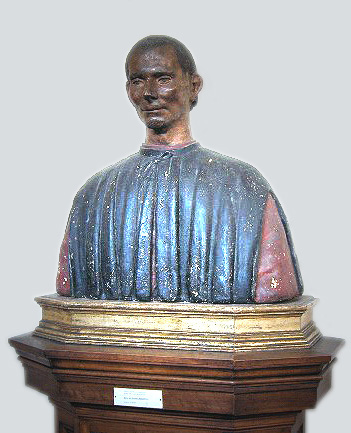
The famous terra cotta bust of Lorenzo. His flattened nose (broken in a brawl in his teen years) makes him look very different from his family, but its conspicuousness made it take a long time for us to notice he also has thickened bone development in his brows, cheekbones, and unusual jaw shape, and a tightened mouth consistent with muscle strain from overgrowth of the jawbone. Skeletal examination found evidence in his hands, his knees etc.
And if you remember my post about the very, very tall towers of the Renaissance, imagine with me the agony of answering the summons to visit the Priori (ruling council). A great honor! But a good floor higher than the tower I lived in that was up 111 steps!
A photograph of Florence’s beautiful Palazzo Vecchio. An arrow points out where the room to meet with the priori was located, on an upper floor above the skyline of the rest of the city, meaning a floor above being up 111 steps!
Diagram of one of the sets of stairs inside the Palazzo, burrowing like worm tunnels through the stone. These are the secret tunnel passage stairs for emergency evacuation and servant movements, but the main stairs, though harder to diagram so clearly, are just as numerous and just as stone!Tall, tall, tall stone staircases inside the Palazzo Vecchio, sloping intimidatingly down and up, made of slick, dark, unforgiving stone.A narrow twisty stone staircase in a different part of the Palazzo Vecchio, with no banister to help!
You couldn’t be carried (Princely! Ambitious!) you had to go on foot. Once Lorenzo’s father Piero on a really, really bad pain day when summoned asked if, for once, the priors could visit him. There were riots, and an assassination attempt. How dare he *summon* the senators like a duke his servants! Books where the Medici are the bad guys (tyrants who corrupted the republic!) will make this incident proof of Piero’s haughty decadence. But I know can’t do those stairs on a pain day, and we could equally call it a disability accommodation. He’s still called “Piero the Gouty” to this day.
Portrait of Piero the Gouty. We call him “Piero the Gouty” to differentiate him from his grandson “Piero the Unfortunate” but I think it’s pretty unfortunate going down in history named for your stigmatized disability!
Speaking of disability accommodations, eventually the Medici built a ramp. This ramp. It connects from the floor where the priori were, passes through the bureaucratic offices and all-important guild HQs, sloping at an easy grade down to the living-quarters level of the family palace.
Outside of the Palazzo Vecchio, directly above those many flights of twisty stairs. An elevated walkway supported by an arch comes out of the wall and connects to the next building.Long hallway interior, lined with portraits.Continuation of the ramp, you can see it bending and sloping downward in segments as it bends.
The long interior descends at a gentle grade with minimal turns and staircases, mostly stair that a horse can climb—horse ramps and riding horses or donkeys *indoors* at a walk was another proto-wheelchair disability tool, one architecture had to plan for with things like horse stairs.
Another interior section, showing two small sections of half-height shallow stairs. A horse or donkey could climb these, or one could dismount this close to one’s destination after taking the living disability aid this far. Even on foot these stairs are much gentler in grade and easier to climb, and separated into half-flight segments, making them much easier than those in the Palazzo Vecchio itself.A shallow sloping section of floor something between a ramp and a staircase, as each step itself slants but is about 2/5 feet deep, while the lips up from step to step are very shallow and slightly raised. This type of staircase is optimized for taking on horseback, and common in the Medici family’s Boboli gardens, which is where this specimen is located.
This is why the Vatican has so many weirdly shallow staircases—popes are old so the Vatican was a palace expecting to always host a disabled monarch, so it’s full of built-in accommodations, the most complex and fascinating accessible architecture case study in the world.
Swiss guards in uniform on duty at the Vatican. Above them is an elevated walkway above an arch, one of many elevated walkways optimizing passage without stairways throughout the maze of the Vatican, ideal for the old popes and cardinals constantly at work there. Even the modern elevators have a bench in the elevator! In the elevator! Because old guys need to sit down!Floorplan diagram of part of the Vatican palace, showing the many, many rooms and hallways slanting in odd angles that were added on century by century as new occupants expanded and modified the palace to suit their ever-cycling needs.
And it’s not chance that it was the first Medici pope, Lorenzo’s son Leo X, who finally installed a donkey-powered elevator in the papal fortress Castel Sant’Angelo. Leo was elected young, still fairly fit, but had memories of his parents’ condition getting worse, and knew his would.
Detail from Raphael’s portrait of Pope Leo X, that is Giovanni de Medici, Lorenzo’s second son.
So, Lorenzo’s descendants finally built Earth’s largest, most famous disability access ramp. It’s name is the Vasari Corridor, the elevated walkway I discussed last week as conquering Duke Cosimo I’s project of architectural domination, the tyrant’s assassin-proof walkway piercing the city’s heart. Diversity celebration or tyrant’s monument? It’s the same piece of architecture but feels completely different depending on what question we ask about it: Why was it built? For power? For chronic pain? Yes. Both.
Diagram of the full Vasari Corridor winding its length from the Palazzo Vecchio along the river, across the bridge, and above the houses until it ramps gently down to the Palazzo Pitti where the later Medici had moved. Thinking of it as a ramp it looks appealing! Thinking of it as an armored walkway to stop the outraged people from striking back at the tyrant, it feels like a gnawing worm in the heart of the ancient republic. It’s both!The Vasari corridor bending around the Mannelli tower, whose tall stone edifice blocks its otherwise gentle descent. Last week my story about this building made it a celebration of resistance against conquerors, as the bend in the corridor shows the citizens of the city defying the tyrant who wanted to blast his corridor through the ancient tower that was the birthright of an old respected family, and was forced to go around, leaving this bend which has stood ever since as a symbol of resistance against the tyrant. From the inside, it’s a super awkward narrow twisty space where you have to turn, and anyone with a walker or a scooter struggles to make the turns. Looks very different depending on your point of view, literally and figuratively!
Years ago I attended a conference on “The Medici: Citizens or Tyrants?” Dozens of scholars presented evidence for the family’s sincere, humble service to the republic, or for their princely power-hungry cunning. ALL the presentations had GREAT evidence, and, in the end, they came out exactly fifty-fifty: half showing evidence for humble servants of the state, half scheming tyrants. You can read the papers in this incredible book. We always worry about bias in history, but one part of bias is: What question were you asking in the first place?
Was Piero the Gouty demanding the obsequious submission of the priori (like summoning the Senate to the White House) or a disability accommodation just this once? Both, is the answer, but the same questions won’t get to both, it takes different historians asking different questions then comparing.
“Inventing the Renaissance” is a history of histories of this supposed golden age, and much of the process of making history lies in adding new questions to the braid as historians ask new and more diverse questions with each generation.
Time to share my current historical obsession: Clarice Orsini de Medici’s EXTREMELY ILLEGAL HAT! A cool reflection on performing social class (and part of my release countdown to the release of Inventing the Renaissance.
Portrait of Clarice Orsini de Medici by Ghirlandaio (1490s). Her face has the barely-visible eyebrows and very high forehead fashionable in the period.
Clarice Orsini, wife of Lorenzo de Medici “the Magnificent” came from the great Roman Orsini family, massively powerful nobles who traced their ancestry back through popes, knights and dukes to ancient Roman senators & peers the Caesars; one of her elder cousins was Queen of Naples.
The Orsini family coat of arms, with a heraldic red rose at the top on white, then a horizontal yellow stripe with a blue eel (probably representing speed/quickness/audacity) above red and white diagonal stripes.A battlemented tower, looking very imposing and Medieval, part of the Orsini castle at Odescalchi, one of many, many castles owned by Clarice’s kin.
Clarice’s hat is an escoffion, a type of hennin, tall, cone-like hats made from thick, starched cloth. Princess cone hats and Meleficent’s hat are forms of hennin. Clarice’s is covered with costly brocade, embroidery, and pearls.
Illumination showing Christine de Pisan before Queen Isabeau, all the ladies wearing hennin hats like Clarice’s, with pearl-covered horn-like protuberances sticking up high above the head. Some have white veils over them, others just oodles of pearls sewn onto costly cloth.Photograph of a modern woman modeling such a hat. One can see the felt cap holds the head tightly covering the hair, but arching up high above the top of the forehead then low over the ears to make the face seem taller. The maker is SPES Medieval Market, a wonderful shop, they’ve made many of my best costumes for demoing to students! For this exact hat follow this link to their Etsy shop.Wicked cast member dressed as the Disney character Maleficent, wearing a horned headdress whose debt to the historical Hennin is more visible when it’s rendered in real cloth.
Okay. Lorenzo de Medici, Clarice’s husband, was merchant scum. All Florentines had to be merchant scum, it was mandatory. After many civil wars & watching neighbors fall to conquerors, the Florentine Republic decided to secure its liberties by *massacring all the nobles and putting their heads on pikes!*.
Lorenzo de Medici, dressed like merchant scum. He’s wearing a very expensive red wool chaperon hat (whose dangling red tip drapes around his shoulders like a scarf). These are very expensive clothes made of costly vividly bright fabrics, but they’re what merchants wear, *not* what nobles wear.
A few peaceful/beloved nobles were spared on condition of effectively renouncing their nobility & being very, very careful to avoid any noble trappings; Lorenzo’s mom came from one of these, Lucrezia “we’re definitely not the noble Tornaquinti family anymore” Tornabuoni. Florence thus became a merchant republic. Normal republics at the time (Venice, Genoa, Siena, the Swiss) were *noble* republics, led by senates drawn from noble families, as Rome had been before the Caesars. Florence’s was wildly different, its ruling council selected by putting the names of the merchant guild members (business owners, the owner of the building full of looms, not the men who works them) in a bag and drawing names at random, and making them share power in a complex rotation. In the 1400s, to be fully part of Florence’s government you had to be merchant scum, especially if rich. All eyes watched top families for warning signs of “princely ambition” making it vital to performmerchant humility, in language, behavior, especially clothing. Florentines wore long wool robes (advertising Florence’s top industry Big Wool) especially in Lorenzo’s day the lucco or “Florentine toga” an open-front, open-sided sleeveless mantle whose looseness was less hot in summer and supposed to invoke the Roman republican toga. (On the lucco check out Elizabeth Curie’s wonderful little book, Fashion and Masculinity in Renaissance Florence).
Detail from a Ghirlandaio fresco showing four of the famous scholars from the circle around Lorenzo in Florence wearing the typical Florentine garments of long red cloaks down past the knee (various shades of red) open down the front and at the sides, over sleeved under-robes. They also wear the acorn-shaped red felt caps common at the period, especially for a scholar (slightly less costly than Lorenzo’s chaperon.)Fresco from a cycle in a confraternity house in Florence, a club whose members were men of good families and did charitable deeds, in this case fiving drink to the thirsty, as poor people gather with jugs which the volunteers are filling with wine. The wealthier men giving out the wine wear more intensely dyed fabrics, and the ones on the right and at center wear the lucco.Another fresco showing four younger Florentine men wearing the long lucco over their light summer doublets (less hot than tunics).
Now, young Lorenzo’s dad & grandpa had made the family *very* powerful, unofficially but-everyone-knew-it helming the state, and foreign contacts helped make that happen. Grandpa Cosimo was close with Duke Francesco Sforza of Milan, and when considering Lorenzo’s marriage.
Lorenzo’s dad Piero de Medici wears a very expensive variant on this style of garment, with gold edging.Francsco Sforza wearing a very very very expensive outfit, with gold brocaded silk,
His parents looked to forge a tie to the City-Where-it-Happens papal Rome. The Medici were as rich as dukes, and as powerful, but to bring a noble princess to the city as a bride was very risky in a city that feared nobility and anyone who seemed to want it. They chose carefully. The Orsini family weren’t monarchs of a region or city-state, they had scattered castles and land in Rome, republican nobility, heroes of the (gone but never forgotten!) Roman Republic and often leaders of the city’s resistance against unpopular or overstepping popes (SPQR!).
They were also heads of the mighty Guelph Party, one of the two great factions whose feud split the Italian peninsula in what Guido Ruggiero aptly calls Italy’s 300 Years’ War. The Guelphs were the papal, anti-imperial side (mnemonic: Pope & Guelph are 1 syllable, Emperor & Ghibelline 3). Florence was a passionately Guelph city. It had massacred its Ghibellines & put their heads on pikes not long after it did so to its nobles, and had the Guelph coat of arms & Guelph war flag on every civic building. The Orsini were the noble leaders of their party, a very strategic ally. Had Lorenzo married a Sforza princess from Milan there’d likely have been immediate riots. A Guelph Orsini republican noble was… *warily* accepted. (Machiavelli’s comment: “When you don’t feel you must marry your neighbors it means you think they’re your servants.”) In 1469 when Clarice married Lorenzo, every worried eye was on them seeking telltale signs of princely ambition (for those familiar with the Pazzi conspiracy assassination attempt against Lorenzo 9 years later, Clarice was one of the named motives!) Which brings us to…
Sumptuary Laws were normal in Renaissance Europe, clothing restrictions justified as preventing overspending on vanity. They restricted expense (gold, pearls, velvet) & enforced social status. People of X rank could only wear X amount of gold, Y fanciness of cloth, Z cut of garment. They also flagged identity. Florentine law required office-holders like Lorenzo to wear the lucco; non-Florentines couldn’t unless granted it as a privilege, a step toward citizenship. Foreigners & nobles were immune to these laws, so were recognizable at a glance, especially for their costly fashions.
Galeazzo Maria Sforza Duke of Milan, wearing a very expensive doublet with gold fleur-de-lis on blue. Lorenzo owned this portrait, but would never, ever have owned this outfit!Giulia Farnese, wearing what young Clarice Orsini would’ve worn in Rome, a costly rose-colored gown embroidered with tons of gold and pearls. Her hair is in a pearl-studded snood.
Like most laws regulating the body, sumptuary laws focused their moralistic side more on women’s bodies than men’s, decrying the wasteful, vain expense of women’s clothes, and in Florence (among other things) banning gold & pearls on women’s hats…
Portrait of Mary Duchess of Burgundy, wearing a tall cone-shaped Hennin hat with a gold jewel on the side.Isabella d’Este wearing a large turban like hat covered with ribbons, gold, and pearls. This is when she is Marquess of Mantua, married to Francesco Gonzaga.
…so naturally Florentine women stopped wearing hats to put the gold & pearls directly in their hair, which much of is why Renaissance paintings of women look so beautiful to us, the only Renaissance portraits who don’t have cone hats or look like their heads are jammed in a Monopoly hotel.
Botticelli portrait made for the Medici family, with an elaborate hairstyle woven through with pearls.Filippo Lippi Madonna, with her hair covered with a light veil and strands of pearls. This is one of the earliest paintings we look at and think “She looks beautiful!” in part because she finally doesn’t have a hat or totally-covering veil!Portrait of Catherine of Aragon, daughter of Ferdinand & Isabella of Spain and wife of Henry VIII, with a hat that looks like her head was jammed inside a Monopoly hotel, then covered with gold.
Now you see it. This is a BANNED hat. Clarice’s Florentine neighbors COULD NOT wear it. But she noble. She was immune. She *could* wear it, but it would signal princeliness sparking outrage as she strode beside her husband who still dressed like merchant scum.
Clarice Orsini’s Hennin hat again, covered with HIGHLY ILLEGAL gold and pearls.Her husband Lorenzo dressed as merchant scum, in a red chaperon and black lucco over a red tunic.
Did she wear this hat? Likely not in public. The two other portraits of Clarice are in frescoes of Medici friends and associates, portraits in public places (churches) where Clarice carefully wears fashionable, expensive, but merchant class apparel, including a modest white veil.
Fresco detail showing two of whom the left is Clarice Orsini. Her head is covered by a translucent veil, looking very modest and almost like the poor women in the image of the men doing charity except for the detail of gold edging on her gown.Similar fresco in which Clarice, on the right, is dressed much the same, in pink over pale lavender with her hair covered with a plain white veil.
Her illegal hat portrait is posthumous, commissioned by widower Lorenzo to remember his late wife. It hung *inside* Palazzo Medici, in private view. This was Lorenzo’s choice, his memento, Clarice looking as royal & un-Florentine as her Orsini kin. Why?
Clarice in her hennin again.Portrait by Botticelli thought to possibly be a Medici woman, perhaps Clarice’s daughter Maddalena, dressed as she should in Florence, in a very modest brown gown with a simple veil.
Did Clarice own this hat? Had she worn it in Rome? Secretly at home? On trips? Had she hated the commoner clothes her marriage forced on her? She certainly grew up dressing like the princess she was. So much high-stakes politics & personal mystery behind one not-so-simple hat!
I hope you enjoyed joining me in my fascination with the complex meaning of Lorenzo’s choice to remember Clarice (and encourage their kids to remember their mom) wearing her extremely illegal hat. For more tales like this, of Clarice, Lorenzo, their kids etc. Inventing the Renaissance coming soon!
Let’s talk about resistance after a conqueror takes power. Specifically let’s talk about this bendy yellow building, and what it shows us about the moment the Florentine Republic finally fell to its kleptocratic/proto-capitalist banking-fortune Medici conquerors.
In a post last week, I talked about how Renaissance towns used to be full of tall stone towers, built by rich families as mini-fortresses, & Florence got sick of people hiding in their fireproof towers while setting fire to rivals’ houses & letting things burn, so they made everyone knock the tops off.
Centuries later, the stubs of former towers were still conspicuous, and owning one was a mark of prestige, that you were rich & powerful *before* the tower ban. Tower nubs symbolized patrimony and stability. With which we can now recognize our yellow thing going around one of these nubs. Why?
The stone building at center above is one of the distinctive rough stone tower nubs, originally much, much taller.Our yellow architectural feature wrapping around another such tower nub.
The iconic Vasari Corridor was built by a conqueror who feared his people. This lovely yellow walkway over the bridge connected the old seat of government (which he symbolically had to occupy) to the new palace where he lived, keeping him from assassination behind solid walls.
It was an architectural show of force, as all the families with property in the way were pressured to submit to the new duke’s demand to let him build his walkway over their roofs or even through their homes. It was also a show of fear, perhaps best personified by the fact that
around the same time that Duke Cosimo built this fortified commuter lane to avoid his people, his neighbor Duke Alfonso d’Este of Ferrara used to walk around his city buck naked (with his dick in one hand & a sword in the other) to show off his confidence that no one dared touch a d’Este.
Duke Cosimo I de Medici
Duke Alfonso d’Este
The d’Este were a *very* blue blooded old family, stably in power for generations, propped up by Venice, the Holy Roman Emperor, and the papacy who all wanted stability in the duchy that was the buffer zone between their three empires, minimizing direct war.
In contrast, the Medici were mere merchant scum, commoner equals of their neighbors who, back when everyone important in Florence had a tower, hadn’t had an impressive one. Bowing before a noble-blooded prince made sense to people at the time, before that family down the street?
Machiavelli said if people are deeply invested in an institution they fight for it, so places used to monarchy (like Milan) if they became republics yield to new conquerors easily (Milan did in 1450) but peoples who truly love their would never stop fighting for their ancient liberty.
Florence did fight the ducal takeover. Cellini’s Perseus statue, the topic of my first thread in this series, commemorated Duke Cosimo crushing of one violent uprising, & his desire to cast the severed heads of his enemies in eternal bronze was a show of force, but also fear.
When Duke Cosimo wanted to build his elevated private commuter tunnel, those heads on pikes were fresh memories. Most neighbors yielded to his architectural conquest, but there in his way was one old tower nub, cramped, unfashionable, cold, but patrimony of the Mannelli family who… were descended from the Roman Manlii family who’d had a consul as early as 480 BC, peers of Cicero and Caesar, who’d already owned the tower a century when Boccaccio’s friend Francesco Mannelli lived in it during the Black Death, 200 years before Duke Cosimo took power.
So when the duke unveiled his plans to blast a hole through it, the Mannelli told the young conqueror to get stuffed. Cosimo knew if he violated this symbol of ancient patrimony, every *other* propertied family would turn on him. The conqueror didn’t dare cross that line.
This wasn’t idealistic resistance; it came from one of the most oligarchic and entrenched of social forces: property rights. But it was resistance, and it worked. Around the tower the corridor went. Every generation thereafter pointed to it as a place the people drew the line, and won.
This is not a story of the kind of resistance that groundswells and overthrows the tyrants. The Medici stayed in power until the family died out, they were never overthrown. But they were *kept in check.* A line the conqueror doesn’t dare cross is a powerful line, that protects much behind it.
Stories of revolution are dramatic and cathartic, but we also need stories like this, of resistance *under tyranny* that drew a line, *reducing harm* even while tyrant stayed. Nor was this the only time Florence drew such a line.
Rewinding a century, the Medici rose to power around 1430 through a combination of cunning, cash & cultural soft power under Cosimo the Elder the great-great-great-grandfather of the Duke Cosimo. Many times in that century Florence drew the line.
Portrait of the original Cosimo de Medici the elder, dressed in merchant-appropriate red robes, lined with fur which shows they were extremely expensive, but very much not what a duke would wear.
Portrait of Duke Cosimo I, wearing very warlike and splendid armor, looking very ducal exactly as his merchant-class descendants didn’t dare look in portraits. (Despite Cosimo’s grandsons in fact owning armor and jousting, but what you choose to look like in a *portrait* is different.
They drew it violently with uprisings or assassination attempts in 1433, 1466, 1478, 1494, 1430, 1437 etc., and more quietly many times between through moments of resistance like the Mannelli telling the conqueror he and his corridor to (literally) get bent (around their tower).
The tale of resistance told by the Mannelli Tower isn’t one of revolution, it’s one of slowing down the shifting baseline. The baseline did keep shifting, less liberty for all and more power for the conquerors, but it shifted * slowly*, and many lives and rights sheltered behind that line. If we define victory as preserving the republic, there’s no happy ending, the Medici won. But if their conquest started in 1430 and they still didn’t dare pierce a symbolic tower 130 years later, that is a lot of slowing the baseline compared to what Florence’s conquered neighbors endured. Slowing the baseline shift meant many generations of Medici being careful, respecting core rights, while Alfonso d’Este didn’t just parade around Ferrara buck naked, he had his artists thrown in the dungeon if he thought they weren’t painting fast enough.
Machiavelli said peoples who treasure their liberties can preserve them even through long stretches of tyranny. That it’s peoples like 1450 Milan who yield quickly to the tyrant and don’t try to hold the line who lose their liberty completely. He wasn’t wrong.
We don’t like resistance stories without a cathartic revolution, they don’t feel like blowing up the Death Star. They feel like loss. They’re not. We need to revisit these worst case scenarios to see that, even when resistance didn’t *win* it did *work*. It saved lives & livelihoods.
Florence’s republic didn’t fall to the Medici only once, it kicked them out in 1433, in 1494, in 1512, in 1530, it took many conquests. But even when it *was* the worst case, the final fall, resistance kept Florence a place that with noticeably more liberty than its neighbors.
No one in Florence knew which republic was the last republic, not in 1430, 1478, 1494, 1512, or 1530, but they did know *all* resistance held the line and preserved liberties. Partial victory is powerful. We must remember that.
Looks fake, doesn’t it? This implausible Medieval forest of towers, as dense as Manhattan skyscrapers, is our best reconstruction of the town of Bologna at its height, toward the end of the Medieval Guelph-Ghibelline wars. We don’t see many such towers today… or think we don’t, but actually their remnants are all over Italy.
Often when in Florence one sees buildings like this, where one section is rough stone standing out amid stucco neighbors.
These are actually the bottom nubs of Medieval stone towers. The town of San Gimigniano (below) is famous for having several still intact. Wealthy families built these as mini-fortresses within the city, where they could defend against riots, enemy families (think Montagues and Capulets) and invasion:
Signs of wealth and prestige, these all-stone buildings were also fireproof, leading to a terrible but effective tactic: take your family, treasures & goods up into your tower then set fire to enemies’ homes and let the city burn around you while you sit safe above. This was VERY BAD for cities.
street corner in San Gimigniano
After many disasters, Florence’s solution was to BAN private buildings over a certain height, forcing everyone who had a tower to knock the top off down to regulation height, leaving these recognizable stone nubs all around the city. This round one below is the oldest (now a restaurant).
My favorite tower stub is this one, in Via dei Cerchi. I lived on the top floor for a year as a grad student, up 111 steps! I had calves of steel by spring, but the views from the top looked like someone had put a poster of Florence on the wall except it was a window!
Only city buildings were allowed to exceed the mandated height, which is why Florence’s skyline is now all special buildings: monastery bell towers, the cathedral & baptistery, Orsanmichele the city’s granary (tall to keep grain away from water & mice), the seat of government, and one special guy…
The tower on the right here is part of Bargello, the prison & police fortress, but it didn’t start that way. It was built by a private family, who sold it to the city when the law banning towers was passed, and the city incorporated it into their prison fort.
The city jail had to be a fortress in case someone from a powerful family was arrested and the family sent goons to break them out (those guys who bite their thumbs in the opening scene of Romeo & Juliet would *totally* have stormed the jail to bust Romeo out!).
In this photo you can see how the brick battlements are a later addition, added to the tower as part of its transformation from private fortress to public.
What did Florence look like back when it had all its towers? Its long-time ally across the mountains Bologna is famous for still having two intact towers, but in the Middle Ages Bologna was known as the City of 100 Towers because so many families built them. The reconstructions look absolutely incredible. Florence didn’t have so many but did have dozens, so the richest part of the city center would have looked much like this. Much to the despair of the city fire brigade!
So, whether in a film or on the street, if you ever see a historic Italian city and walk along a block where for some reason one chunk of wall is stone and all the others smooth, you’re probably looking at a relic of the faction feuds that Guido Ruggiero aptly calls “The Italian 300 Years’ War.”
I talk about this long war in “Inventing the Renaissance,” one of many points of continuity which show how the supposed difference between a bad “Dark Ages” and Renaissance “golden age” is 100% propaganda, but fascinating propaganda with a deep history.
And I’ll share more tidbits like over the coming days as we countdown to the book’s release!
Inventing the Renaissance comes out in one month in the UK (2 months USA), so I’m going to try to post daily this month on social media to share cool pictures and stories of things related to the book. I thought I would also gather them here, posting them sometimes as individual posts, sometimes gathering a few together when they’re shorter. So to start here are some notes on Benvenuto Cellini’s stunning Perseus, my pick for a cover illustration (thank you, editors!)
For me, this statue personifies the Renaissance because, by standing opposite Michelangelo’s David by the Palazzo Vecchio, it’s part of a suite of famous statues every one of which commemorates some big & often violent tumult. When we meet famous Renaissance art we often hear about the artist but not the context. The severed head is there for a reason!
Cellini lived in the rocky decades when (after the death of the famous Lorenzo de Medici) the Medici family had been kicked out and strove to return and seize control of the city by force. Duke Cosimo I took over in the 1530s, and commissioned the Perseus in the 1540s right after a bloody revolt.
Perseus’s face deliberately resembled the then-teenaged duke, and Florence had long displayed corpses of traitors that square, often hung from battlements, sometimes as heads on pikes. When the statue was unveiled Medusa’s head in the duke’s hand represented very real & recent rebel heads!
To increase the gore factor, the statue is positioned at the edge of a roof, so when it rains Perseus remains dry, but water drips down the gore streaming from her head, from the sword point, and from her severed neck!
To hammer the message home, a relief at the bottom shows Perseus rescuing Andromeda (a personified Florence). In the top right corner a cavalry battle (which does not appear in the Perseus story!) shows the defeat of the rebels, as Perseus “rescues” Florence from the “dragon” of republican rule.
In the base, Jupiter, Perseus’s father, threatens to strike anyone who harms his son, a warning of reprisals from Cosimo’s allies, especially the Emperor whose Landsknecht knights Cosimo quartered under the very roof where the statue stood! Giving it its current name “Loggia dei Lanzi.”
When we celebrate Renaissance art w/o acknowledging the terror & violence that shaped it, we repeat the myth of a bad “Dark Ages” & Renaissance “golden age” a very potent piece of propaganda, which is what Inventing the Renaissance is about, and it has plenty more Cellini anecdotes, he was a wild man who lived a wild life, documented by his book which I will always call “The Implausibly Interesting Autobiography of Benvenuto Cellini.”
I hope you’ll enjoy more tidbits like this in coming days!
It’s time at last. If you’ve enjoyed my ExUrbe blog posts and stories about history over the years, here’s the book-length version on its way! Inventing the Renaissance: the Myth of a Golden Age, coming out February 13th 2025 in the UK (pre-order through Amazon.co.uk in hardcover, Kindle e-book or Audiobook) and March 21st in the USA (pre-order from Bookshop.org, Barnes & Noble, Amazon, or for Nook or Kindle), or it’s always best to order from your favorite independent bookshop!
Combining updated versions of some of my most popular blog series (including those on Machiavelli, the Black Death & Renaissance, the history of Progress, and history of atheism) with tons of new material , this fat and playful whopper of a book (how is it 768 pages?!) is packed with fun anecdotes and intimate details, weaving together the lives of fifteen different Renaissance figures, some famous, some obscure (entrepreneurs, musicians, artists, heretics, princesses, assassins, prophets) to look at where the myth of a bad Middle Ages and golden Renaissance came from, a story partly about the period and equally about the centuries since, and the many political movements that have found it useful to claim a supposed golden age.
OFFICIAL DESCRIPTION OF THE BOOK (more of my own comments below):
The Renaissance is one of the most studied and celebrated eras of history. Spanning the end of the Middle Ages to the beginning of modernity, it has come to symbolise the transformative rebirth of knowledge, art, culture and political thought in Europe. And for the last two hundred years, historians have struggled to describe what makes this famous golden age unique.
In Inventing the Renaissance, acclaimed historian Ada Palmer provides a fresh perspective on what makes this epoch so captivating. Her witty and irreverent journey through the fantasies historians have constructed about the period show how its legend derives more from later centuries’ mythmaking than from the often-grim reality of the period itself. She examines its defining figures and movements: the enduring legacy of Niccolò Machiavelli, the rediscovery of the classics, the rise of the Medici and fall of the Borgias, the astonishing artistic achievements of Michelangelo, Leonardo, and Cellini, the impact of the Inquisition, and the expansion of secular Humanism. Palmer also explores the ties between culture and money: books, for example, could cost as much as grand houses, so the period’s innovative thinkers could only thrive with the help of the super-rich. She offers fifteen provocative and entertaining character portraits of Renaissance men and women, some famous, some obscure, whose intersecting lives show how the real Renaissance was more unexpected, more international, and above all more desperate than its golden reputation suggests.
Drawing on her popular blogs and writing with her characteristic energy and wit, Palmer presents the Renaissance as we have never seen it before. Colloquial, funny and brilliant, this is a work of deep scholarship that will make you alternately laugh and cry.
I love the paperback cover too, it really gets across what the book is about!
I started writing Inventing the Renaissance in summer 2020, as a response to how constantly reporters were asking “If the Black Death caused the Renaissance, will COVID cause an economic boom?” It’s a question founded on such profoundly distorted assumptions, I realized I couldn’t give it a short answer, a real answer required pulling back the curtain on the great and terrible Renaissance and exposing the awkward, often scared and desperate truth behind the curtain. And it took three parts:
Establishing that there is no such thing as a golden age or dark age, but why the myth of dark and golden ages has been hard to wipe out because it’s so convenient for later generations, who want to use it to claim that their policy/party/movement/etc. will bring about a golden age (and to paint their rivals as the corresponding dark age).
What actually caused the production of all the shiny art and architecture which makes us think the Renaissance was a golden age, but was actually born from a desperate reality.
How historical change actually works, and how examining the past shows us we can never sit back and think “Well, X has happened, it will cause a golden age,” since good outcomes in history are real, but are only caused by one thing: people working hard to make it so.
The project took a long time, and ended up incorporating a ton of new material, centering on a set of fifteen mini-biographies of Renaissance figures whose paths crossed in this fascinating but desperate time, many kinds of people: a banker, a musician, an assassin, a poet, two prophets, two princesses, some heretics, ending up with our friend Machiavelli and his hard work to protect Florence during this desperate age. It’s a unique structure for a history, often retelling the same set of events several times but from different points of view, drawing on my skills as a novelist to tell stories full of passion and bias, and then to upend and invert them by suddenly switching to another point of view on the opposite side of the conflict, or zooming out to look at the different historians who have told contradictory versions of the tale.
When I sent the (very fat, very long!) manuscript off to the press I kept expecting them to tell me to cut it, separate it into different things, but my editors said they just love the way the whole thing flows, weaving together many stories, not just of the Renaissance but later eras, and drawing back the veil on historians and the work we do in inventing history, showing, with more candor than books usually do, the messy underbelly of the historian’s craft, “how the sausage gets made” so to speak. It’s a big book but a surprisingly fast read for its length, full of warmth and intimacy as well as humor and adventure, treating historical figures as friends we meet across the diaspora of time, and history-making as a long, multigenerational collaboration where even the errors are often a fruitful and vital part of getting to better truths beyond. It doesn’t read like most histories, but it does a lot, and, as my editors said, it ended up making them feel hopeful for our present in a way that can be rare in our desperate times.
So I hope you’ll give it a try, and enjoy sharing this taste of the Renaissance world that I’ve been living with so intimately with over my years getting to know our friends in the past, who worked so hard, and left us – not the world they wanted to make – but a world very worth having.
But remember, it’s always best to order from your favorite independent bookshop! If you pre-order a book they’ll notice, and they might order an extra one; that makes the biggest difference of all!
I struggled to think of a relevant image for this, but isn’t this a lovely letter B?
Hello! It’s been a while since I posted since, as usual, many projects press, so it’s rare for me to have the time to write the kinds of polished essays I like sharing here. But I’ve been hoping to share more things, since a lot of the history work I’ve been doing lately has helped me with reflecting on current events, and I want to share that faster than the slow grind of book-length work and academic journals will allow. So I’m going to start posting a few things here that are a little rougher. I hope to still post formal essays a few times a year as before, but I’m going to start also sharing things like transcripts of lectures or talks I’ve given, excerpts from my teaching notes, or assemblages from Twitter threads which took meatier turns. I hope you’ll enjoy them, but I’ll also try to always make clear what kind of content each post is, so you know which are the polished essays you’re used to.
I’m also launching a Patreon, so if you’ve enjoyed my posts, books, music etc. please consider supporting me.
I’ve felt torn about Patreon for a long time since, unlike so many wonderful scholars and authors I know, I have a steady living wage from my university and don’t struggle to get by. But, as my Patreon page explains, what I don’t have enough of is the means to hire help. As someone trying to create a lot (and as a chronic pain sufferer who often has fewer than 7 days in my week) it makes an enormous difference to how much I can do if I can pay for help: pay a music editing service to turn polish vocal tracks into completed albums without spending hours on it myself, to pay my part-time assistant Denise who helps with my calendar and paperwork and fire-hose of email which so easily eat up whole days, to hire a sound editor to finally make it possible to launch a podcast with my good friend Jo Walton talking about books, and craft of writing, and history, and science, and Florence, and gelato, and interviewing awesome friends. Even the little post below was made possible by having help, and wouldn’t exist otherwise. And supporters will get updates on what I’ve been up to, and early access to blog posts and podcast episodes, and snippets of outtakes and works in progress. So if you’d like to help me hire the help I need to turn more ideas into reality, and to have more time to write, please have a look at the Patreon page for details, and thank you very much!
Meanwhile…
Why I Teach Machiavelli Through His Letters
(excerpt from a lecture transcript, so this is how I explain this to students too)
Teaching Machiavelli through his letters is a separate thing from being an historian accessing Machiavelli through his letters. One of the reasons that I love teaching Machiavelli through his letters is that you get a very different view of the person from letters. You get unimportant details. You get the things that the person cared about that week, as opposed to the things that the person wanted to be discussed by many people in the context of that person’s name for a long time. You do get the serious political thought, but you get it mixed with “Where is my salary?” “Hello my friend,” “Here’s the party I was at,” “I have a cold,” all of these very human elements that don’t come to us when we just read a thesis.
Thanks to interdisciplinarity, both at University of Chicago and elsewhere, I move from department to department a lot–I spend some of my time with historians, and some with classicists, political science people, Italian literature or English literature people, and with philosophy people. Each of these disciplines has a different way of approaching text, but many of them approach the text perhaps not with the formal philosophical attitude of “death of the author, we care only about the text,” but all the same with the effective attitude of “we try to learn about this author only through the text,” and only through the formal polished text, the treatise.
When I’m trying to unpack not only Machiavelli but history in general to my students, it’s very easy for the history to seem like a sequence of marble busts on pedestals who handed us great books. It’s much harder to get at the fact that those people are also people who are like us: people who messed up, people who ran out of money, people who had anxieties, people who failed in things that they undertook. People who had friends, people who were nervous without their friends, and lonely. And that isn’t a version of history that we get shown very often. We get shown heroes, we get shown villains, and we get shown geniuses, as if there isn’t a person present as well. Machiavelli is a very valuable example, because we have such a great corpus of letters, but he’s also such a name. If you want to make a shortlist of people who are a marble bust on a pedestal in the way that they’re presented as we talk about the history of thought, Plato, Aristotle, Socrates, Cicero, Machiavelli, are major major figures in that way. So the letters humanize them and make them real.
I feel it’s important not to approach these works as if these people are somehow superhumanly excellent, as if these people are somehow perfect in what they undertake. I’ll often be at a conference where someone will talk about a passage in a work in isolation. I was recently at the Renaissance Society of America conference, and there was an interesting discussion of a passage in which Ficino had a really weird interpretation of this one passage of Lucretius. And there was a very nasty fight between two scholars over the interpretation, in which one of the scholars insisted he’s making this complicated subtle three-part reading of a thing that relates to another thing, diagram diagram diagram. The other person said “I think he translated the passage wrong. Because the passage was really hard. And his copy didn’t have a very clear script. And I think he didn’t read the sentence the way we read the sentence.” And the first person was adamant that it is inappropriate to question whether someone like Ficino might have had trouble reading a piece of Latin, that of course his Latin is immaculately better than our Latin. And his Latin was better than our Latin, because he spent more of his life doing it and I do believe he’s better than most classicists at this — but most classicists really struggle with that line. And when you read the commentaries on it there’s lots of ambiguity even now about what it means, and we have dictionaries, which he did not.
It was very interesting to me to see that battle between thinking of the figure as human, in which the question “Did he mess up?” is a valid question, as opposed to thinking of the person as someone who could never mess up. And a lot of the ways we approach historical figures, whether it’s Machiavelli, or Aristotle, or anyone, involve the idea that all of their works are fully intended, that they’re somehow in an a-temporal vacuum, that we should look at them all in sequence, that no one is ever going to change his mind about a thing unless the person themselves made changing their mind about a thing be a big deal. We create this idea of these geniuses where everything they wrote even from early on is exactly what they meant, which then all gets incorporated into material.
I want my students to come away from my courses not thinking about historical figures like that, but remembering that every historical figure had to pay for socks, or had to deal with laundry, or have a servant who dealt with laundry for them and then they had to deal with the servant. But they all had everyday practical existences, and they all mess up. Machiavelli’s letters give you access to somebody who feels like a real human being. Some of the things he’s doing are really weird. Some of the things he’s doing involve bizarre sexuality. Some of the things he’s doing involve uncomfortable politics. Some of the things he’s doing involve very astute politics. Some of them involve very terrifying moments like his wife saying: “I’m so glad you’re alive, we heard that Cesare Borgia massacred all of his people, I’m so glad you’re alive!” And others are very much “We’re trying to get my brother a job and no one will give him a job because it was corruptly given to the other person and we have to figure out how to get my brother a job,” which is not the sort of thing we imagine such people giving their hours to.
When you read Michelangelo’s autobiography there’s an interesting point in it where he stops talking about art for a while and starts talking about the lawsuit that went on between him and people associated with Giuliano della Rovere because he was contracted to build Giuliano della Rovere’s tomb, but then for a variety of complicated reasons the tomb did not materialise as it was supposed to have, largely because the plan for the tomb was the most insane ridiculous over-the-top impossible tomb that you could ever possibly conceive of. That was obviously never going to happen. But also there were lots of fights between him and della Rovere over who had to pay for the marble and whether the marble was delivered and he said the marble was delivered and Della Rovere said the marble wasn’t delivered and there was a crack in it… and all these lawsuits went back and forth, and also Guiliano della Rovere was starting a giant war and invading Ferrara. At one point Michelangelo ran away from Rome saying “I’m not going to work on this stupid tomb any more” and went to Florence, and then Giuliano della Rovere moved an army over to besiege Florence and started threatening them “Florence! I will besiege you and burn you down unless you give me back Michelangelo!” We have these great documents where Michelangelo is begging Signoria “Please don’t make me go back to Della Rovere! I hate him and he just torments me. I’ll build you really good defensive walls! Look at my engineering ideas for how to improve the walls!” and they had to say “No, I’m sorry Michelangelo, we’re not going to war with the Battle Pope just for you, go back to Rome, build the stupid thing.” And he did go back to Rome, and then Della Rovere made him paint the Sistine Chapel ceiling knowing Michelangelo hated painting, basically as punishment for trying to run away. I’m not exaggerating. And that’s why there are lots of angry figures in the Sistine Chapel ceiling. But the wonderful horrible flirtatious strange antagonism between Michelangelo and Giuliano della Rovere is magnificent.
And in his autobiography he’s talking about this lawsuit that arose because of the della Rovere tomb project, in great detail, and then there’s a line that says Michelangelo realized that, while dealing with a bunch of lawsuits and Pope Adrian and such, he’d been so stressed he hadn’t picked up a chisel in four years. Because he spent the entire time just dealing with the lawsuit. (Anyone feeling guilty about being overwhelmed by stress this year, you’re not alone!) And we have four years worth of lost Michelangelo production, because he didn’t do any art that entire time, because he was just dealing with a stupid lawsuit. And that’s not the sort of thing that fits into our usual way of thinking about these great historical figures. We imagine Michelangelo in his studio with a chisel. We do not imagine him in a room with a bunch of lawyers being curmudgeonly and bickering and trapped in contract hell.
Those sorts of things are important, I think, to reintroduce into the way we imagine historical figures. That they have an everyday mundanity that we imagine that they don’t. And I think that’s a big part of why when we compare ourselves to them we feel as if we can’t live up to that greatness. Because we tell edited versions of the lives of great men and great women, in which we edit out the things that feel like us. So of course we feel as if our everyday lives full of mundanity can’t rise to those levels, because we’re not comparing ourselves to the real people, we’re comparing ourselves to the edited version in which we take out the mundanity! So Machiavelli’s letters give us that. And they give us a person with problems, and a person with mistakes, and a person with a sense of humor, and a person with sexuality, all of these elements we erase from our marble busts on pedestals. And so that’s a big part of why I use the letters while teaching, and when my students read them I want them to put together “Here is a real person who is like us,” as well as “Here is the everyday on the ground experience of what it’s like to live in this crisis.”
We need that, when we live in a real crisis ourselves, and it makes us feel so often like we’re powerless and weak compared to these impressive people in the past–but they felt that way too.
Off to Italy again. This seems like a good time to share a link to a video of an illustrated talk Ada gave at the Lumen Christi institute in Chicago in February. It’s a fascinating overview of the place of San Marco in Florence, with lots of excellent pictures. It’s like an audio version of an Ex Urbe post, with Fra Angelico, the meaning of blue, the Magi, the Medici, Savonarola, confraternities, and the complexities of Renaissance religious and artistic patronage.
And here’s one of the pictures mentioned but not shown in the presentation, a nine panel illustration by Filippo Dolcaiati “The History of Antonio Rinaldeschi.” It depicts the real historical fate of Rinaldeschi, who became drunk while gambling and threw manure at an icon of the Virgin Mary. A fascinating incident for demonstrating the functions of confraternities, and for demonstrating how seriously the people of Florence took the protection offered by saints and icons.
Welcome to a new feature here on Ex Urbe — the promoted comment.
From time to time, Ada makes a long substantive chewy comment, which could almost be its own post. Making it into an actual post would take valuable time. The comment is already written and fascinating — but hidden down in a comment thread where many people may not notice it. From now on, when this happens, I will extract it and promote it. I may even go back and do this with some older especially awesome comments. You’ll be able to tell the difference between this and a real post, because it’ll say it’s posted by Bluejo, and not by Exurbe, because it will say “a promoted comment”, and also because it won’t be full of beautiful relevant carefully selected art but will have just one or two pieces of much more random art.
I thoroughly enjoyed reading this new post. As I am reviewing macroeconomics, especially the different variations of Solow Model, I cannot help but link “intellectual technology” with the specific endogenous growth model, which attempts to led the model itself generate technological growth without an exogenous “manna from heaven”. In this model, technology growth is expressed endogenously by the factor capital as “productive externalities”, and individual workers, through “learning by doing,” obtain more “skills” as the capital grows. Of course, the “technology factor” in the model I learned is vaguely defined and does not cover the many definitions and various effects of “intellectual technology” not directly related to economic production.
Your conversation with Michael reminds of me the lectures and seminars I took with you at Texas A&M. By the time I took your Intellectual History from Middle Ages to 17th Century, I have already taken some classes on philosophy. Sadly, my fellow philosophy students and I usually fell into anachronism and criticized early thinkers a bit “unfairly” on many issues. That is why your courses were like a beam of light to me, for I was never aware of the fact that we have different logic, concepts, and definition of words from our predecessors and should hence put those thinkers back into their own historical context.
It seems to me that Prof. Peter E. Gordon’s essay “What is intellectual history’ captures the different angles from which you and Michael construe Machiavelli: Michael seems more like a philosophy/political science student who attempts to examine how and why early thinkers’ ideas work or not work for our society based on our modern definitions, concepts, and logic, thus raising more debates on political philosophy and pushing the progress of philosophical innovation; your role as an intellectual historian requires one to be unattached from our own understanding of ideas and concepts and to be aware of even logic that seems to be rooted in our subconsciousness so that to examine a past thinker fairly without rash judgement. Michael is like the one who attempts to keep building the existing tower upward, while you are examining carefully the foundation below. For me personally, it would be nice to have both of these two different ways of thinking.
I have a question: I have been attempting to read a bit of Karl Marx whenever time allows. He argues that our thinking and ideology are a reflection of our material conditions. If we accept his point of view, would it be useful to connect intellectual history with economic history?
Ada replies:
Nahua, I think you have hit it spot on with your discussion of Peter Gordon’s essay. When I worked with him at Harvard (I had the privilege of having him on my committee, as well as being his teaching assistant for a course) I remember being struck by how, even when we were teaching thinkers far outside my usual scope like Heidegger, I found his presentation of them welcoming and approachable despite my lack of background, because he approached them in the same context-focused way that I did, evaluating, not their correctness or not or their applicability to the present, but their roots in their contemporary historical contexts and the reasons why they believed what they believed.
For Marx’s comment that “our thinking and ideology are a reflection of our material conditions” I think it is often very useful to connect intellectual history with economic history, not in a strictly deterministic way, but by considering economic changes as major environmental or enabling factors that facilitate or deter intellectual change and/or the dissemination of new ideas. I already discussed the example of how I think the dissemination of feminism in the 19th century was greatly facilitated by the economic liberation of female labor because of the development of industrial cloth production, more efficient ways of doing laundry, cleaning, cooking etc. Ideas about female equality existed in antiquity. They enjoyed a large surge in conversation and support from the intellectual firebrands of the Enlightenment, through figures like Montesquieu, Voltaire and Wollstonecraft. But mass movements and substantial political changes, like female suffrage, came when the economic shift had occurred. To use the “intellectual technology” concept, the technology existed in antiquity and was revived and refined in the 18th century, but it required economic shifts as well to help reach a state when large portions of the population or whole nations/governments could embrace and employ it.
As I work on Renaissance history, I constantly feel the close relationship between economics and the intellectual world as well. Humanism as I understand it began when Petrarch called for a revival of antiquity. Economics comes into this in two ways. First, the reason he thought a revival of antiquity was so desperately necessary was because Italy had become so politically tumultuous and unstable, and was under such threat of cultural or literal invasion from France–these are the consequences, largely, of economic situations, since Italy’s development of banking and its central position as a trade hub for the Mediterranean had filled its small, vulnerable citystates with incomparable wealth, creating situations where powerful families could feud, small powers could hire large mercenary armies, and every king in Europe wanted to invade Italy for a piece of its plump pie. Then after Petrarch, humanism’s ability to spread and succeed was also economically linked. You can’t have a humanist without books, you just can’t, it’s about reading, studying, correcting and living the classics. But in an era when a book cost as much as a house, and more than a year’s salary for a young schoolmaster, a library required a staggering investment of capital. That required wealthy powers–families or governments–to value humanism and have the resources to spend on it. Powers like the Medici, and Florence’s Republican government, were convinced to spend their money on libraries and humanism because they believed it would bring them glory, strength, respect, legitimacy, the love of the people, that it would improve life, heal their souls, bring peace, and make their names ring in posterity, but they couldn’t have made the investment if they hadn’t had the money to invest, and they wouldn’t have believed humanism could yield so much if not for the particular (and particularly tumultuous) economic situation in which Renaissance Italy found itself.
Yesterday I found myself thinking about the history of the book in this light, and comparing it to some comments I heard a scientist make on a panel about space elevators. We all want a space elevator–then space exploration will become much, much less expensive, everyone can afford satellites, space-dependent technologies will become cheap, and we can have a Moon Base, and a Mars program, and all the space stations we want, and all our kids can have field trips to space (slight exaggeration). To have a space elevator, we need incredibly strong cables, probably produced using nanofibers. Developing nanofibers is expensive. What the engineer pointed out is that he has high hopes for nanofiber devlopment, because nanofibers have the ideal demand pattern for a new technology. A new technology like this has the problem that, even if there are giant economic benefits to it later on, the people who pay for its development need a short-term return on that, which is difficult in the new baby stages of a technology when it’s at its most expensive. (Some of you may remember the West Wing episode where they debate the price of a cancer medication, arguing that producing each pill costs 5 cents so it’s unfair to charge more, to which the rebuttal is that the second pill cost 5 cents, but the first pill cost $300 million in research.) Once nanofiber production becomes cheap, absolutely it will be profitable, but while it’s still in the stage of costing $300 million to produce a few yards of thread, that’s a problem, and can be enough to keep a technology from getting support. One of the ways we work around this as a society today is the university system, which (through a form of patronage) supports researchers and gives them liberty to direct research toward avenues expected to be valuable independent of profit. Another is grant funding, which gives money based on arguments for the merit of a project without expecting to be paid back. A third is NASA, which develops new technologies (like velcro, or pyrex) to achieve a particular project (Moon!), which are then used and reused in society for the benefit of all. But looking at just the private sector, at the odds of a technology getting funding from investors rather than non-profits, what the scientist said is that, for a technology to receive funding, you want it to have a big long-term application which will show that you’ll make a steady profit once you can make lots of the thing, but it needs to also to have a short-term application for which a small number of clients will be prepared to pay an enormous amount, so you can sell it while it still costs $300 million, as well as expecting to sell it when it costs 5 cents. Nanofibers, he said, hit this sweet spot because of two demands. The first is body armor, since it looks like nanofibers can create bullet-proof fabric as light as normal fabric, and if we can do that then governments will certainly pay an enormous amount to get bullet-proof clothing for a head of state and his/her bodyguards, and elite military applications. The second is super-high-end lightweight golf clubs, which may seem like a frivolous thing, but there are people who will pay thousands of dollars for an extremely high end golf club, and that is something nanofibers can profit from even while expensive (super lightweight bicycles for racing also qualify). So nanofibers can depend on the excitement of the specific investors who want the expensive version now, and through their patronage develop toward the ability to produce things cheaply.
In this sense the history of the book, especially in the Renaissance, was very similar to the situation with nanofibers. In the early, manuscript stage when each new book cost the equivalent of $50,000 (very rough estimate), libraries were built and humanism was funded because wealthy people like Niccolo Niccoli and Cosimo de Medici believed that humanist libraries would give them and their home city political power and spiritual benefits, helping them toward Heaven. That convinced them to invest their millions. Their investments then created the libraries which could be used later on by larger populations, and reproduced cheaply through printing once it developed, but printing would not have developed if patrons like them weren’t around to make there be demand for the volume of books printing could produce. It took Petrarch, Niccoli and Cosimo to fund a library which could raise a generation of people who could read the classics before there was enough demand to sell the 300-1500 copies of a classical book that a printing press could print. And, working within current capitalism, it may take governments who really want bullet-proof suit jackets to give us our space elevator, though universities, NASA, and private patronage of civilian space programs are certainly also big factors pushing us forward.
In sum, I would say that economics sometimes sparks the generation of new ideas–as the economically-driven strife Petrarch experienced enabled the birth of humanism–but it also strongly affects how easily or quickly a new idea can disseminate, whether it gets patronage and support, or whether its champions have to spread it without the support of elites, patrons or government. Thus, in any given era, an intellectual historian needs to have a sense of funding patterns and patronage systems, so we can understand how ideas travel, where, and why.
One more thought from last night, or rather a test comparison showing how the concept “intellectual technology” can work. I was thinking about comparing atomism and steel.
Steel is a precursor for building skyscrapers. Despite urban demand, we didn’t get a transition to huge, towering metropoles until the development of good steel which could raise our towers of glittering glass. Of course, steel is not the ONLY precursor of the skyscraper–it also requires tempered glass, etc. And it isn’t the only way to build skyscrapers, you can use titanium, or nanotech, but you are very unlikely to get either of those things without going through steel first. Having steel does not guarantee that your society will have skyscrapers. Ancient Rome had steel. In the Middle Ages Europe lost it (though pretty-much everywhere except Europe still had steel). When steel came back in the Renaissance it still didn’t lead immediately to skyscrapers, it required many other developments first, and steel had to combine with other things, including social changes (growth of big cities). But when we look at the history of city development, studying steel is extremely important because the advent of steel-frame construction is a very important phase, and a central enabling factor for the development of modern cities.
My Lucretius book looks at the relationship between atomism and atheism in the same way that this analysis looks at steel and skyscrapers. Atomism was around for a long time, went away, came back, etc. And you can have non-atomic atheism, we have lots of it now. But atomism, as the first fully-developed mechanical model of the working of Nature (the first not dependent on God/gods to make the world work) was, in my opinion, one of the factors that you needed to combine with other developments to reach a situation in which an intellectual could combine mechanical models of nature with skepticism with other factors to develop the first fully functional atheistic model of the world. It’s one of the big factors we have to trace to ask “Why did atheism become a major interlocutor in the history of thought when it did, and not before or after?” just as tracing steel helps us answer “Why did skyscrapers start being built when they did?” There had almost certainly been atheisms before and independent of atomism (just as you can make really tall things, like pyramids or cliff-face cities, without steel-frame construction) but it was rare, and didn’t have the infrastructural repeatability necessary to let it become widespread. Modern atheists don’t use Epicurus, they more frequently use Darwin, just as modern skyscrapers use titanium, but the history of skyscrapers becomes clear when we study the history of steel. Just so, the history of atheism becomes much clearer when we study atomism. Of course, we now use steel for lots of things that aren’t skyscrapers (satellite approaching Pluto!), and similarly atomism has lots of non-atheist applications, but we associate atomism a lot with atheism, just as we think a lot about “towers of glass and steel” and usually think less about the steel bolts in our chairs or the steel spoons we eat with. All applications of steel, or epicuranism, can be worth studying, but skyscrapers/ atheism will never stop being one of the biggest and most interesting, at least in terms of how they changed the face of our modern world. And finally, while minority of buildings are skyscrapers, and a minority of contemporary people are atheists, the study of both is broadly useful because the presence of both in the lives of everyone is a defining factor in our current world.
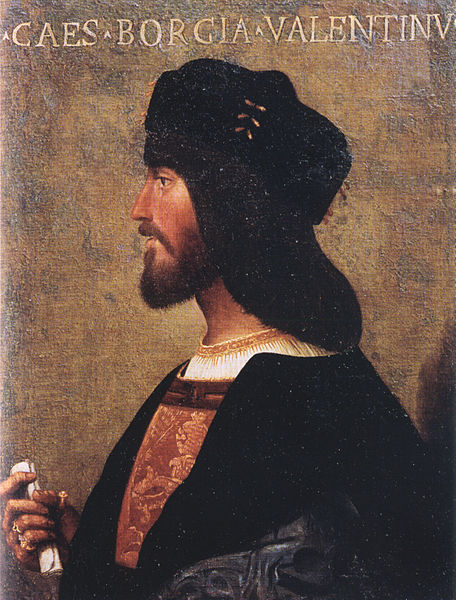
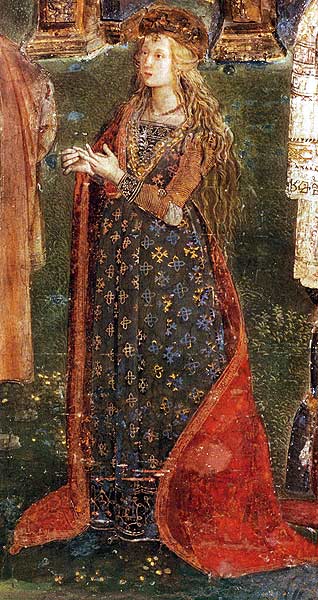
Cesare Borgia. With him and Lucrezia we have several different paintings which have been identified as possible portraits, but fewer certain ones.
Once upon a time (circa 1475) the whimsical Will that scripts the Great Scroll of the Cosmos woke up in the morning and decided: Some day centuries from now, when mankind has outgrown the dastardly moustaches of melodrama and moved on to a phase of complex antiheroes, sympathetic villains and moral ambiguity, I want history teachers to be able to stand at the front of the classroom and say, “Yes, he really did go around dressed all in black wearing a mask and killing people for fun.” Thus Cesare Borgia was conceived.
Note: I have discovered that I have a lot to say about the Borgias, so this will be the first of two posts about their impact on Machiavelli. I will try my best to get the second one out promptly. Thank you, kind readers, for being patient with the long delay between the last post and this. It was a chaotic September.
In the middle phase of the Harry Potter saga, my father phoned me one day to exclaim that if he were Harry he would walk up to Crabbe and Goyle and appeal to them in the name of rational self-preservation. Voldemort is a terrible, terrible person who randomly kills people who work for him. Joining his side, or becoming involved with him in any way, is absurdly dangerous. If you’re a Malfoy or something, and you know he’d come after you if you tried to quit, then joining him is certainly the safest option. But willingly getting involved is rather like plunging enthusiastically into a game of Russian roulette. I cite this example because its simple appeal to human Reason (Evil is bad! You don’t want to be around it! Think about it!) is exactly the sort of argument which lay at the heart of the Handbook of Princes genre before Machiavelli got his ink-blackened hands on it. The Princewas far from the first Handbook of Princes. To the contrary, it argued against a long tradition of manuals of etiquette and collections of heroic maxims which were a common literary form, especially in an age when authors made money from their books only by dedicating them to patrons, who were often more inclined to reward books which seemed directly useful to themselves and their heirs.
Augustus was a great prince. If we read his biography 50 times, we will be too!
A typical Handbook of Princes consisted of a mixture of anecdotes and advice. The anecdotes were great tales of heroic exploits, focusing on brilliant and successful historical figures (Augustus Caesar, Henry V, take your pick) or on more obscure stories wherein a single figure (usually from Roman history) is remembered for a single noble act. The presentation focuses on the hero, his character and the virtues (courage, wisdom, patience, generosity, self-sacrifice, industry) which enabled his successes. These works are histories/biographies in a sense, but unlike the modern versions of those genres, were largely devoid of cultural and historical context, and would never discuss how men were products of their times, or how their successes were affected by class movements or economics. The men were successes because they were great men, and by reading about their actions and the virtuous decisions which underlay them, the young prince could absorb these virtues and learn to do the same. Moral advice accompanied these moral examples, advice predicated on a combination of logic and the Renaissance universe in which we must remember God is presumed to take a very active part. The virtuous prince will be more successful than the corrupt or wicked one. Why? First, because people will love and respect him, and therefore obey him. If he acts like Voldemort, reason and self-preservation will drive his followers to realize that it is dangerous to be around him, and he will be abandoned and overthrown. Tyrants fall to tyrranicides. Beneficent monarchs, on the other hand, attract loyal followers who want them to stay in power. People living under a good king will be willing to go to effort to keep him in power.
Castiglione, author of the Book of the Courtier, another high Renaissance descendant of the Handbook of Princes genre, which teaches one how to be an ideal courtier and help to advise and support an ideal prince.
As for dealing with rivals and enemies, i.e. foreign affairs, here too virtue is advised. The virtuous prince will be more successful. Why? Because people will respect and listen to him. Because chivalrous conduct makes a man outstanding and brave. Because a virtuous man will have fewer enemies, at home and abroad, and thus be able to sleep at night with a clear conscience and less fear of assassins. And because God is part of politics in this age. This culture still believes in trial by combat, that the champion of a virtuous and true cause will always defeat the champion of an unjust one. The saints will like and bless the good king, and drive plague from his kingdom. “But bad things happen to good people too!” objects the devil’s advocate. “What about Job? What about the fall of the Roman Empire? What about nuns who get the Black Death tending to people who have the Black Death?” True, the culture answers, sometimes God sends tests to virtuous men, but by persevering through them with virtue one earns even greater rewards. There is Providence. If there is Providence, it is logically never, ever a good idea to do evil. While the ultimate balance lies in Heaven, even on Earth, in a world with a deep belief in saints and direct divine intervention to answer prayer and protect the chosen, virtue is 100% the right call. And religion aside, won’t a prince who is loved be showered with support and help? Certainly Petrarch and his followers, who were so desperate for peace and stability, would eagerly shower any virtuous prince with support and help, and very sincere loyalty. So stands the genre when a young Machiavelli works with Soderini in the Palazzo Vecchio, attempting to run the government of Florence and to achieve stability and peace in a world of chaos and conquest. This government is the product of Florence’s rebellion against Medici corruption, and everyone knows it exists for the sole purpose of protecting and serving the Florentine citizens and protecting the city and all her works and precious people. No one in Florence has any incentive to do anything but love and support this government. Right?
Unmatched in Infamy:
I was in the palace section of the Vatican Museum recently, showing some friends the dark neoclassical frescoes and blue and gilded Borgia bulls which so oppressively dominate Alexander VI’s apartments that no pope has been willing to inhabit that part of the palace since, when a guide came by with her tour group. She was speaking English as a compromise language, since she was a native Italian and her group was Korean, but since they were all 75% fluent in English it sufficed for basic communication. Basic, but not subtle, so when they entered the room she began, “These are the rooms of Pope Alexander VI, he…” and then I saw a look of exasperated despair wash over her face. How with broken English could she communicate the significance of the Borgia papacy to this group to whom Renaissance Italian politics were so foreign that if she’d told them Michelangelo was a pope, or Duke of Florence, or both, they would probably have believed her. “He was a very very, very very, very, very bad pope,” she concluded, and shooed her flock on. I applauded her concision at the time, but when she had moved on my friends immediately turned on me and (with the full pressure of a common language demanding thoroughness) asked, “Why was he so bad? I mean, this is the high Renaissance right before the Reformation – weren’t all the popes incredibly corrupt and terrible? You’ve been telling us stories about catamites and elephants and brothels all day; what made Alexander VI so exceptional?”
The Borgia Bull. Learn to look for it. (I accidentally terrified my Sicilian tour guide once by spotting it over a cathedral doorway and, being rather startled, pointing at it and shouting “Borgia! Borgia Borgia Borgia!”)
It is a fair question. The papal throne was indeed at its most politicized at this point, a prize tossed back and forth among various powerful Italian families and the odd foreign king, and Italy remains littered with the opulent palaces built with funds embezzled by families who scored themselves a pope. My best short answer is this:
They were Spaniards, and the Italians hated that, so all possible tensions were hyper-inflamed.
Instead of the usual graft and simony, they tried to permanently carve out a personal Borgia duchy in the middle of Italy, and when that was going well, they tried to turn the papacy into a hereditary monarchy.
They very nearly succeeded.
The Borgia family came from Valencia in eastern Spain (then Aragon), and were powerful enough there to frequently secure Church offices for younger sons, including the bishop’s miter. Trivium of the day: Valencia’s Cathedral is known for possessing one of the best accredited Holy Grails (i.e. more confirmed miracles than any leading rival grail candidate), which means both Rodrigo and Cesare Borgia were briefly custodians of the Holy Grail. The first Borgia pope, Callixtus III(originally Alfonso de Borja, b. 1378, d. 1458), was from Valencia in eastern Spain. During the middle years of his career he was instrumental in getting the royal house of Aragon to accept the compromises which ended the schism, in those years when Europe was going through its antipope-a-month phase. He was made a Cardinal as a reward, came to Rome, and was elected pope in 1455 as a compromise candidate. A compromise pope is elected when two or more powerful rivals have a deadlock in which neither can secure the majority necessary to become pope, and neither will let the other win, so they pick someone neutral and extremely old who is guaranteed to die within a couple years, giving the rivals time to level up their bribery skills and try again. The most notable achievements of his three year reign include a brief crusade, excommunicating Halley’s Comet when its bad luck interfered with his crusade (“Take that! No communion or last rights for you, comet!”), and securing Cardinal’s hats for two of his nephews, including young Rodrigo.
Rodrigo Borgia as Pope Alexander VI
Rodrigo Lanzol Borgia, later Pope Alexander VI (1431-1503) was only matrilineally a Borgia, the son of Callixtus III’s sister. He took a law degree at the university of Bologna, and was twenty-five when his uncle became a compromise pope. Making good use of their manifestly narrow window, Callixtus had the city of Valencia promoted from having Bishops to having Archbishops. He thus made Rodrigo an Archbishop, then a Cardinal, and finally gave him the position of Vice-Chancellor of the Church, an important (and lucrative!) position managing the papal purse, particularly its taxes and military expenditures. There is no better office from which to be plugged directly into the detailed workings of the Church, and to secure a precarious but powerful position as one of the foremost non-Romans in Rome. After his uncle’s death, Rodrigo stayed in this position through four more papacies, setting up a permanent household in Rome and there raising his most famous bastard children. When his fifth papal election rolled around in 1492, he was nicely on track to be another mildly-entertaining, thoroughly-corrupt Renaissance pope. The papal election of 1492 was one of the great power games of world history. Anyone seeking to create a board game or one-shot role-playing simulation of an exciting political moment need look no farther. Twenty-three men are locked in the not-yet-Michelangelized Sistine Chapel. They can’t leave until someone receives twelve votes and becomes pope. Everyone has a different goal. A few want to be pope. Others want to sell their votes to the papabile (pope-able candidates) for the best price going. Some want wealth; some have plenty and want to turn it into power. Some want titles; some have titles but have lost the fortunes that should go with them and are hoping to earn that back. Some are young and want to make friends and be owed favors; some are old and want young relatives to become cardinals to preserve the family’s toehold in the College. The Medici Cardinal is sixteen and hoping to cement the family’s hold on Florence. The Patriarch of Venice is ninety-six, dying, and wants to go back to his impregnable hometown and eat candy. Ten of the cardinals present are nephews of previous popes, eager to keep nursing from the coffers and to keep their family fortunes safe from rivals. Eight are pawns of kings and want to secure the clout necessary to get the new pope to grant their masters’ requests should a king want to, for example, divorce Catherine of Aragon and marry Anne Boelyn (that’s a few decades off but it’s the kind of thing one has to be prepared for). The previous pope glutted the College with his own relatives but all are too young for anyone to be willing to vote for them, so they have thrown their collective clout behind the cunning veteran Giuliano della Rovere: learned, aggressive, interested in art, interested in the classics, and interested above all in how both can be used as tools of power. As for Rodrigo Borgia, he has waited a long time. This may well be his last shot at his uncle’s throne. Resources: all the wealth, contacts, secrets, tax-returns and dirt he has accumulated in decades managing the papal purse.
The Sistine Chapel is not actually that large a place for thirty-odd men to be trapped for several days.
It was a very complex election, about which we have lots of information, but little that is reliable. We know there were four rounds of voting, and that Borgia was not one of the front runners in the three leading to his unanimous or near-unanimous victory in the last. We have records of enormous bribes, offices and territories representing tens of thousands of florins in annual income changing hands. Some allege that the king of France contributed hundreds of thousands to efforts to get Giuliano della Rovere on the papal throne. It seems pretty clear that the Borgias smuggled letters offering fat bribes into the chapel inside the food which was delivered for the cardinal’s meals. One delightful anecdote from the period claims that the 96-year-old Patriarch of Venice was the last critical swing vote, who, having a wealthy family, secure lines of power, a literally impregnable homeland, and not long to live to enjoy the fruits of bribery, sold out for a couple hundred florins and some marzipan, since, when one is locked in the Sistine Chapel with a bunch of clerics for day after day, sweets are precious hard to come by. In the end even Giuliano della Rovere himself seems to have accepted that, if he could not win, it was better to profit and wait than to remain stubborn and gain nothing. He was still fit, favored by the King of France, and likely to survive to see another election. (For more nitty-gritty details on what we think we might maybe know could have happened potentially, see the wiki.)
The Papal Arms of Alexander VI
Thus Rodrigo Borgia became Pope Alexander VI. One point of friction which came up in the course of the election was a proposal to contractually limit the number of new cardinals the new pope could appoint. All popes strove to load the College of Cardinals with their kin and allies to ensure that their factions had a leg up in the next election, and over the course of the five popes Rodrigo had lived under the portion of stooges and nephews in the college had ballooned like the bubo of a plague victim. Rodrigo Borgia agreed to a high but reasonable limit (I believe the limit was six, although I could be a little off). Then, still within the blushing springtime of his papacy, he trashed that limit and appointed twelve! One of those twelve Cardinal’s hats went to the Archbishop of Valencia, one of his own bastard sons, Cesare Borgia. It was a strange and strained life growing up a Borgia bastard, with a Spanish father but an Italian mother, raised in Rome. The kids learned Catalan as well as Italian and French, not to mention Latin and Greek, since by 1480 humanism was sufficiently victorious that even a twelve-year-old bastard daughter of nobility received a healthy dose of Homer. The Italians considered the Borgias Spanish, but in Spanish eyes they seemed Italian, making them literally at home nowhere. Even within the walls of their own house, as bastard children of a Cardinal they could not be properly acknowledged, at least not in the earlier parts of Rodrigo’s career. This left them wealthy and well-set-up, but also rootless in a world of enemies. Our protagonists here will be Rodrigo’s children by the primary mistress of his Roman pre-papal years, Vannozza dei Cattanei. He had other bastards both before and after, but none that will interest us as much as Giovanni Borgia (1476/7?-1497), Cesare Borgia (1475/6?-1507), Lucrezia Borgia (1480-1519) and Gioffredo Borgia(1482-1518).
A Pope Like No Other:
Rodrigo now had one goal: permanently establish the Borgia as one of the great families of Europe. He was an old man, and had to move fast. He bought a ducal title for his intended heir, Pier Luigi. When Pier Luigi died, he bought one for the next son, Giovanni, and made Giovanni commander of the papal armies. He married his younger son (Gioffredo, aged 12) to a princess of Naples (aged 16). He filled the College of Cardinals with stooges who owed their positions and fortunes to the Borgia family, and ensured they had no other allies and many enemies, so they had nowhere to turn if they broke from the Borgia fold. And he positioned his “nephew” Cesare in the College as a cardinal, just as his uncle had positioned him.
The ceiling of Alexander’s apartment.
All this is expected of a Renaissance pope. He spent lavish sums on redecorating the papal apartments within the Vatican palace, with the Borgia bull all over them. He took a new mistress, the young and enchanting Giulia Farnese, and soon the papal palace rang with the cries of a newborn papal princess. He gave vast sums from the Church’s coffers directly to his children, to spend on amassing land and personal troops. He made corrupt appointments of clerics that fed vast sums into the pockets of allies who never went near the abbeys or peoples whose spiritual well-being they were supposed to oversee. He used papal military forces to pursue personal family vendettas, particularly against the Orsini and Delle Rovere. All this was also pretty standard for a Renaissance pope. Here is where it gets exceptional. Cardinals and other powerful figures who opposed the Borgias kept dying–sometimes of symptoms suggesting poison, sometimes of bloody assassinations, sometimes of obviously trumped up court sentences, or of unexplained issues while they were incarcerated in the private papal prison in Castel san Angelo. The estates of the condemned kept getting confiscated by the holy see, and winding up, not in the papal treasury, but privately in the hands of the popes sons and cousins. Giovanni was a Duke, and begins demanding to be treated as the equal of the many Italian nobles who had looked down their noses all those years at the half-Spanish mutts. Cesare, meanwhile, positioned in the papal conclave and with fourteen-or-so other Cardinals appointed by his father and sure to vote his way, was in a good position to succeed his father in the next election. Now the papacy was ready to become a permanent hereditary Borgia monarchy.
More Borgia Bulls, on Alexander’s ceiling. The next pope refused to live in those rooms, and made new ones. Now they keep confusing modern art there.
In 1494 big problems began, somewhat hard to summarize, but largely revolving around the primary rival Borgia had defeated in that hard-fought 1492 election: Giuliano della Rovere.
Giuliano della Rovere: “Hey, King of France! This Borgia pope is evil!”
France: “What’s wrong with him?”
Giuliano della Rovere: “He’s better at bribing people than I am, and bought the election I was trying to buy! I hate him! I hate him!! I hate him!!!”
France: “Is that so? What a strange and marvelous age we live in.”
Giuliano della Rovere: “He’s also Spanish.”
France: “What? We hate those guys!”
Giuliano della Rovere: “Please invade Italy!”
France: “Srsly?”
Giuliano della Rovere: “To oust the evil Borgia pope and free Rome from corruption that isn’t mine! And if you make me pope, I’ll be your buddy and do whatever you want.”
France: “Tempting… say, Naples is in Italy, right? I seem to remember my distant cousin being King of Naples…”
Ludovico Sforza: “Your Highness should totally invade Italy. On the way in, might I recommend attacking Milan?”
France: “Sforza? Aren’t you the Duke of Milan?”
Ludovico Sforza: “No, my nephew is Duke of Milan. Please invade Italy, attack my home city, and murder my closest relative!”
Della Rovere: “Makes sense to me.”
France: “You Italians have very strange priorities. OK. I suddenly care deeply about this evil Spanish pope. I will oust him!”
Sforza & della Rovere: “Hooray! France is invading Italy!”
Italy: “Waaaaaaaaaaaaaah!”
France: “CRUSH THINGS!”
Della Rovere: “Hey, don’t crush too much! I want to tyrannize this stuff later.”
France: “CRUSH MILAN!”
Sforza: “Thank you!”
Other Sforza: “You jerk!!”
France: “CRUSH FLORENCE!”
Savonarola: “Have you considered not crushing Florence?”
France: “Oh, I thought you Italians liked being crushed; my mistake.” *gentle condescending head pat*
Machiavelli: “What the… that worked?! How did that work?!?!”
France: “CRUSH ROME!”
Della Rovere: “Excellent! Now, get that evil Borgia pope!”
France: “Right. Where is this evil Borgia pope?”
Alexander VI: “Hello, Your Majesty. Would you like me to make you King of Naples?”
Ludovico Sforza: “Great idea! Go crush Naples!”
France: “Did you two read my character sheet or something? Yes! Naples! That is indeed what I want.”
Alexander VI: “I hereby crown you King of Naples. Now you can crush and tyrannize the entire southern half of Italy without consequence. I shall tyrannize the middle, and you and Sforza can share the top.”
Ludovico Sforza: “Here’s a big bat. Have fun!”
France: “I AM THE KING OF NAPLES! CRUSH THINGS!!!!”
Della Rovere: “Borgia bad! You said you’d oust Borgia!”
France: “Yeah, I can see why Borgia out-bribed you at the election. He’s way better at this evil pope stuff!” SMASH!!!!
Alexander VI: “In the name of Saint Peter, CRUSH THINGS!!!!”
Italy: “Wait, did the papal runner-up just invite the French to invade, and then the pope encouraged them to invade more, and then the pope started a new war of his own to seize the ravaged territories? That’s a new one for the ‘worst popes’ book!”
Alexander VI: “Della Rovere did it.”
Della Rovere: “Borgia did it.”
Savonarola: “THIS POPE IS THE ANTICHRIST! THESE ARE THE END TIMES! APOCALYPSE! JUDGMENT!”
Everyone: “You know, that explains a lot…”
But he remained the pope, however destructive his exploits. He had armies, money, his own prison-fortress, his own courts of law, political instincts honed by decades, detailed knowledge of everyone’s secrets, the authority to grant noble titles (like King of Naples), and the power to damn you to Hell forever and ever. His every move made him more powerful at the cost of his enemies, so the worse things got, the bleaker the prospect of taking down the Borgia monster.
Lucrezia Borgia
If you can’t take down the monster, one traditional option is to marry it. Yet in this case, even allying with the pope by marriage, effectively agreeing to permanently condone and support whatever antics he got up to, was not necessarily a permanent fix. The infamous and enchanting Lucrezia Borgia deserves an entry of her own someday, but I will treat her briefly here. She was supposed to be one of the most beautiful ladies in the world, with blonde hair which fell past her knees, and a keen and well-trained intellect. I can testify personally to the latter, since I have read some of the letters she wrote to her father from Milan at the age of fourteen, and the depth of her understanding of the European situation as she warns her father of political turmoil along Italy’s northern border certainly adds plausibility to the impossible competence of a lot of teen-aged young adult and anime protagonists. In marriage terms, she was the best catch in the world. Unfortunately, she was too valuable. Alexander engaged her to one noble, then broke it off in favor of a better one, then a better one (“What’re ya gonna do about it? Her dad’s the pope!”). Eventually he married her to a bastard of the Sforza, the ruling family of Milan, then when the Sforza weren’t valuable enough wrangled an annulment (the Sforza objected fiercely: “You can’t do that! We’re Catholic! Ending a marriage requires a special dispensation from the pop… oh, right. #%$&!”) Next Alfonso of Aragon, from the Naples-Spanish royal family. That one ended in a juicy (and unsolved) murder. All the rumors of corruption that follow corrupt rulers naturally followed the Borgias, and I mean all of them. Every important person who died was poisoned by the Borgias. Every body found floating in the Tiber was their fault. Lucrezia was sleeping with her brothers. Lucrezia was sleeping with her father. Giovanni was sleeping with Gioffredo’s wife. Giovanni murdered his own wife. Cesare murdered Lucrezia’s second husband out of jealousy because he was in love with her. Alexander was sleeping, not just with Julia Farnese, but with Julia Farnese’s brother Alessandro. Alexander was sleeping with the Ottoman Sultan’s brother Cem. Most of these rumors must be untrue, and experts have spent many years making baby steps toward sorting true from false, but the majority is pretty much impossible to verify. It does seem to be true that there was a patch in there when so many Cardinals were being murdered that there were active betting pools in Rome where you could lay money on which Cardinal would be offed next. I myself am half convinced by the numerous accounts that claim that Cesare used to go out in the streets at night and murder people for fun. I mean, why not? His dad’s the pope! Many of the claims may be outlandish, but neither historical facts nor the rule of plausibility can really help us quash them when the facts we do have are so exactly what we would expect if everything was true. For example, in 1498, two of Lucrezia’s household servants were found dead in the Tiber without explanation, and shortly thereafter she definitely gave birth to a bastard, which was officially declared to be Cesare’s son, then to be Alexander’s son, then to be her half-brother with no claim about who the father was. What was history supposed to think? And all this time, the Ottoman Sultan’s brother Cem, who was living in Rome as a political hostage, did spend a suspiciously large amount of time hangin’ with the Borgias.
Shock! Dismay! Much later romanticized image of Cesare, Lucrezia and Rodrigo as the body is brought in.
But these were small things. In 1497, one of the bodies floating in the Tiber was their own. Giovanni Borgia, Duke of Gandia, Alexander’s heir. An untouched purse containing gold worth more than a year’s income to many Romans proved it was not a random murder. Alexander launched an intense investigation, then suddenly halted it after less than two weeks without any announcement of the result. No one was convicted. Rumors blamed the Orsini. Darker rumors blamed his fellow Borgias. Young Gioffredo Borgia was accused, on the grounds that Giovanni was supposed to have been sleeping with his wife. Cesare Borgia was accused on the grounds of… of… frankly, it just seems that everyone who knew Cesare and knew Giovanni and knew the situation just agreed, as if by instinct, that it was Cesare. Nothing else made sense. Fratricide–the narrative demands it.
The Dark Prince Rises:
Why kill Giovanni? [Disclaimer: there is no proof Cesare did kill Giovanni. I freely confess that my tendency to believe those who claim he did is based solely on (A) its consistency with his later actions, and (B) the fact that it feels narratively right. There is no proof!] Cesare was supposed to succeed his father as pope. But Giovanni, he was the one who got to be a Duke, to marry a princess, to enjoy the lands and castles, and to carry on the Borgia name. He had been the heir. The logical next heir should have been Gioffredo. Instead Cesare took center stage. He renounced the Cardinalship, becoming the only man in history ever to do so. His father pressured the French into giving him a princess for a wife, and a Ducal title. So little did the actual people ruled by nobles matter to the aristocrats who owned them at the time that they decided to make him Duke of a region called Valentinois for the sole reason that, as Archbishop of Valencia, he was already nicknamed “Valentino”, and this way they wouldn’t have to change his nickname. He took command of the papal armies, and control of the Borgia estates. But Alexander continued to sort-of treat him as a Cardinal and he continued to sort-of act like one, making everyone worry that they might still intend Cesare to succeed his father as pope even though he was now also intending to succeed as worldly heir. What did it mean?
This drawing by Leonardo Da Vinci is pretty-much unknown, but an expert whom I have reason to trust told me with confidence that he believes it is a portrait sketch of Cesare.
Titular power was not enough now. During Giovanni’s years, Alexander had already started signing papal lands over to his son-and-heir, not as temporary leases but as permanent gifts, carving off pieces of the Papal States and creating a private Borgia kingdom out of what had been Rome’s. You see, titular ducal titles like Gandia and Valentinoi,s to Italian eyes, just meant some faraway nowhereville which gives people money and makes us have to call them “Your Grace”. Such territories didn’t matter, not like a territory in Italy would matter. What Alexander and Cesare made now was different. Alexander gave a big hunk of the papal states to Cesare, as a permanent gift. The cities within the Papal States were governed by papal “Vicars,” i.e. nobility granted rule over sub-territories within the papal lands much as Dukes and Counts are granted sub-territories in a kingdom by a king or emperor. These vicars were in theory appointed by the pope and could be replaced by him, though in practice the position was by custom passed along noble lines from father to son. To depose them all and give their lands to his son as the new vicar was thus technically legal but practically unthinkable, and an as great a shock to the political scene as if a king of France had suddenly deposed half his top nobles. It also implied Alexander’s intention to leave these territories in Borgia hands permanently. Next Cesare raised armies and started, on small pretexts, attacking neighboring city-states and territories, ejecting the current rulers and adding them to his private Borgia kingdom. (“What’re ya gonna do about it? My dad’s the pope!”) A new blotch appeared on the European map. Let me repeat: a new blotch appeared on the European map, a kingdom out of nowhere, carved out in the heart of Italy, a kingdom which no longer belonged to the pope, or any Italian house, but to the Borgias. Whether Cesare became pope next or not, he would be Duke—perhaps soon King—of an ever-growing chunk of the world. No pope had done this. No pope had done anything close to this.
Maps help, even if this is not the best. The blue section in the middle is the Papal States. The northern arm is what Alexander carved off for the Borgia kingdom. Ferrara to the north (Yellow) and Modena (also yellow, west of it) are what became Borgia allies when Lucrezia married Alfonso D’Este. Notice how Florence’s orange territory is now an inconvenient bite-shaped hole in the side of Cesare’s kingdom.
The new and growing Borgia Kingdom was an especially terrifying force in the eyes of those on its ever-changing borders. The pattern rapidly became clear: ally with the pope–by marriage or treaty–or you are next on Cesare’s chopping block. These were not subtle takeovers but outright sieges, with the full brutality of Renaissance warfare. Even Ferrara—the untouchable no man’s land between Venice and Rome which no man dared disturb lest strife on the Venetian border weaken the power whose fleet was the only barrier between the Turk and Christendom—even here Cesare threatened war. The threat of war with the Turk meant nothing to him. He was ready to ravage Ferrara, and would have if the Duke hadn’t speedily married Lucrezia and agreed to condone and acknowledge all his new brother-in-law’s conquests. So even the untouchable noble house of Este fell into Borgia hands. And do you know what plump, gold-fatted city-state lay directly west of the patch where Cesare was playing king-unmaker? Good guess.
Good morning, Mr. Machiavelli. Your mission, should you choose to accept it, is to prevent Cesare Borgia from conquering Florence. You will serve as our official ambassador to his court. You will shadow the Duke-Cardinal as closely as possible, report to us about his character and tactics, and develop a strategy to keep him from adding Tuscany to his expanding kingdom. While at his court, you will need to maintain yourself and your team with grandeur sufficient to make him take us seriously as a political force, but we can’t send you any funds to pay for this, since Borgia has so completely destroyed peace and order in the region that bandits are rampaging through the countryside robbing and murdering all our couriers. As always, should you or any member of your team be caught or killed, the Signoria will disavow all knowledge of your actions. This message will self-destruct in a few weeks when your office is inevitably looted and burned, but if you throw it in the fire that will speed things up.
Thus began Machiavelli’s very special education in the conduct of a different kind of prince.
Cesare’s ducal coat of arms, adding the French fleur de lis after he successfully wins the King of France to his side.
Cesare Borgia was both feared and loved. The “loved” part may seem out of place given Borgia infamy, but it was true. The papal vicars Cesare replaced had been widely disliked by the peoples they ruled, since most of them were corrupt and more interested in family advancement than their people’s well-being. Cesare offered something different, and in many cases better. Better how? Because the fundamental purpose of government, from the perspective of a butcher or a weaver, is to keep the peace and prevent killing and looting. Cesare did that. Cesare did that very, very well. How? If someone was caught causing strife in the streets, that person would be executed in the most horrifically graphic possible way and his corpse strung up in public. Consequence: peace. Two examples of Cesare’s activities in this period crop up particularly vividly in the history books, and in Machiavelli’s “little book on princes.” The first is the case of Remirro de Orco. Cesare conquered the territory of Romagna (East/middle hunk of Italy), including the city of Cesena. Such was the chaos resulting from the violent upheaval and expulsion of the old rulers, that the region of Romagna had largely degenerated into chaos, banditry, killing and looting. Cesare needed to bring order. He appointed a mercenary captain named Remirro de Orco, one of his more loyal men, and commanded that he bring peace to the area as efficiently as possible by using maximum brutality. Following Cesare’s order, Remirro carried out numerous executions, using methods gruesome even for the Renaissance, and speedily crushed the region under the iron heel of peace. No one looted. No one dared. After peace was achieved, Cesare inspected the region and confirmed that it was indeed stable, arguably even more prosperous than it had been before his conquests, but that the people were fired with bitterness and rage. The next morning, Cesare had departed, and Remirro de Orco was found in the town square of Cesena, having been sliced in half, with his gore-spewing entrails strewn across the decorative pavement. No one doubted it was Cesare’s doing, but to Machaivelli’s astonishment, the effect of this unthinkable betrayal was instant and lasting peace. The people were satisfied, even grateful, that Cesare had taken revenge upon the brutal oppressor, and the new, gentler vassal he left in place to rule the region was readily obeyed. They did not blame Cesare for the atrocities loyal Remirro had carried out at his express order – instead they thanked him for avenging them. Cesare was loved.
Coins minted by you-know-which-pope.
He was also feared, by other loyal vassals who noticed (as my father urged Crabbe and Goyle to) that the villain had a tendency to brutally murder people near him, even loyal servants. This was unheard of. The Handbook of Princes says the success of the prince depends on his ability to inspire loyalty and love from his vassals. The vassal betraying the benefactor is the worst thing in Dante’s Inferno; Dante didn’t even have a section for benefactors who betray their vassals because it simply didn’t occur to the Renaissance political mind that one would ever want to. But it did occur to Cesare. By this phase, by the way, Cesare’s face had been disfigured by syphilis, and he had taken to wearing a mask. And dressing all in black. Yes, ladies and gentlemen, he genuinely did go around dressed all in black wearing a mask, betraying and murdering people. Sadly, we have no documentary evidence that he went “Wa ha ha! Wa ha ha ha ha!” The nervousness that swept through Cesare’s vassals leads us to the second amazing incident, the massacre at Senigallia. In very late 1502, several of the vassals who had supported Cesare in return for receiving power under him and having his help crushing their enemies became increasingly afraid, both for their lives and for Italy and Europe, and plotted against him. This was really quite rational. But they were disorganized and uncertain, and did not follow through well. They heard rumors that Cesare had heard about the plot. They didn’t quite trust each other not to sell each other out to him. One problem led to another, and in the end they decided to abandon the plot, confess to him that they had considered treason but renew their vows to follow him to the end, and beg his forgiveness. They confessed. He forgave. They rejoiced. He invited them to join him for a feast. They heartily accepted. He massacred them all. High on Olympus Hestia sighed, and the vengeful Furies in the depths gnashed their teeth as the Laws of Hospitality lay wounded. Cesare’s vassals never plotted against him again.
Our most reliable portrait of Machiavelli, made from his death mask.
I will never forget the letter written to Machiavelli by his friend Biagio Buonaccorsi on January 9th 1503, expressing absolute delight and abject gratitude and relief upon hearing that Machiavelli had survived the massacre at which so many of Cesare’s court had been killed. Throughout this period, dear Niccolo’s friends and family were prepared to read any day that he had been killed, either with Cesare or by Cesare. And they didn’t manage to send him his salary. Once they tried giving it to Michelangelo to carry to him when he was en route to Rome, but even Michelangelo turned back in Cesare-ful times of banditry and chaos. But something else unsettling was happening too. What of our Handbooks of Princes? Shouldn’t a betrayal like that make the rest of Cesare’s vassals turn and flee? Shouldn’t these people rebel hearing rumors of his brutality? Doesn’t the Handbook of Princes genre teach us that every move Cesare is making should fail? Then why does every step he takes seem to be a step up? They’re trying to turn the papacy into a hereditary monarchy, and they’re succeeding. It should be noted that Cesare’s rise does not necessarily completely undermine the advice in the traditional Handbook of Princes. Providence has exalted tyrants before, and fools have followed them, many out of of fear. The apparent (psychological) effects of the incidents with Remirro and at Senigallia are hard to explain, but this can still fit traditional narratives, especially if the Borgias fall in some appropriately cataclysmic way, demonstrating the wages of sin and the grisly fate that waits for bad princes and bad popes. Then Cesare’s story can join our collections of moral anecdotes as an example of hubris and cruelty, while one of his enemies (Guidobaldo da Montefeltro perhaps?) becomes the hero. But for now, hubris and cruelty seem to be winning the day.
A sample of Cesare’s surviving handwriting, with his signature at the bottom.
Machiavelli’s letters from the period include some of his reflections on these larger philosophical and historical questions, but he does not have the leisure to invent political science just now. That must wait for the leisurely days of his exile. On this mission, every second is reserved for Florence. Seeing all who opposed the rising prince fall one by one, Machiavelli too chose to follow fear’s advice and suggested an alliance. Florence accepted his plan and, after many careful approaches by their wily ambassador, so did Cesare. Florence became an official Borgia ally, agreeing to recognize Cesare’s legitimate claim to his newly-carved kingdom and to offer money and resources to help him conquer more. Florence was safe for now—at least, as safe as Remirro de Orco had been. And it is in this precarious state that we must leave Florence, and Machiavelli, and the triumphant Cesare for a little while, as the spring of 1503 promises Great Change.
"Warm, generous, and inviting," Inventing the Renaissance provides a witty and irreverent journey through the fantasies historians have constructed about the supposed Dark Ages and golden Renaissance, and exposes the terrible yet often tender reality beneath.
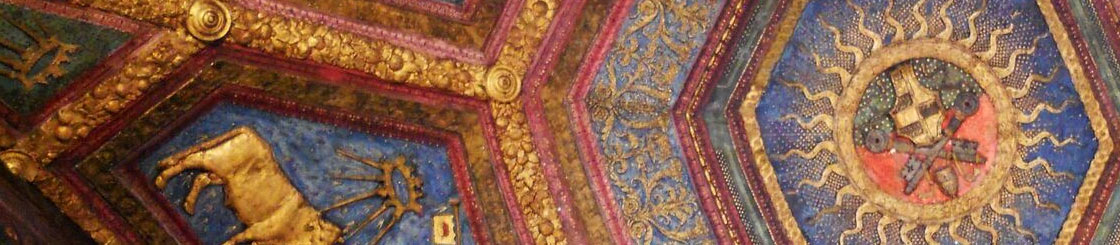
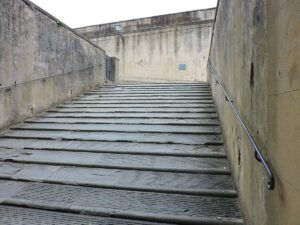 Time for the largest, most famous disability access ramp in the world, paired with a twist about how our feelings about a piece of history can reverse completely based, not just on the historian’s point of view, but what questions we start with.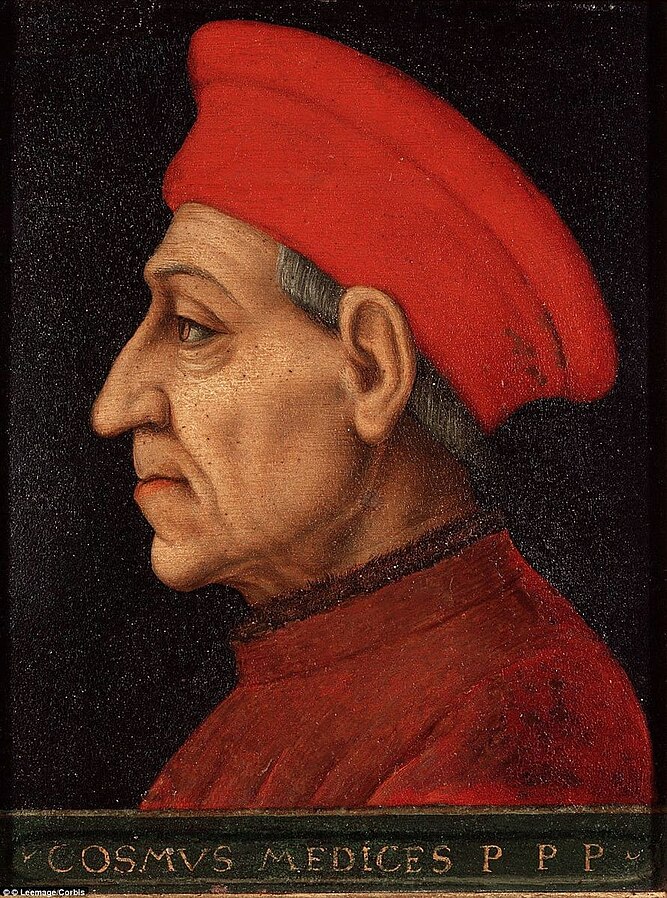

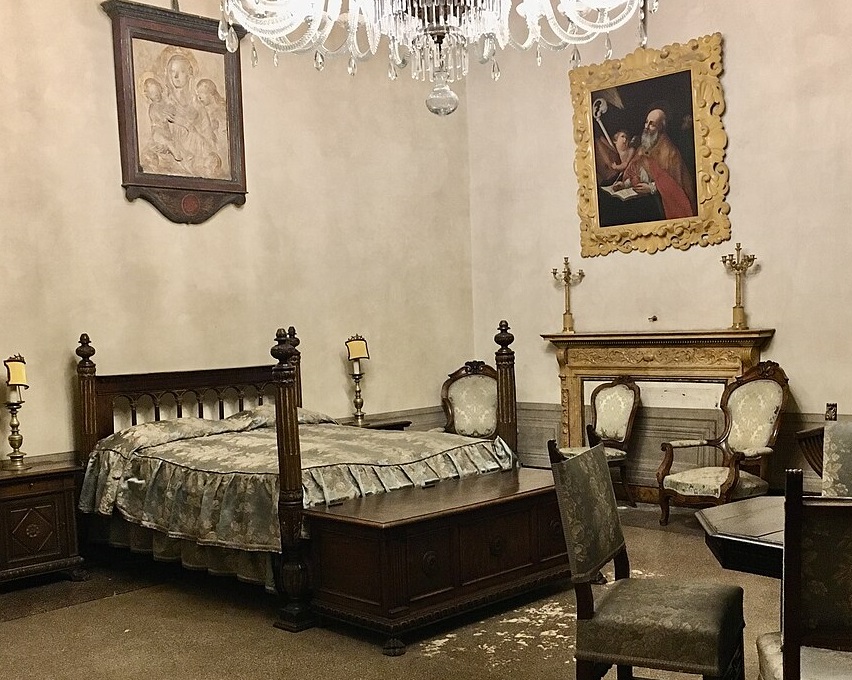

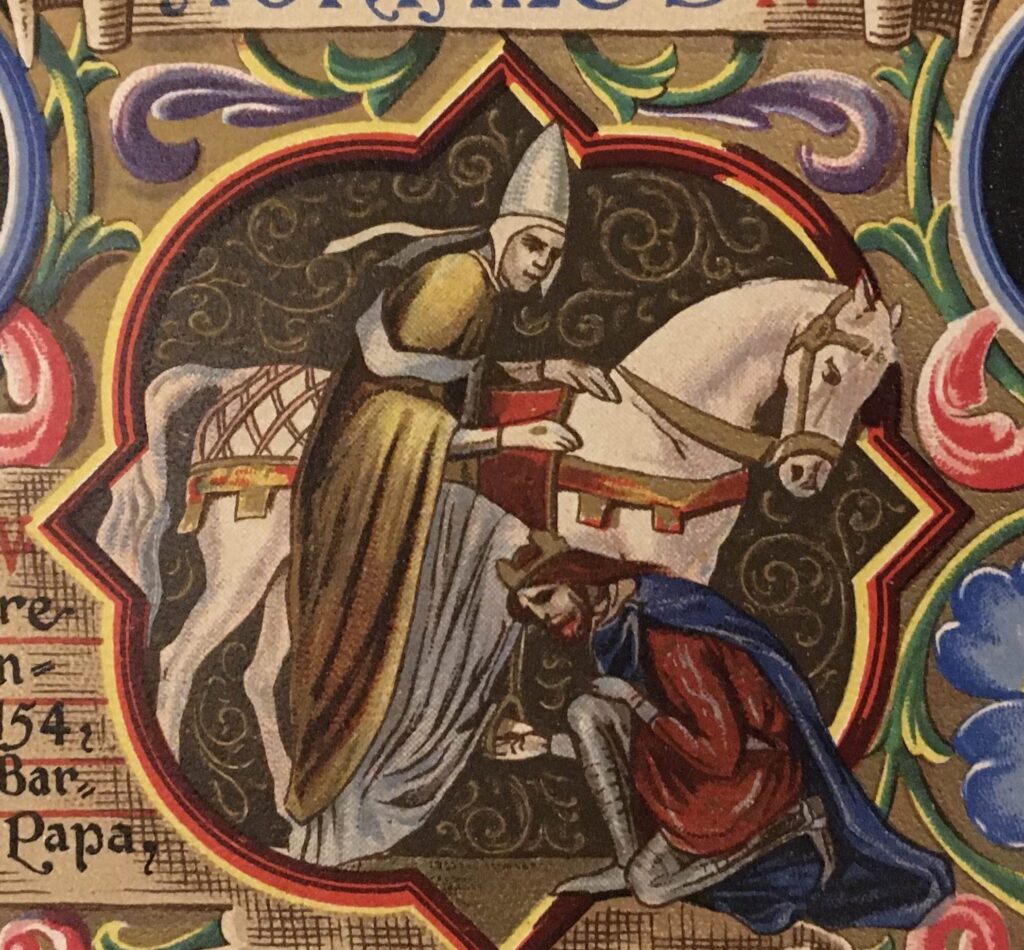
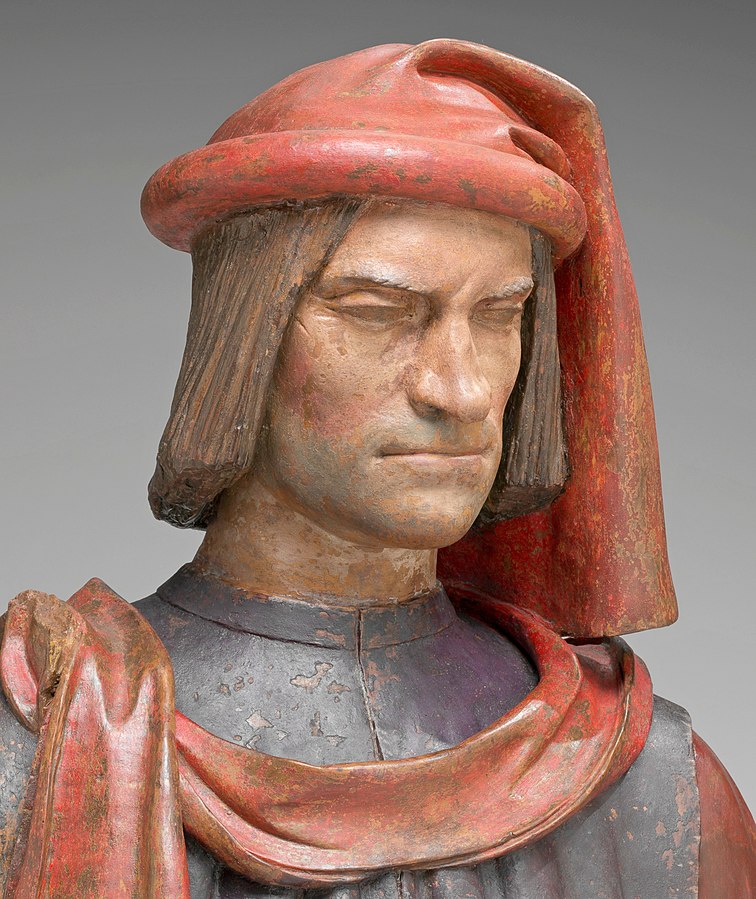
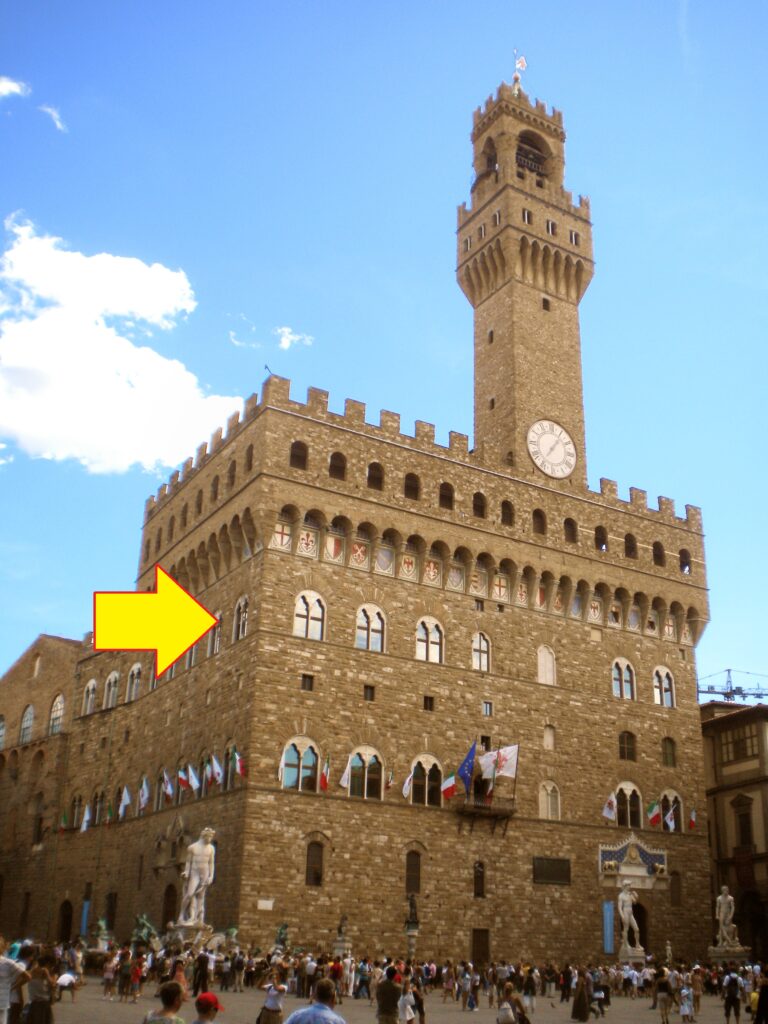
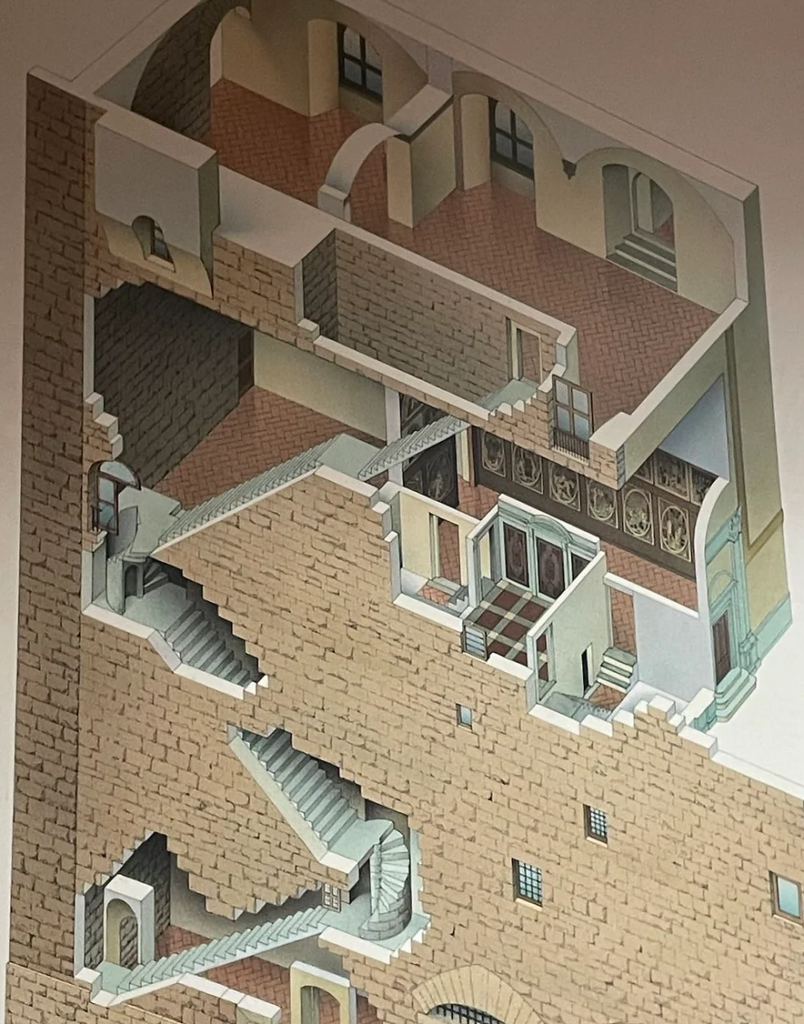
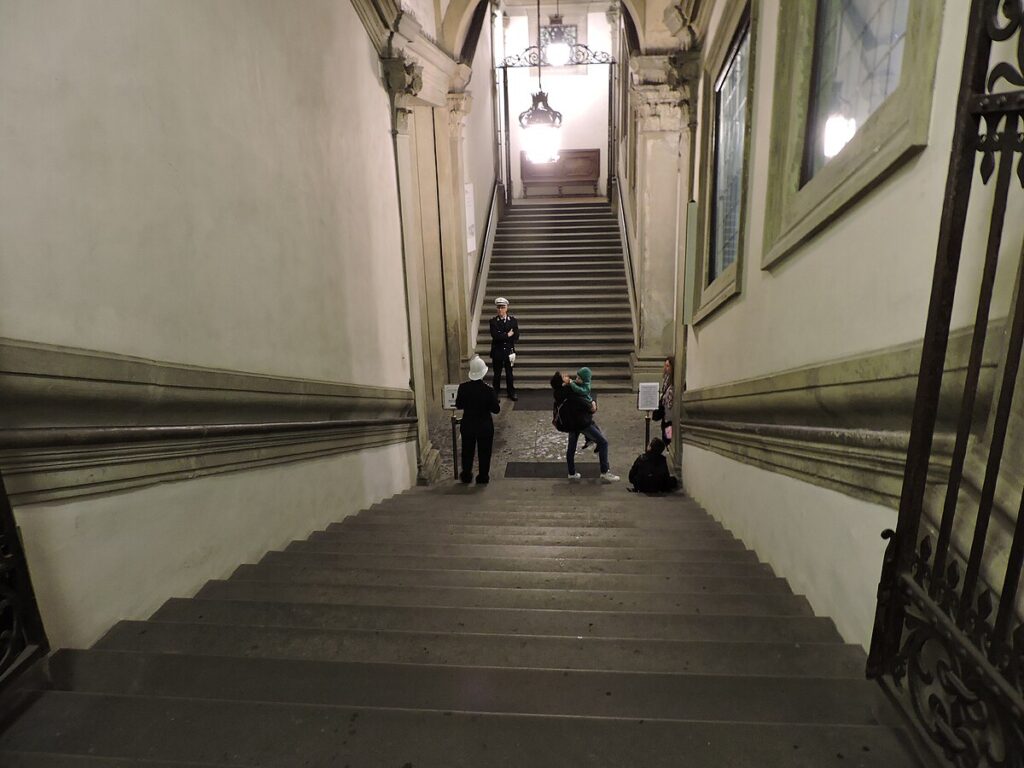
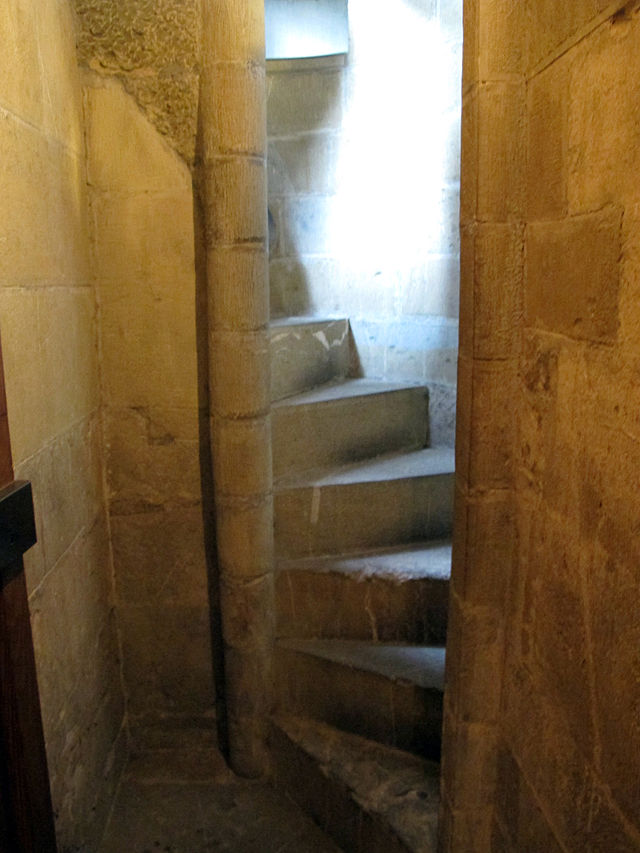
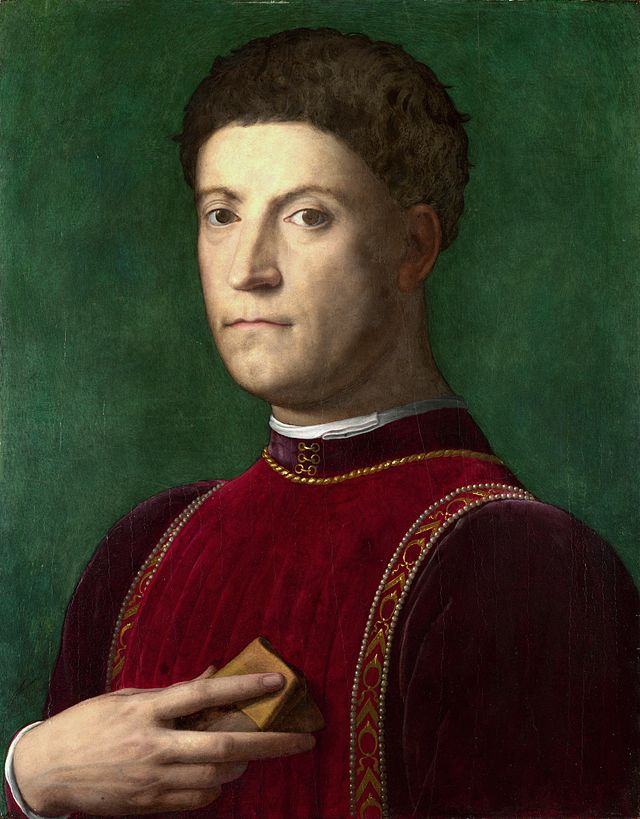
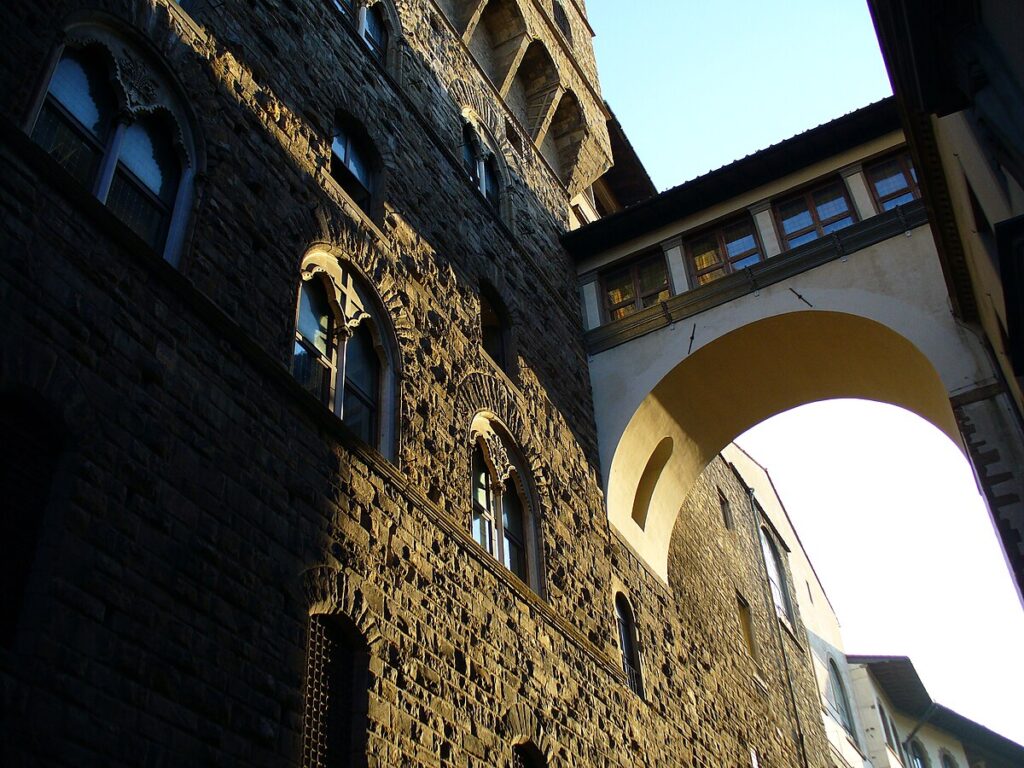
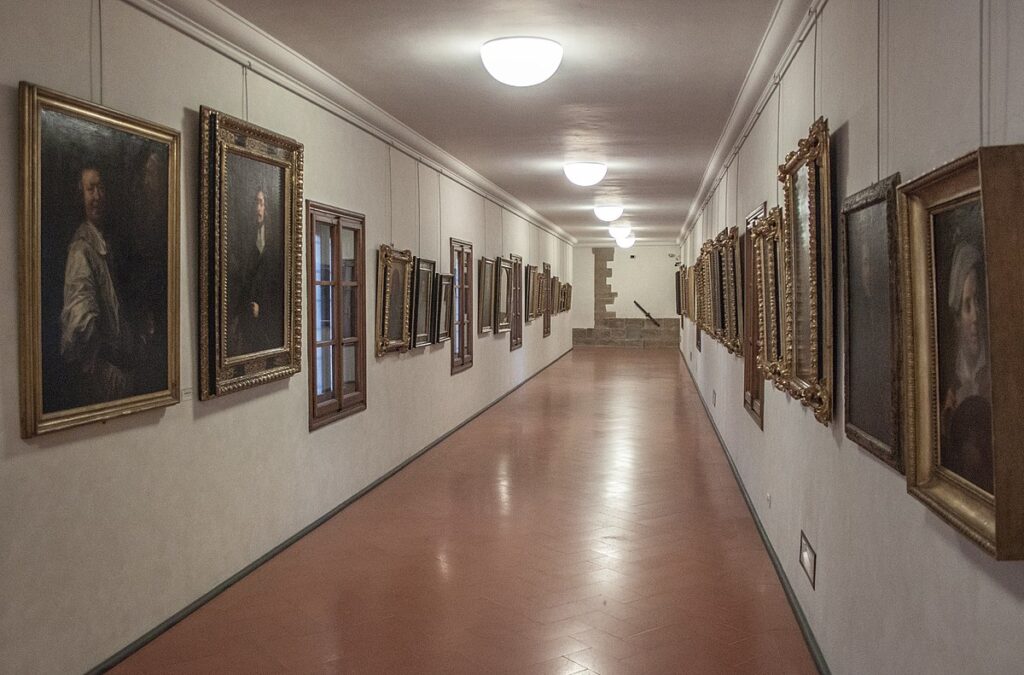


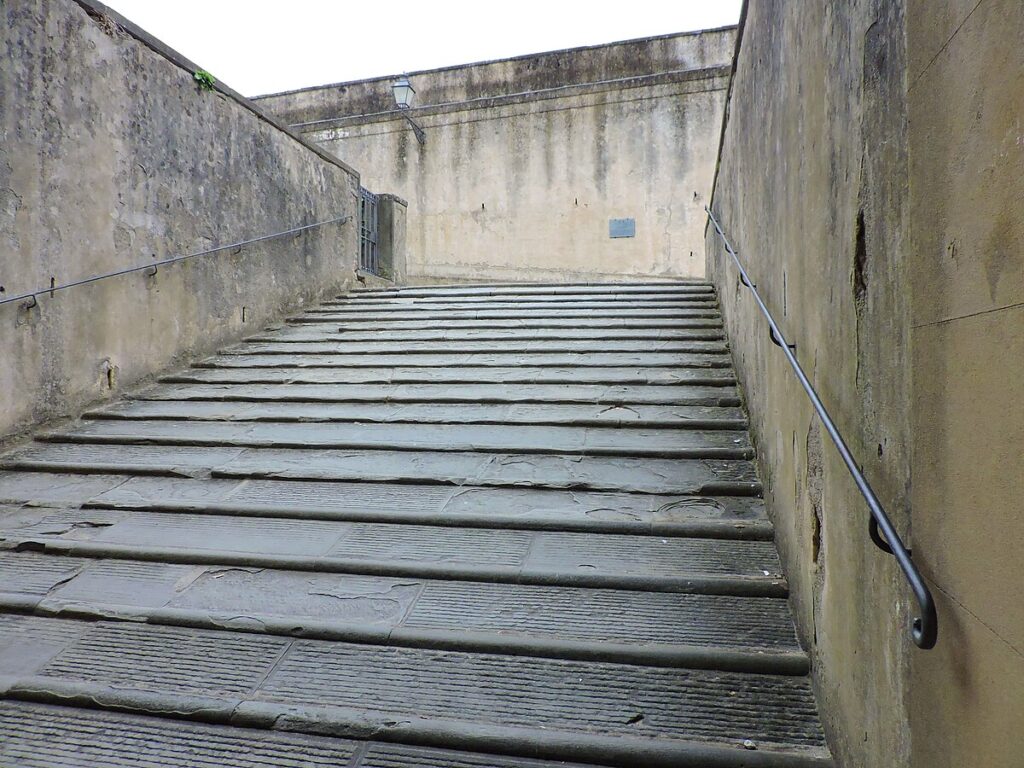
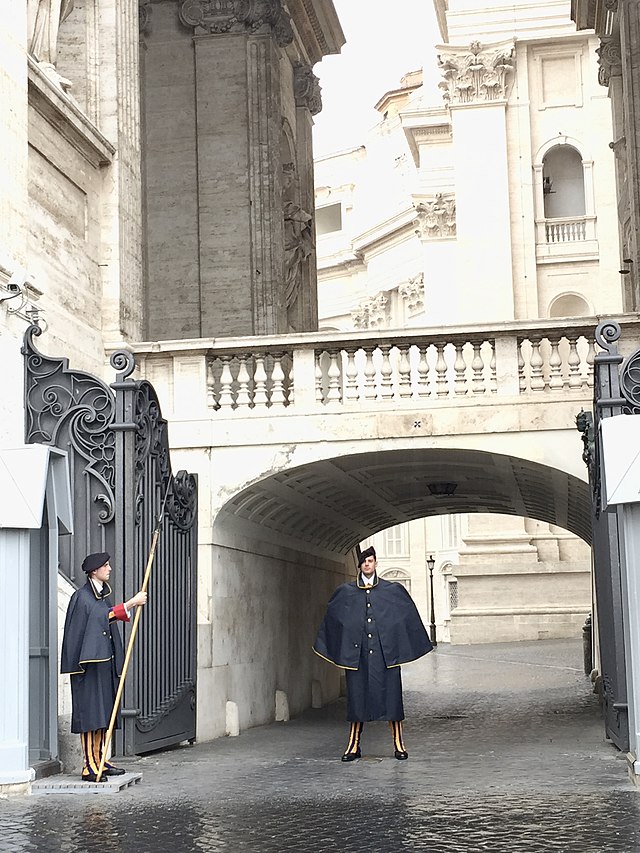

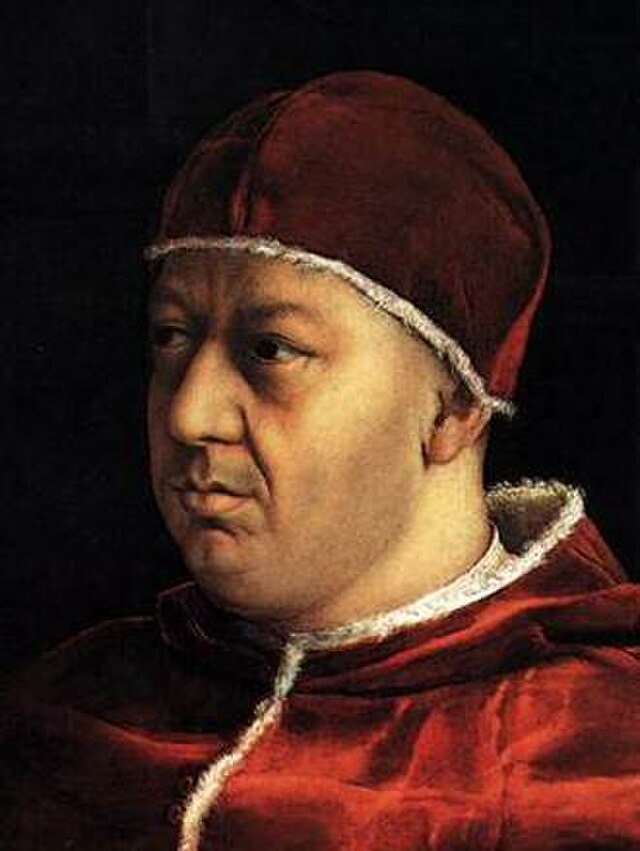
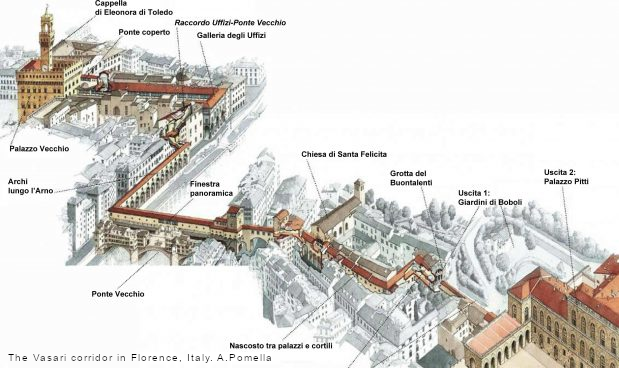

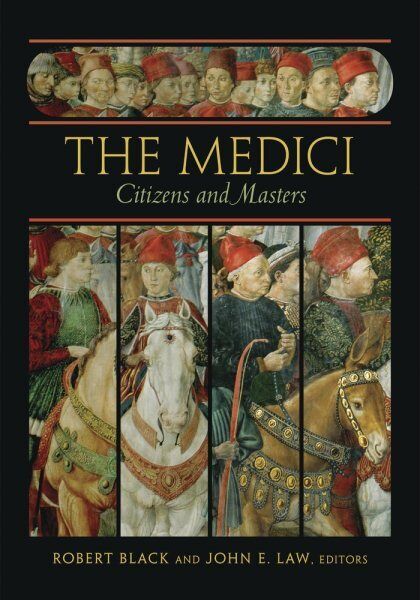

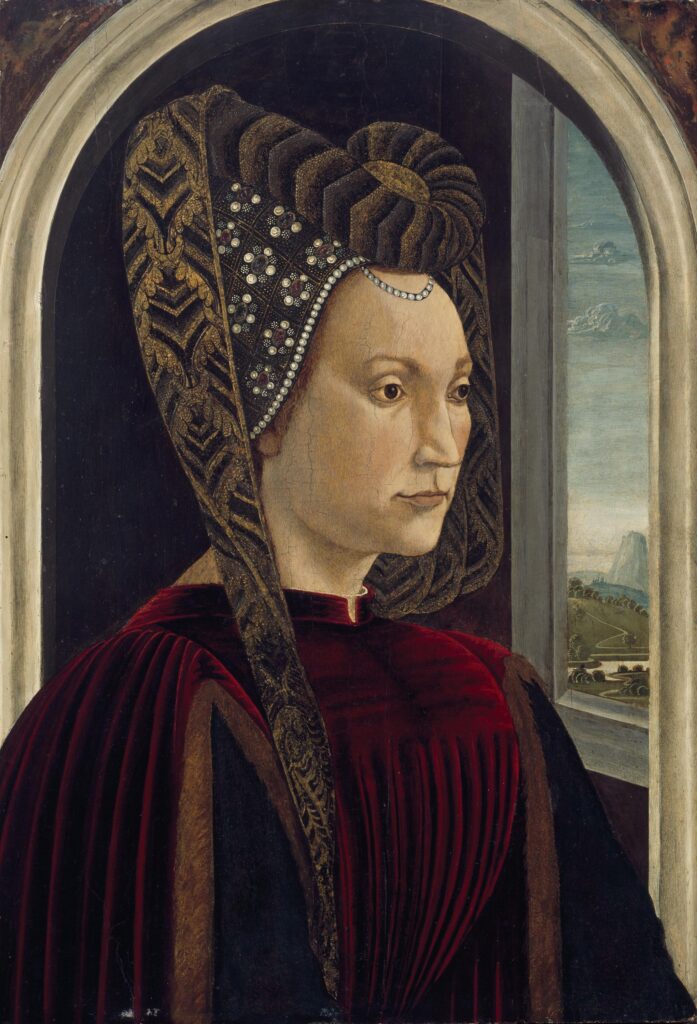
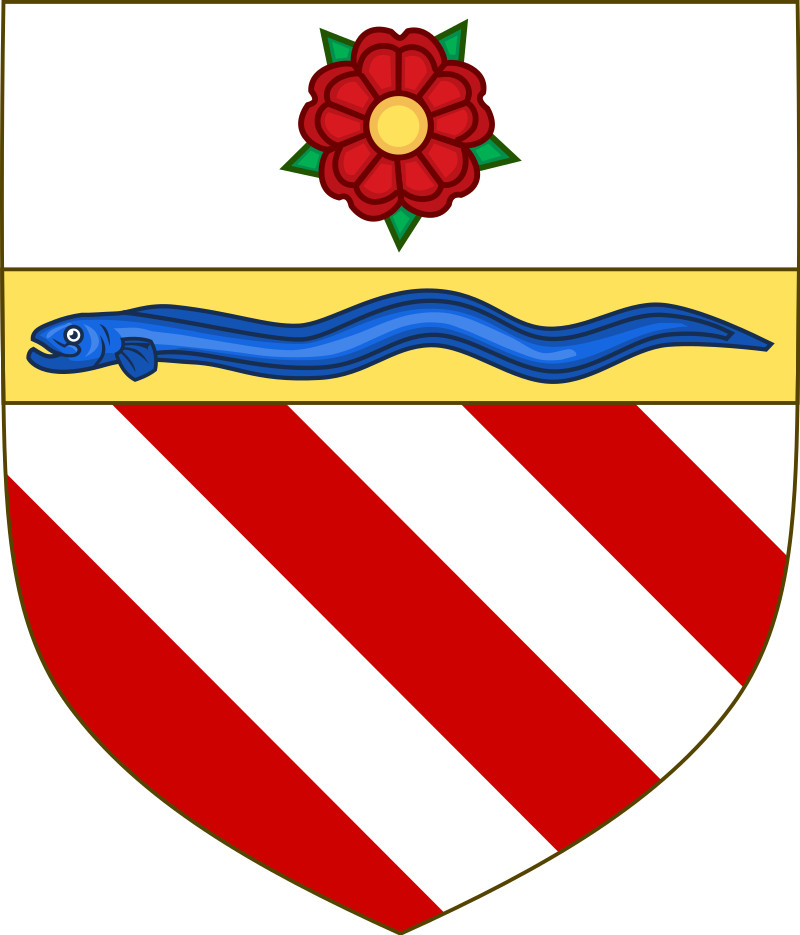
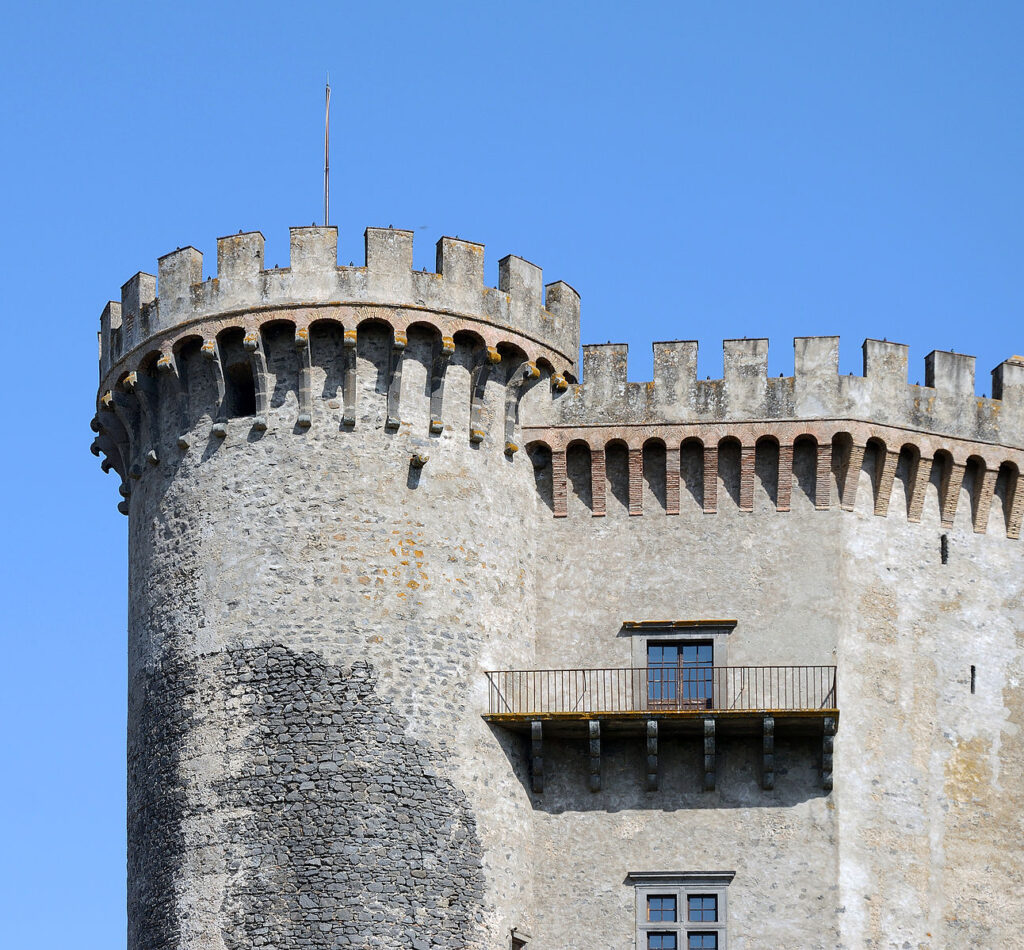
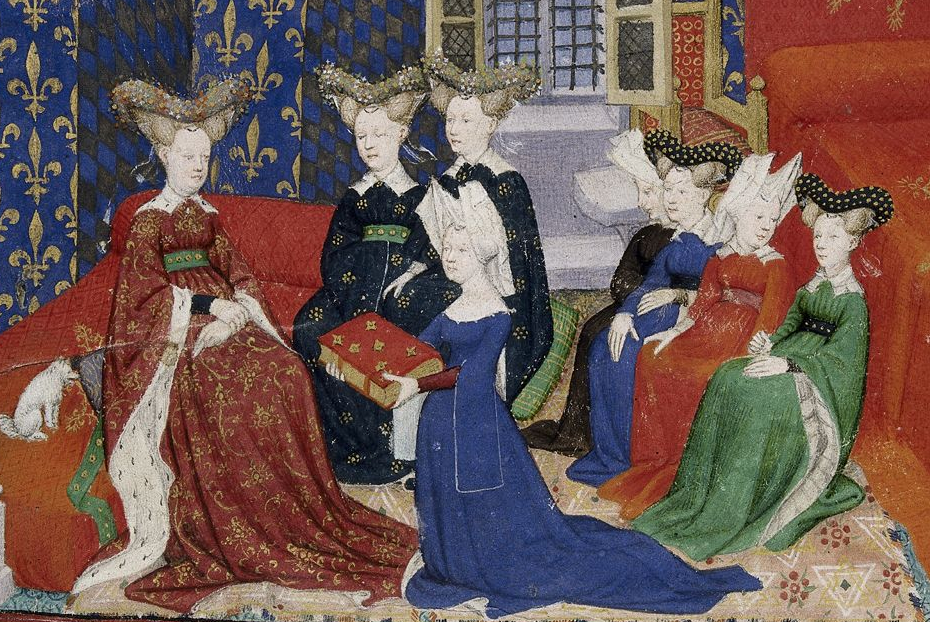

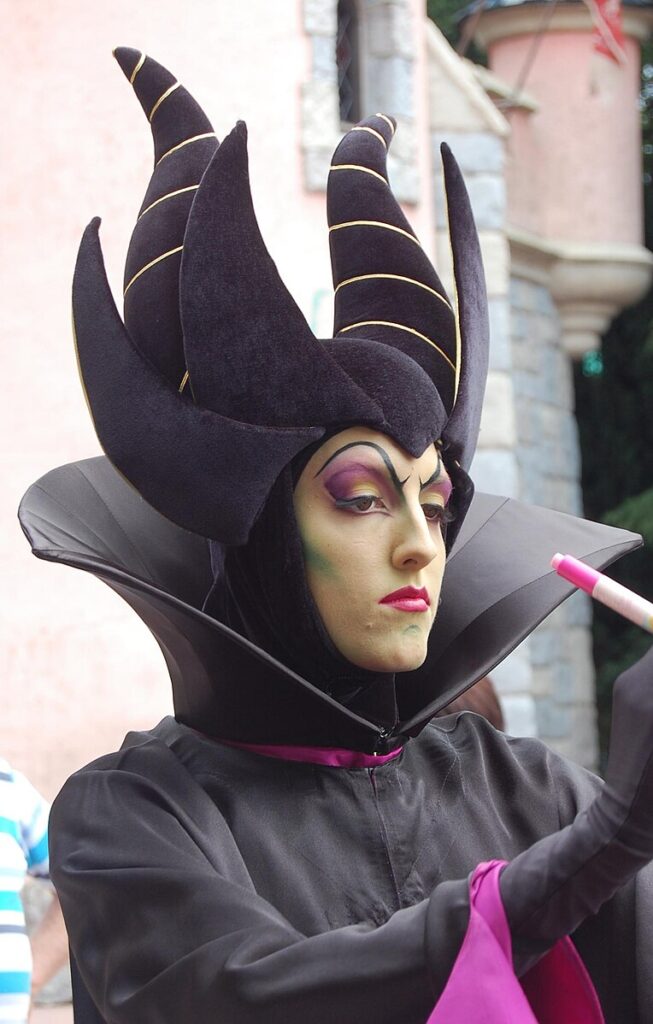
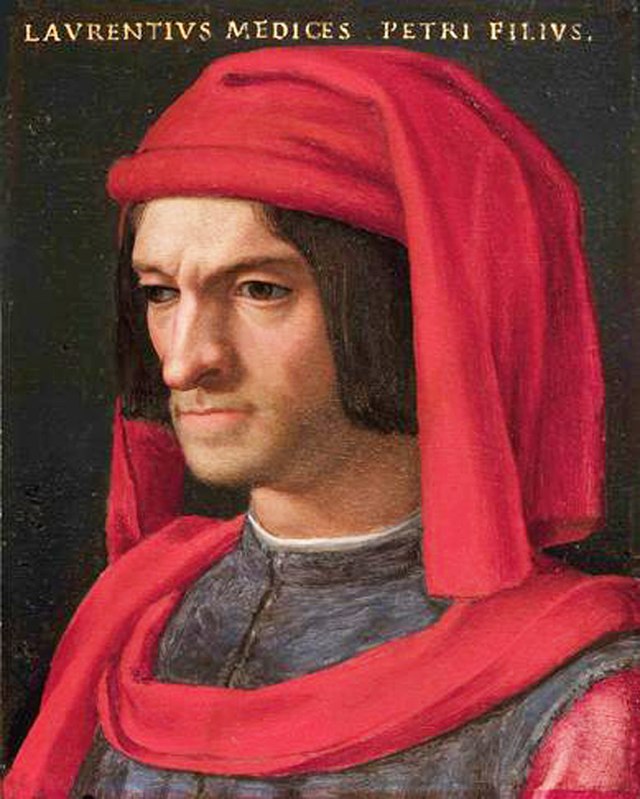
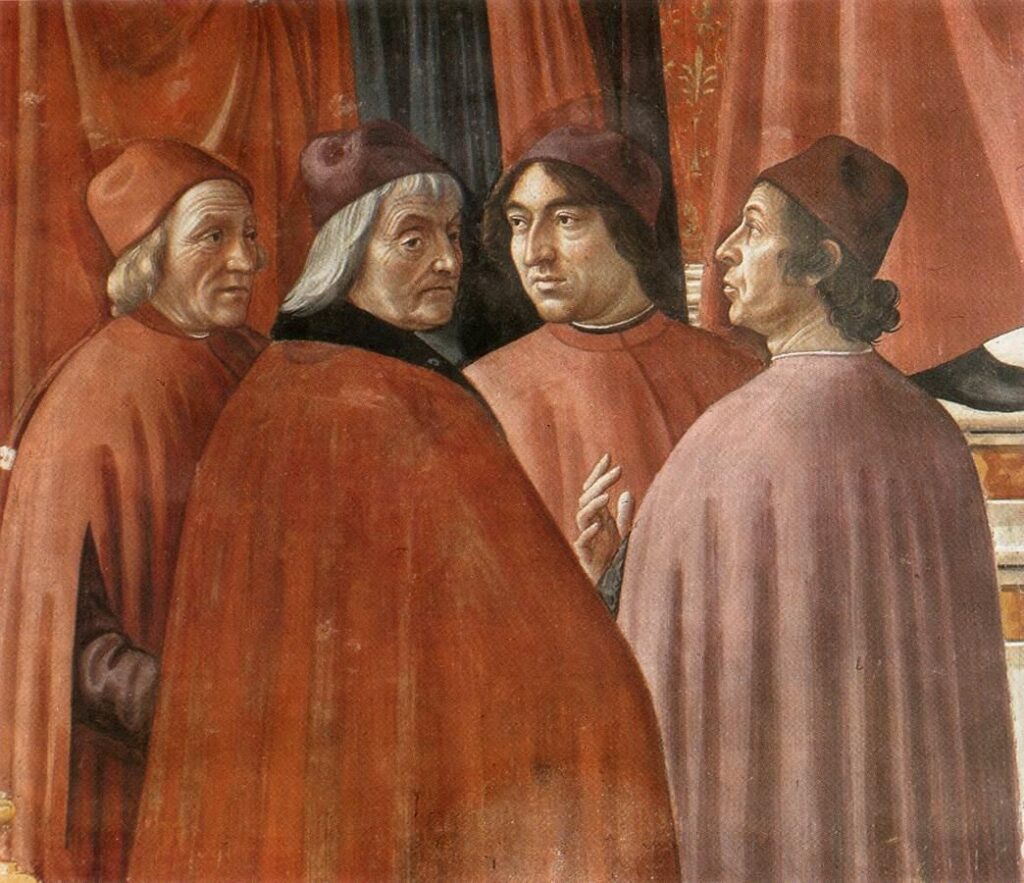
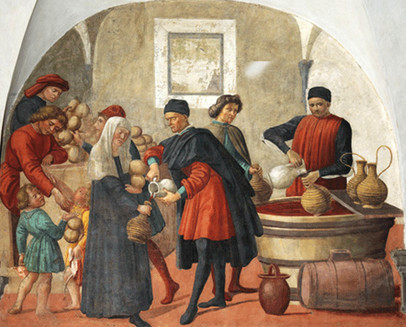
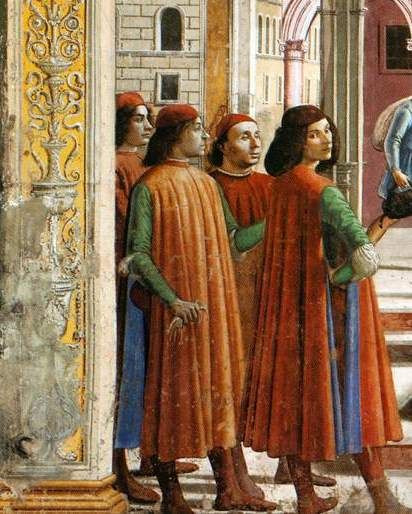
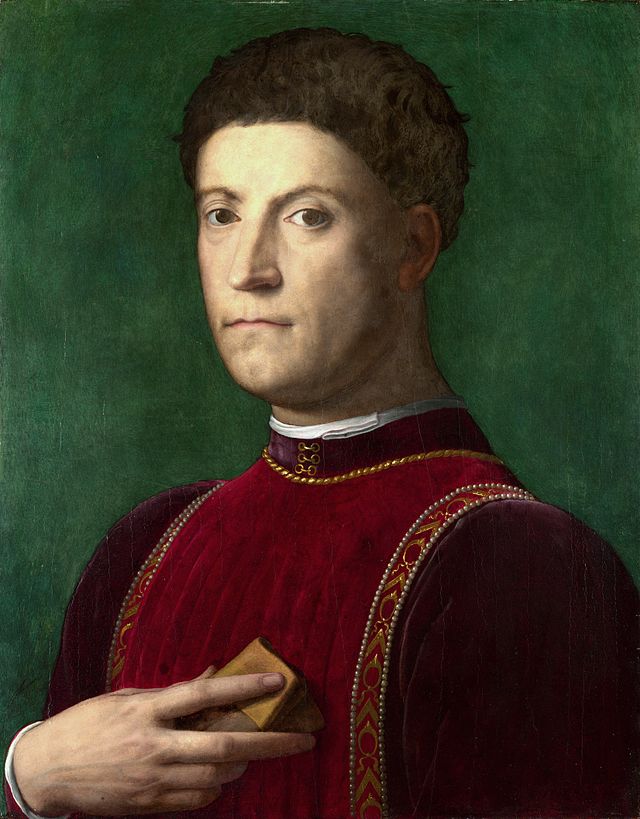

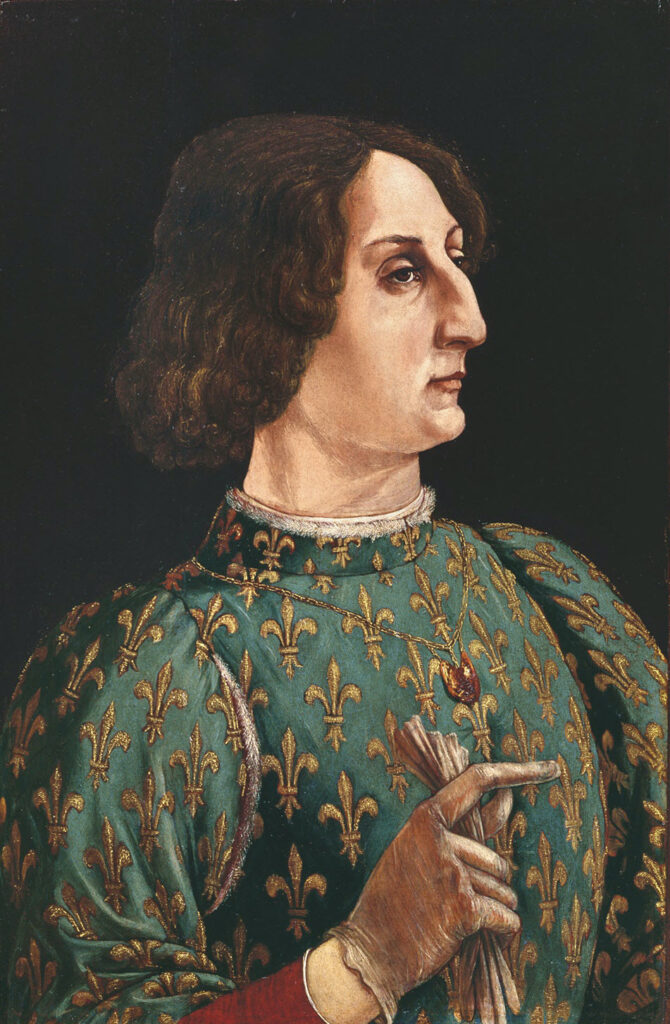
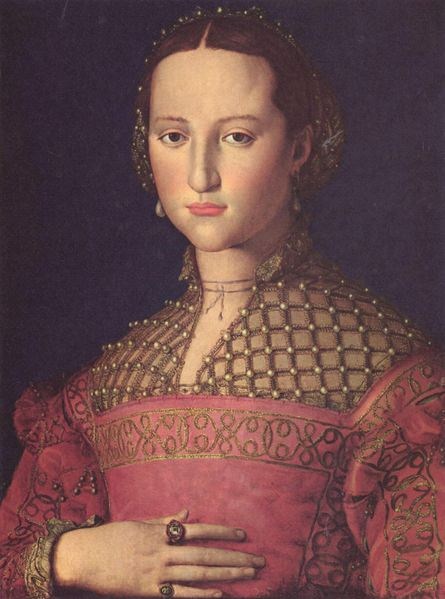
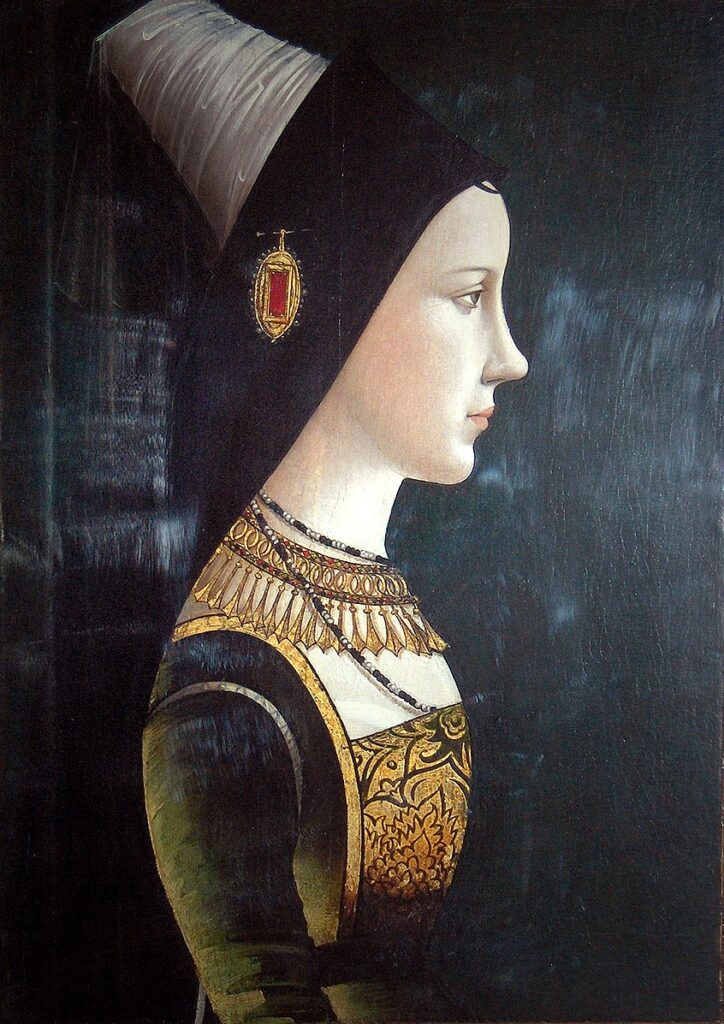
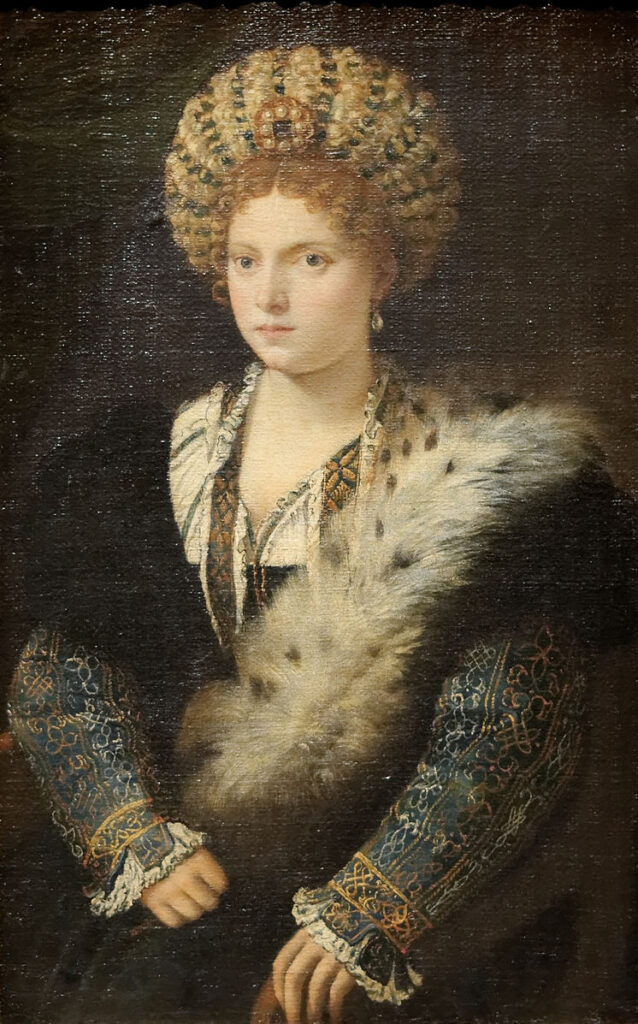

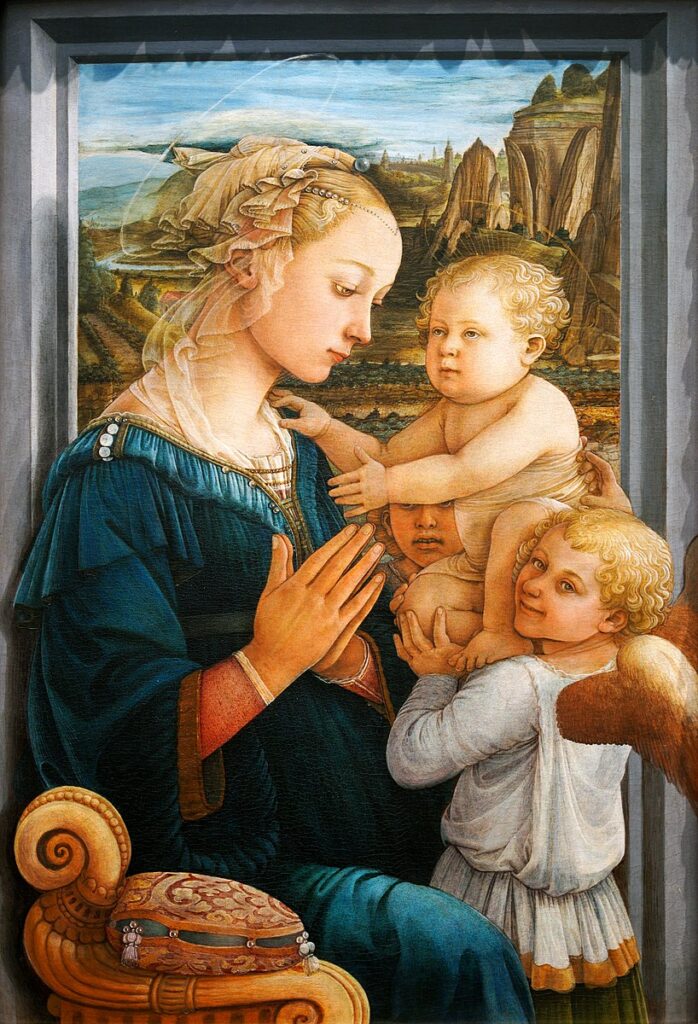
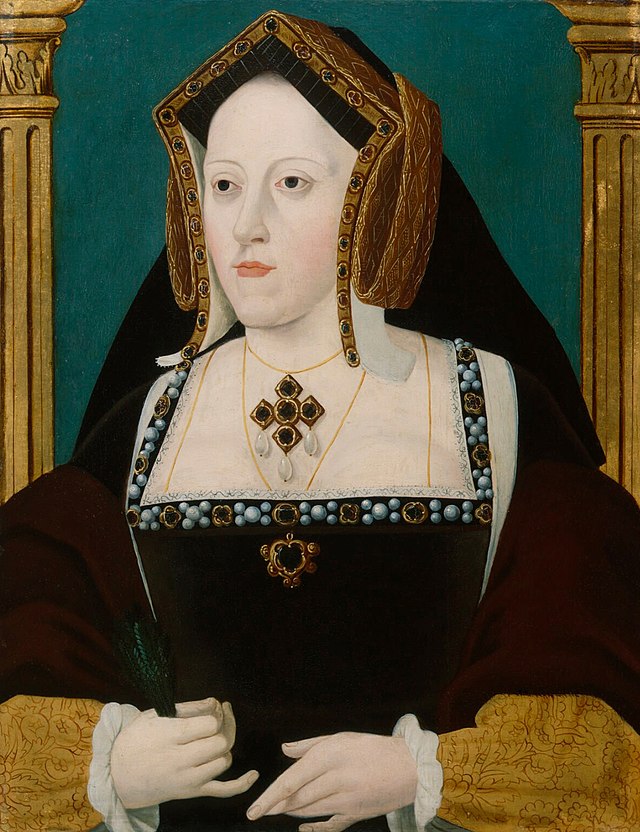

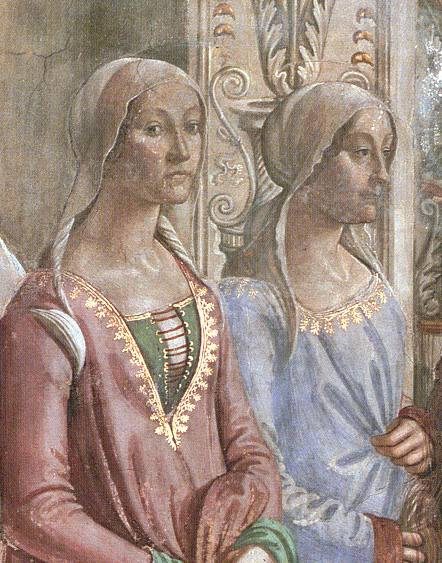
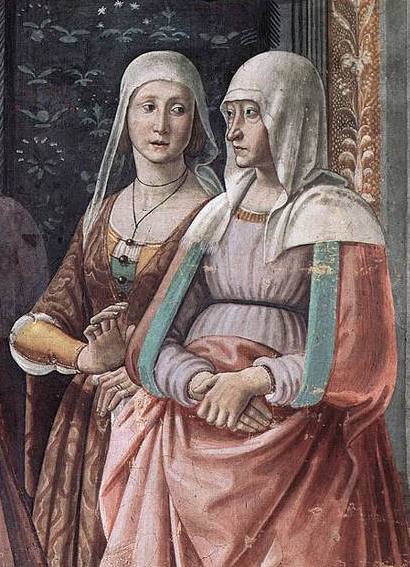
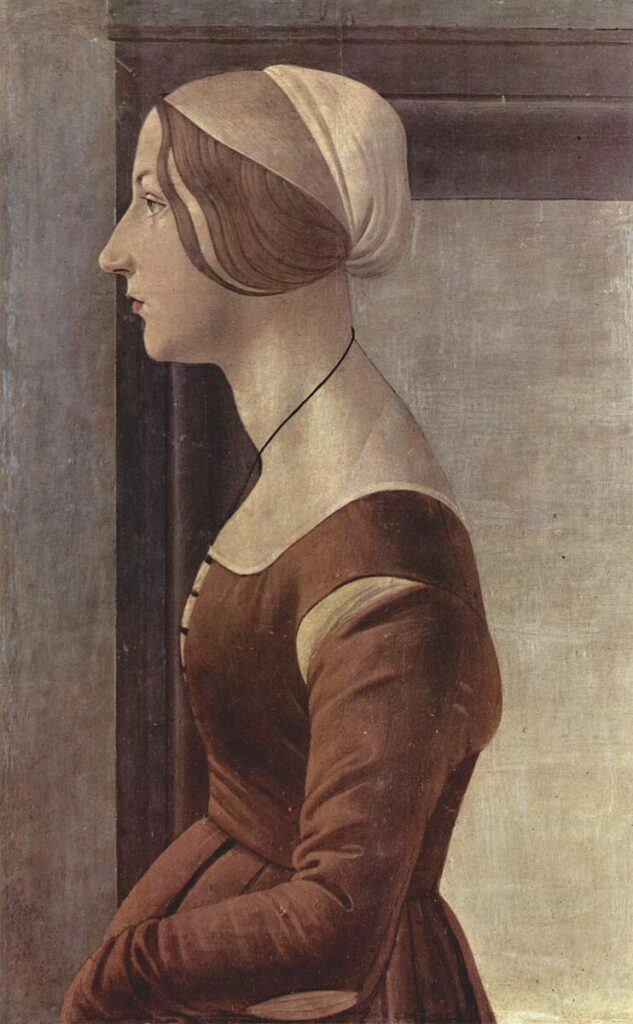
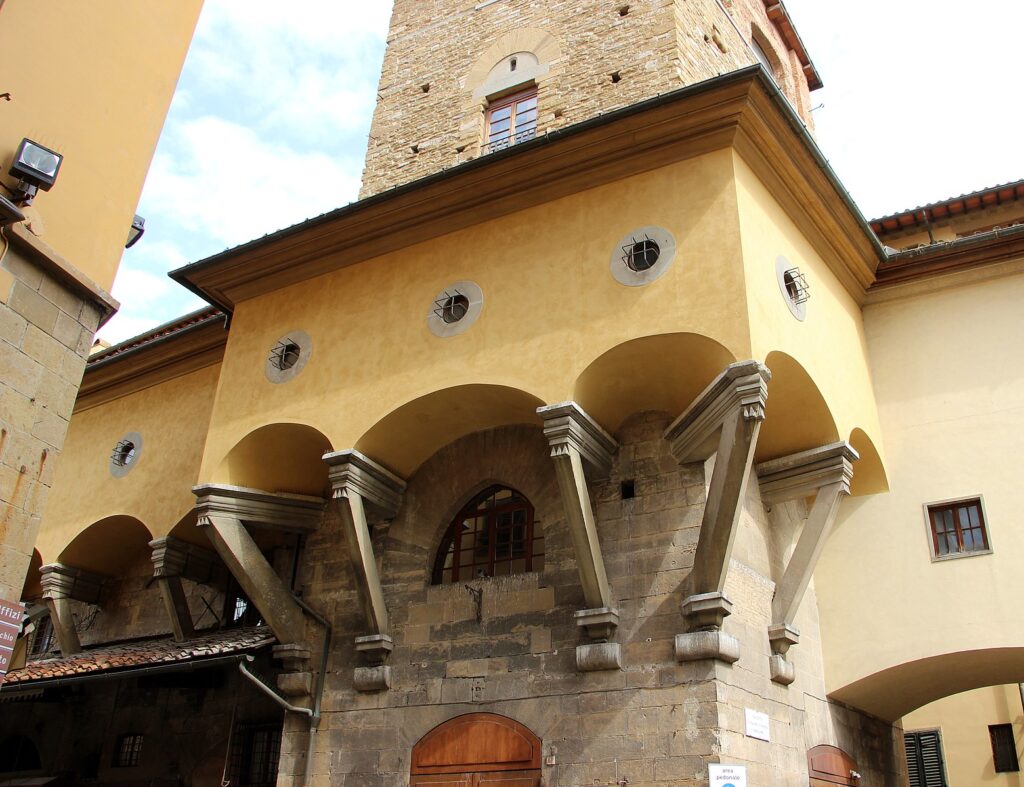
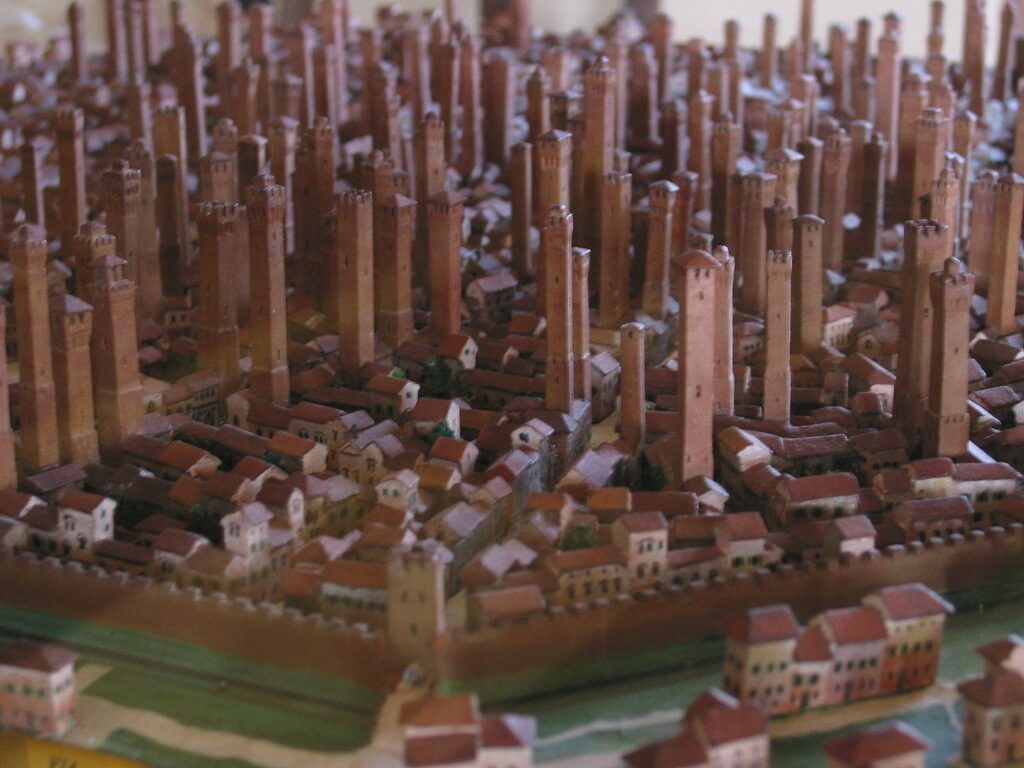
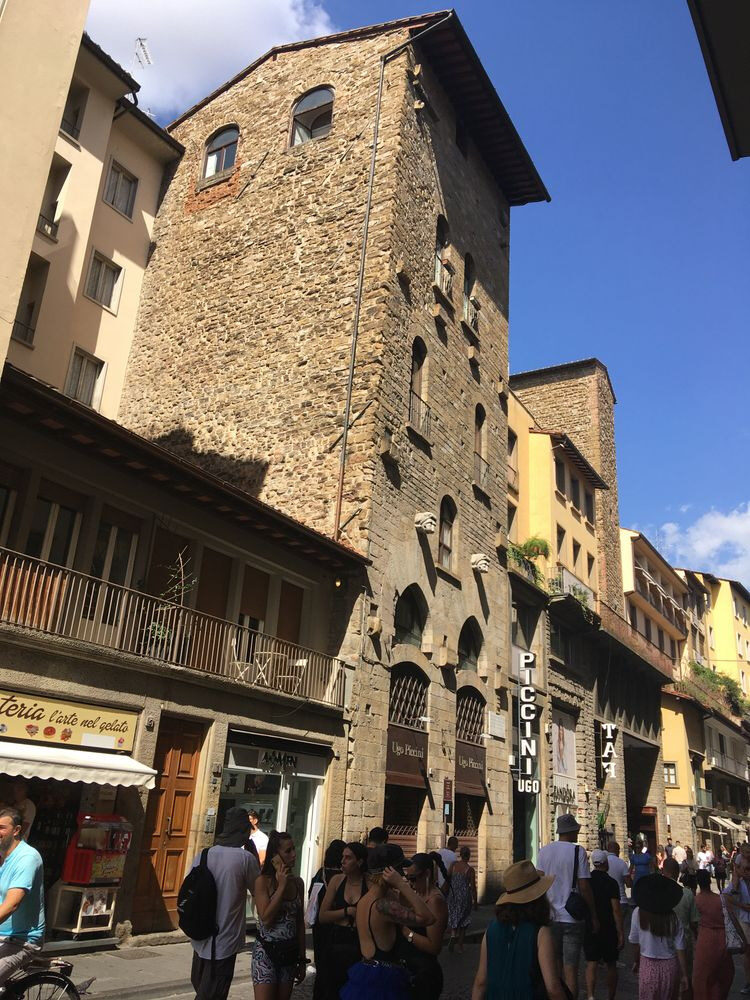

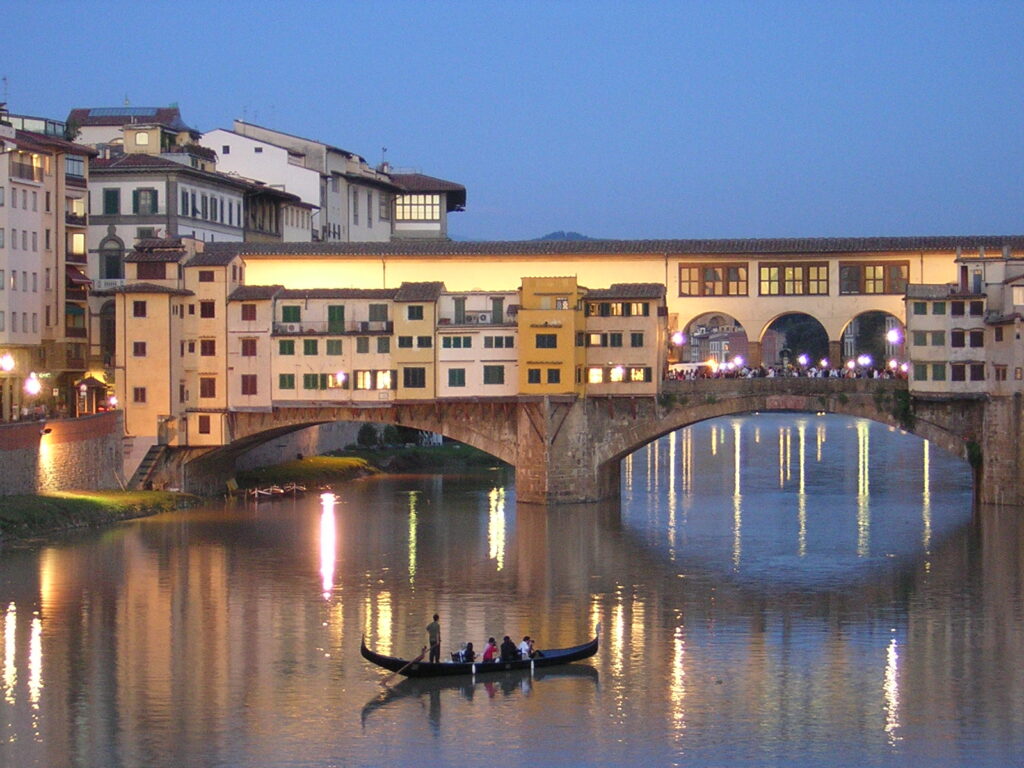
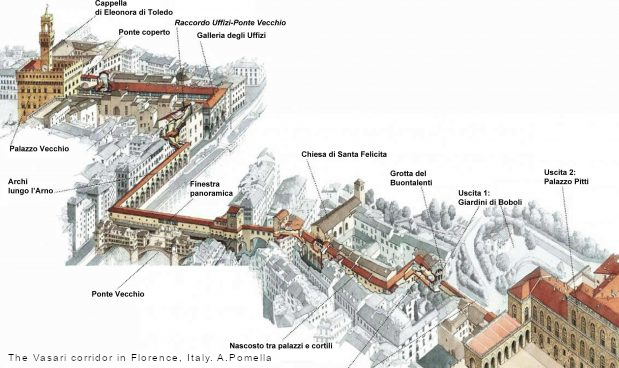
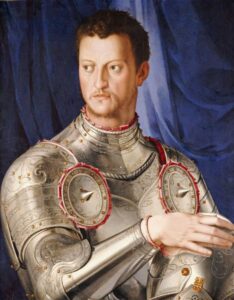
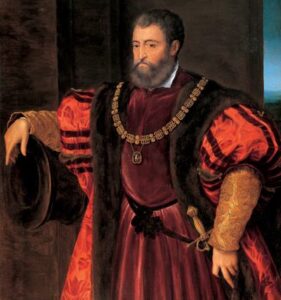
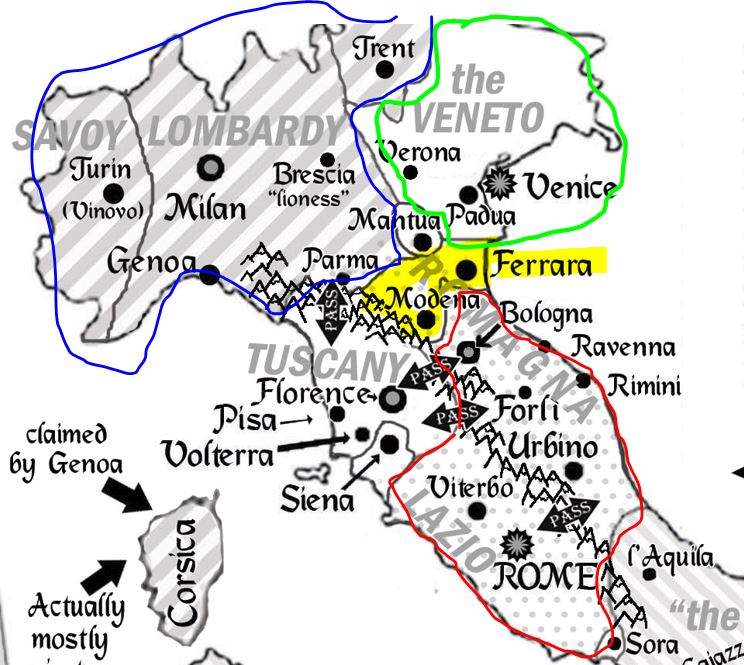

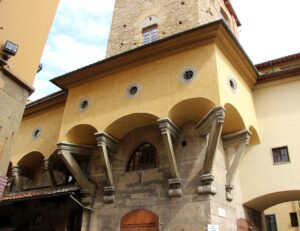
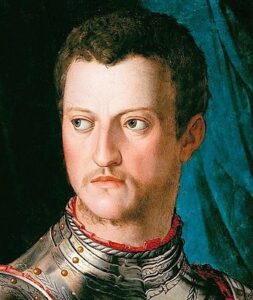
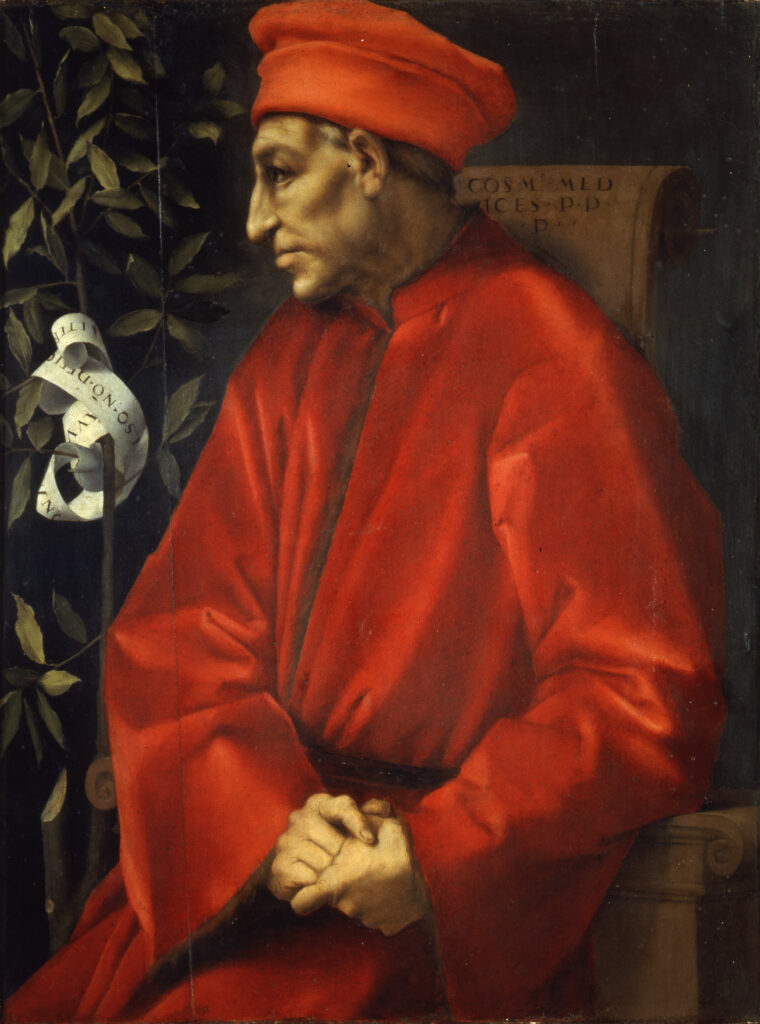
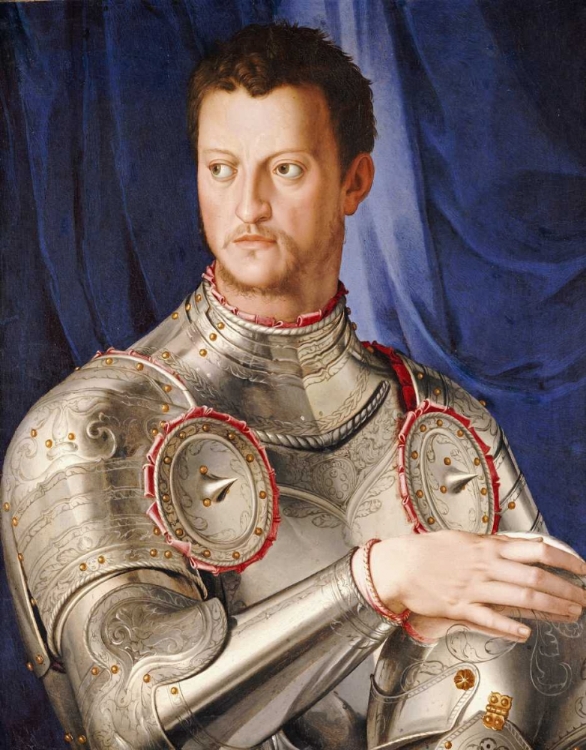
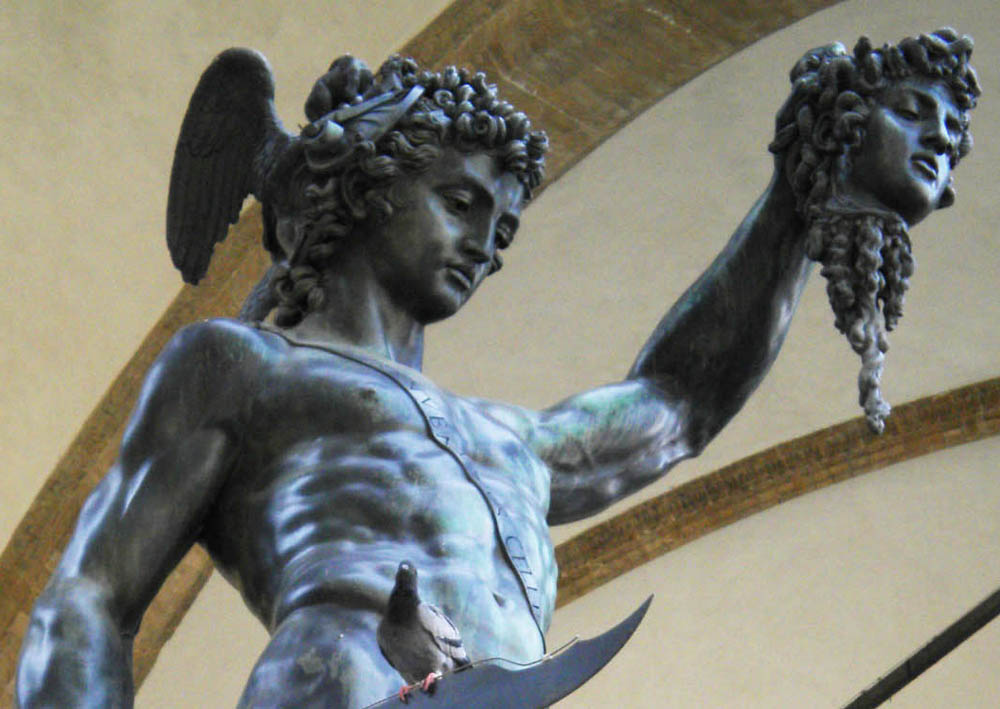
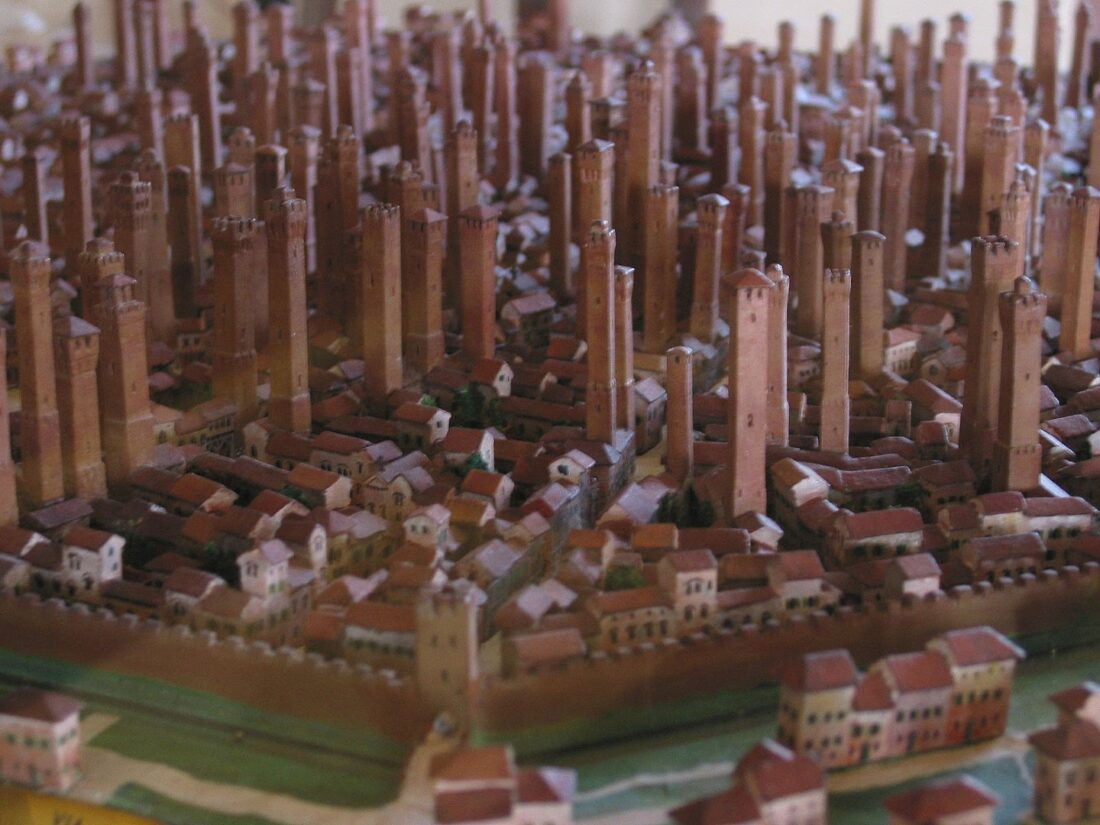
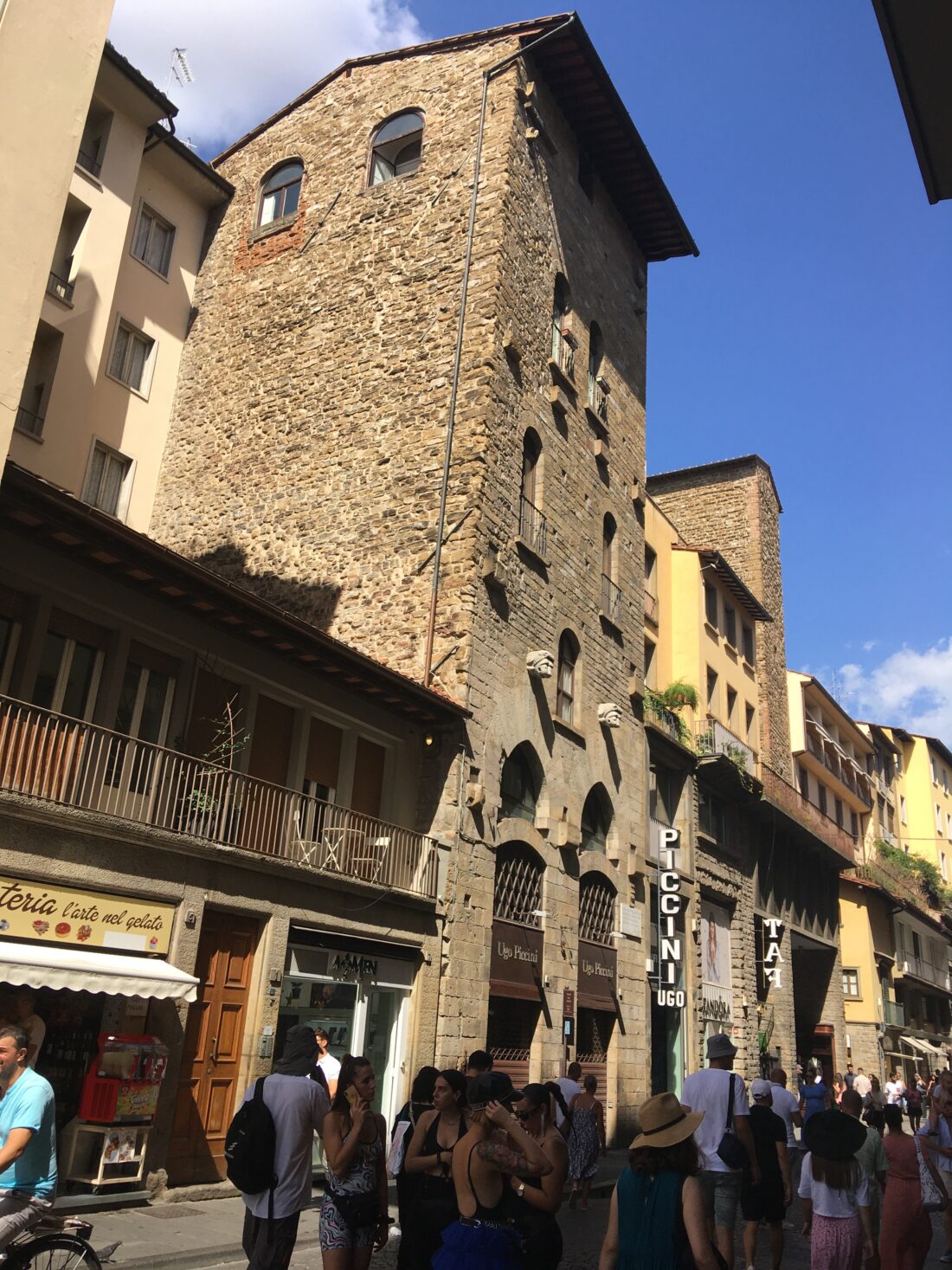
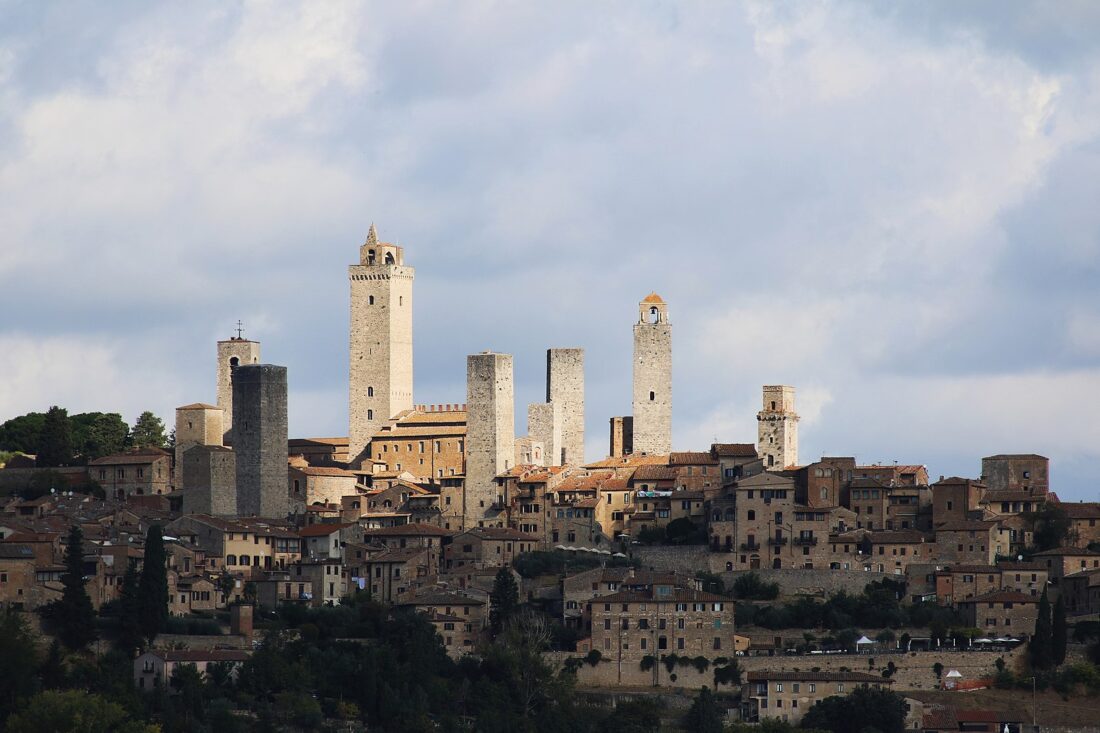
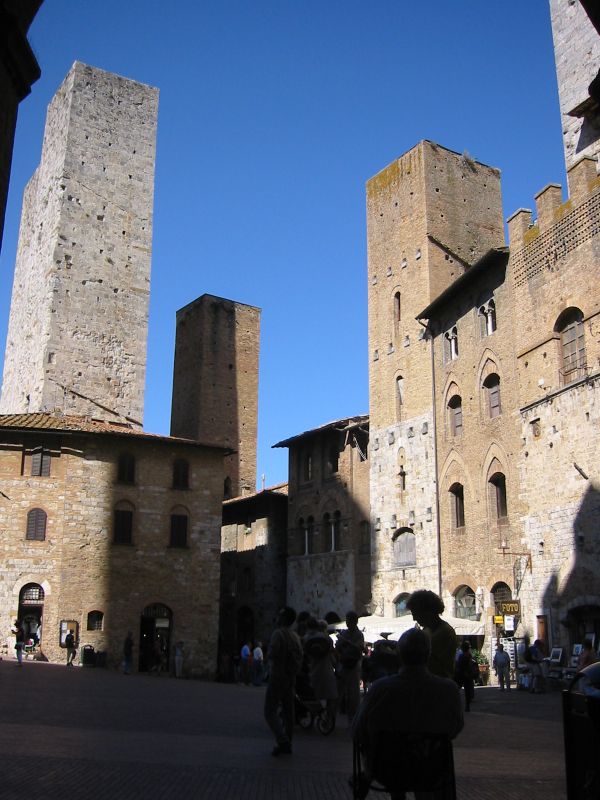
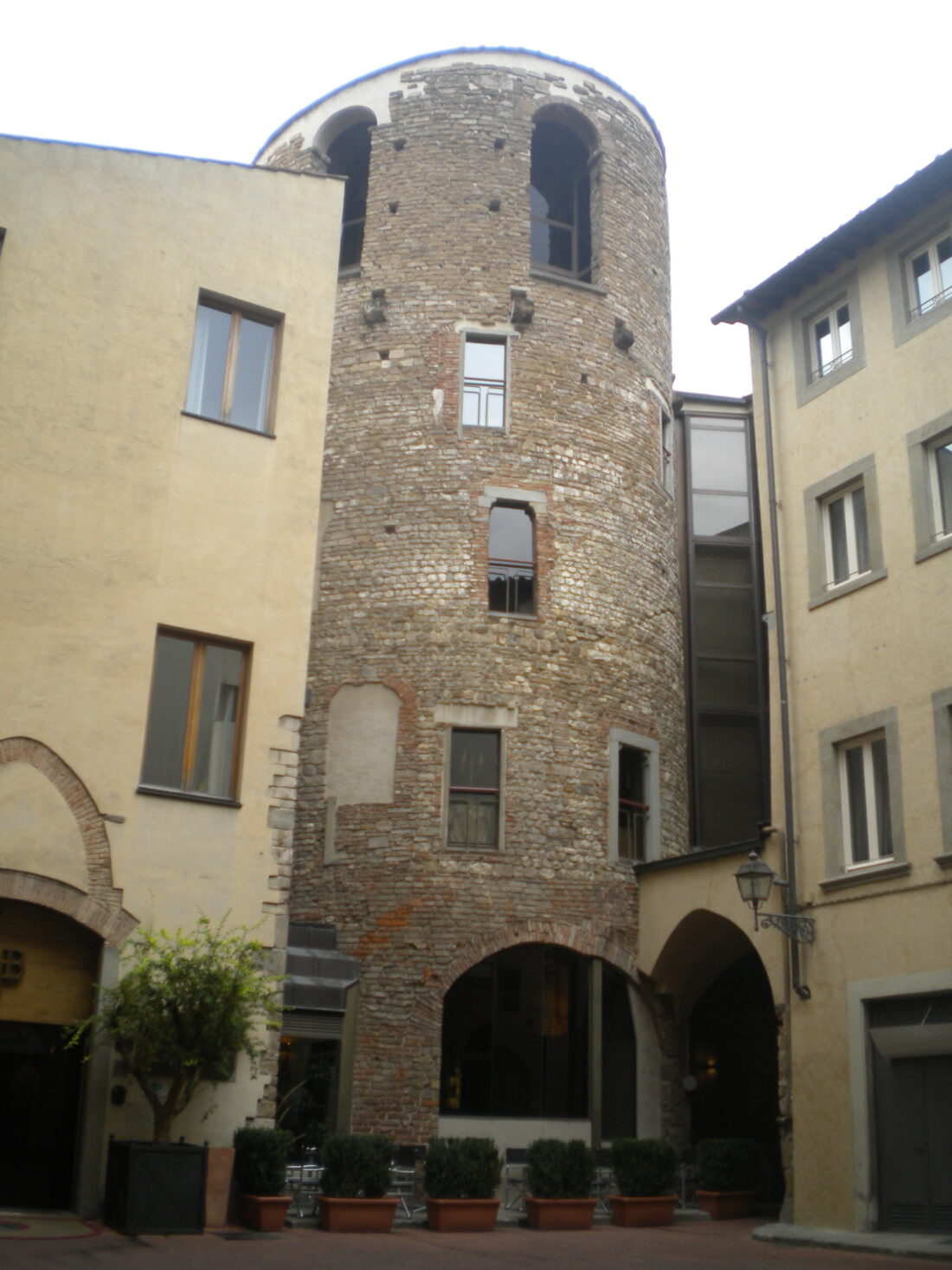
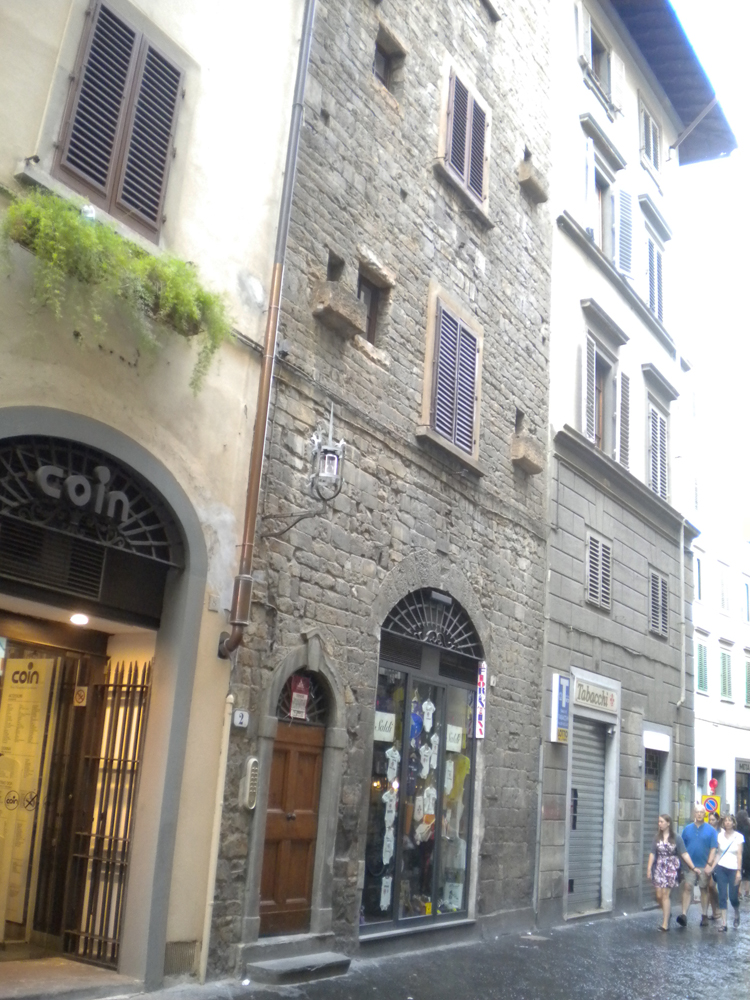
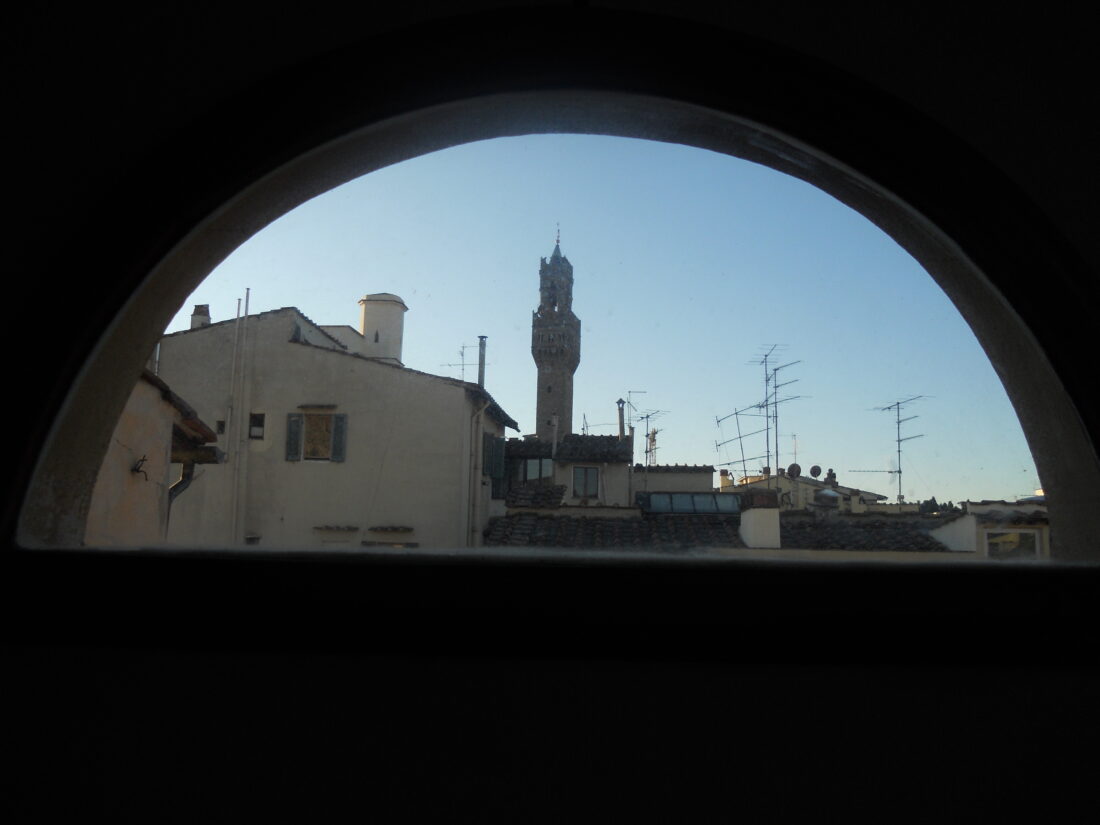
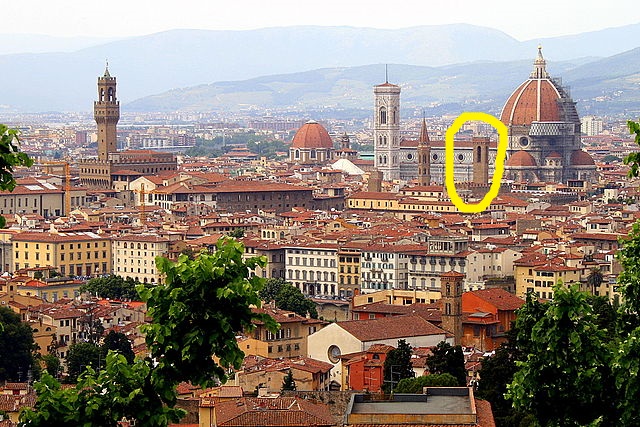
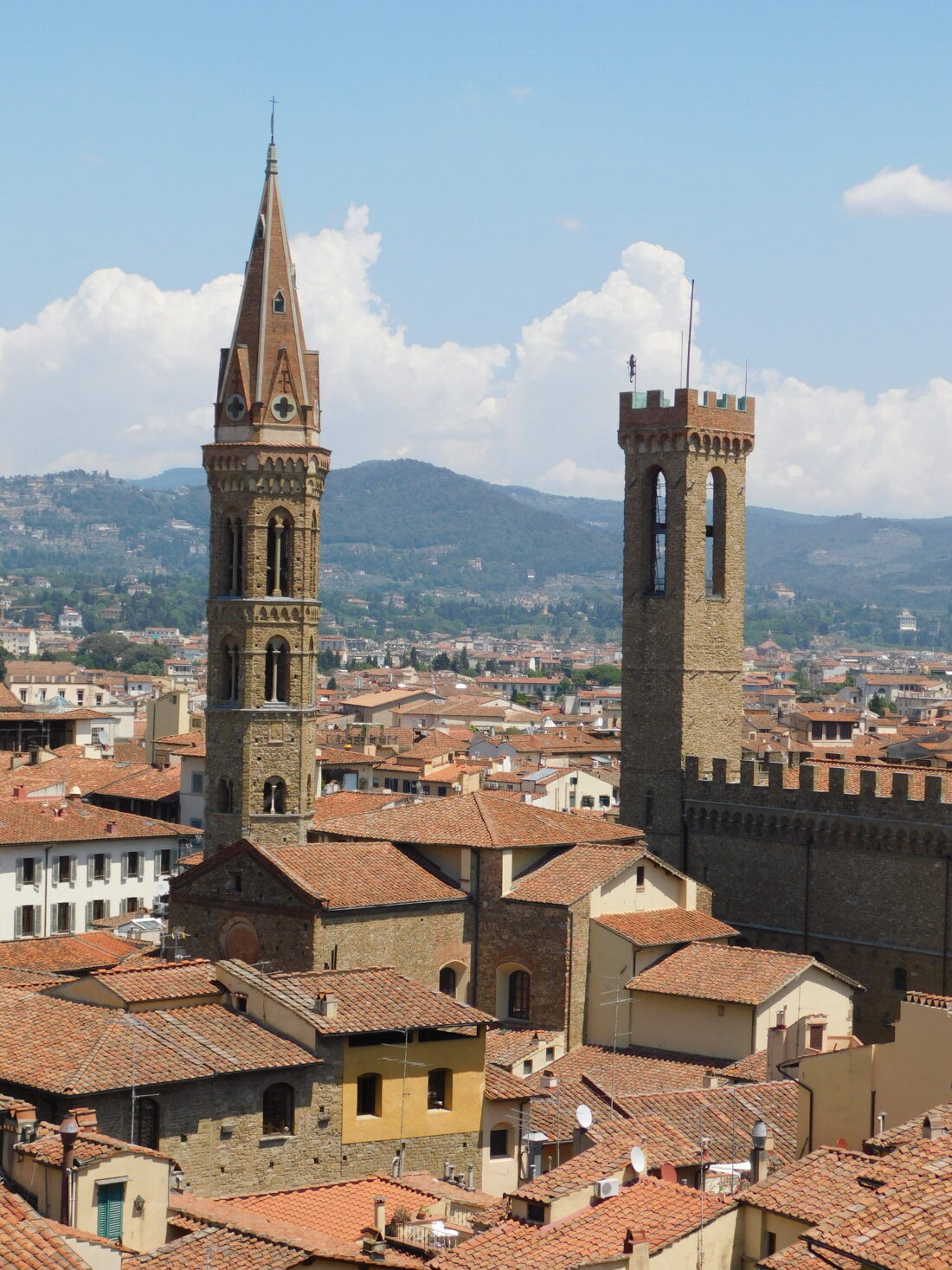
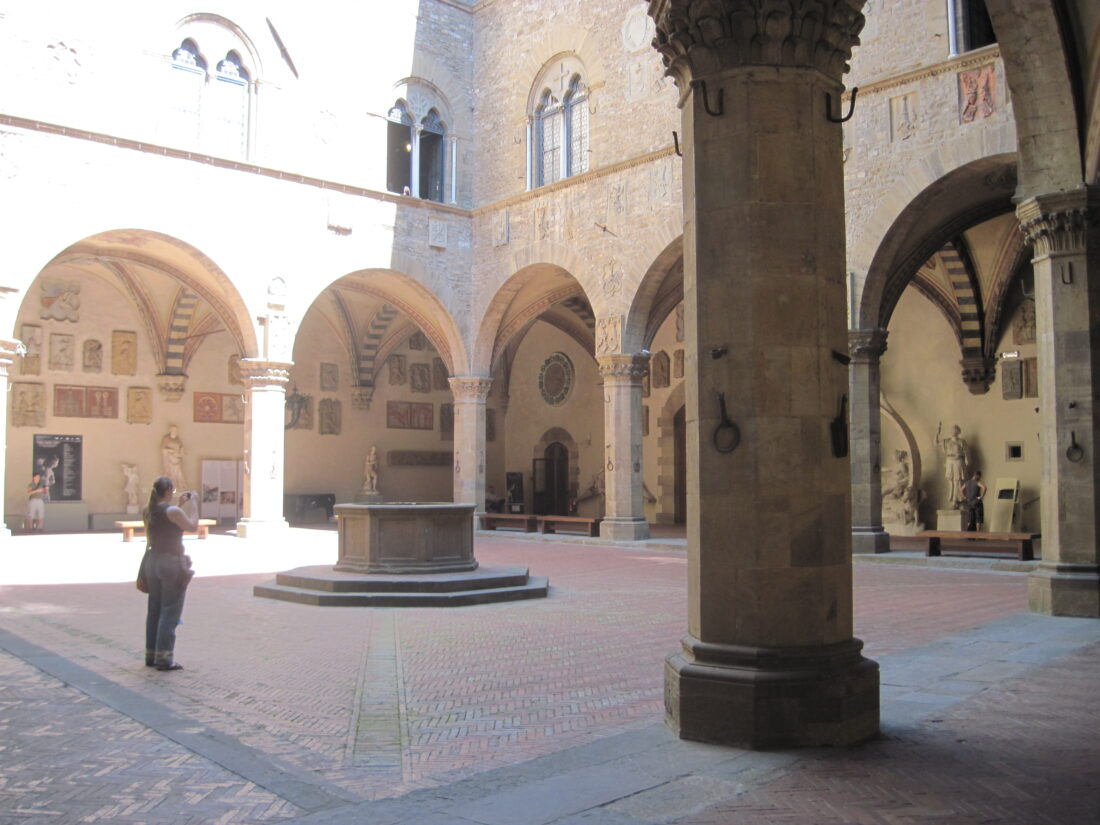
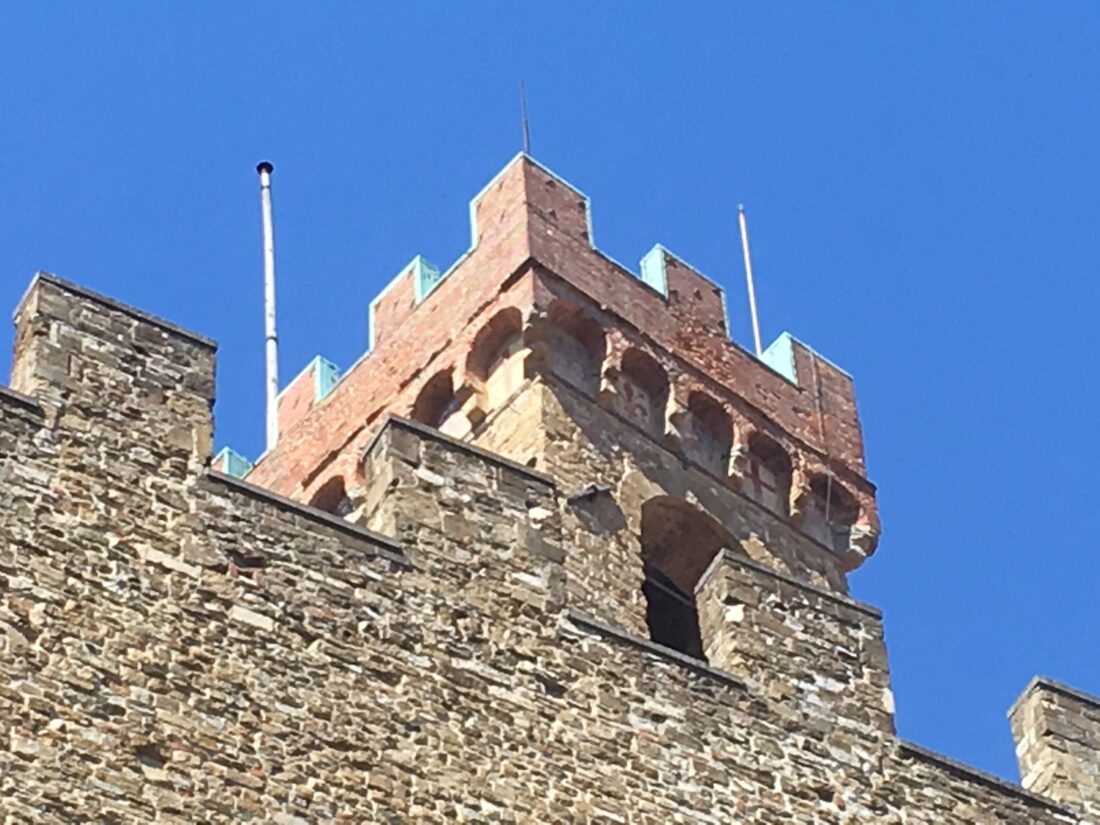
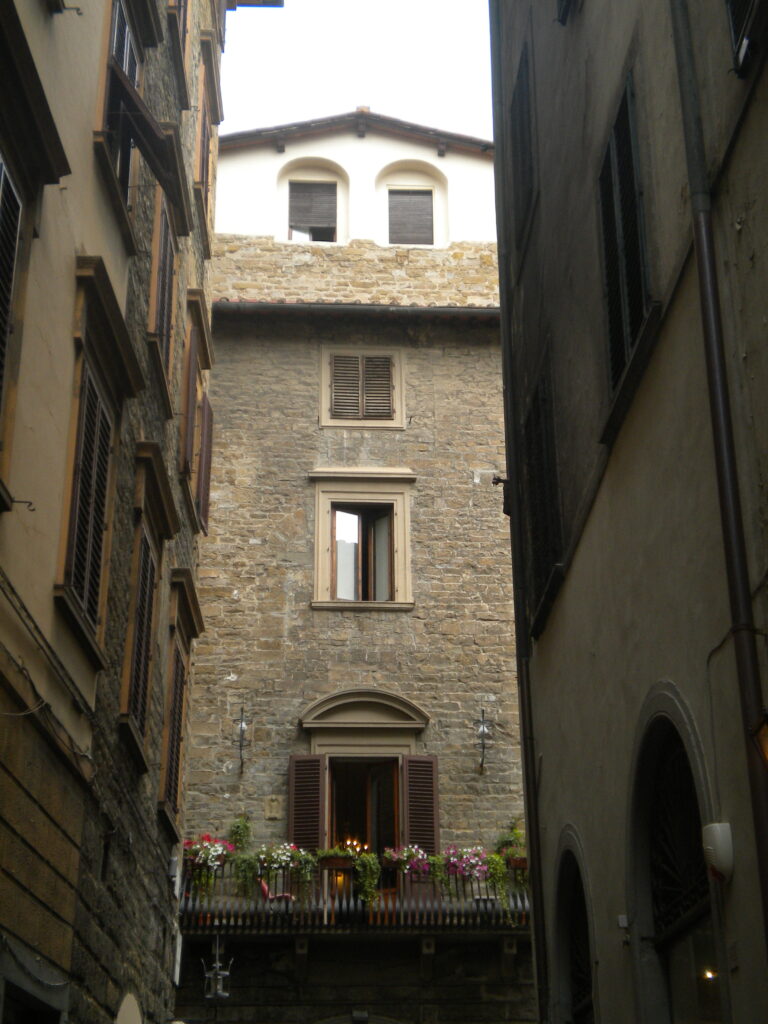
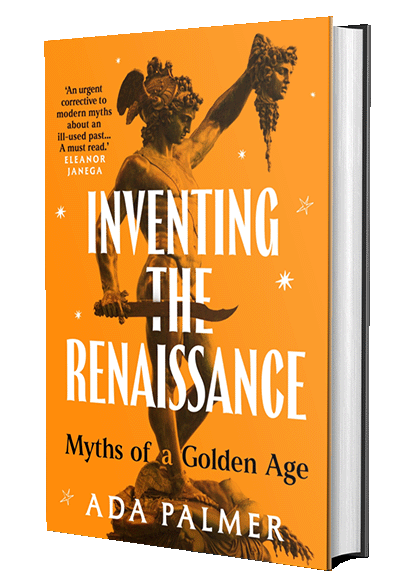
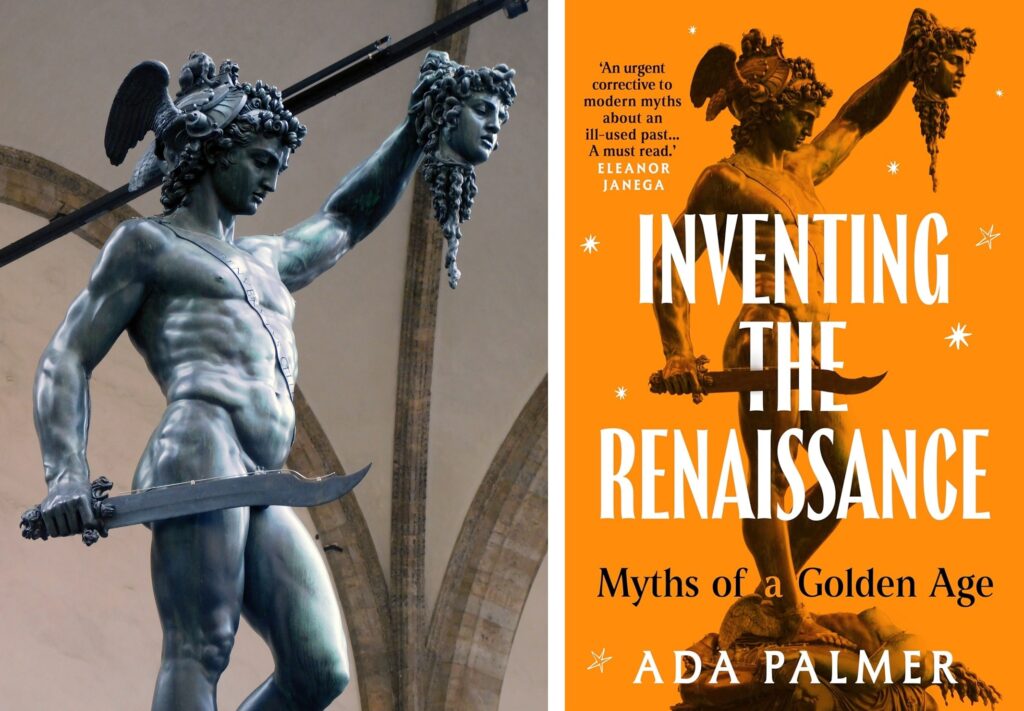
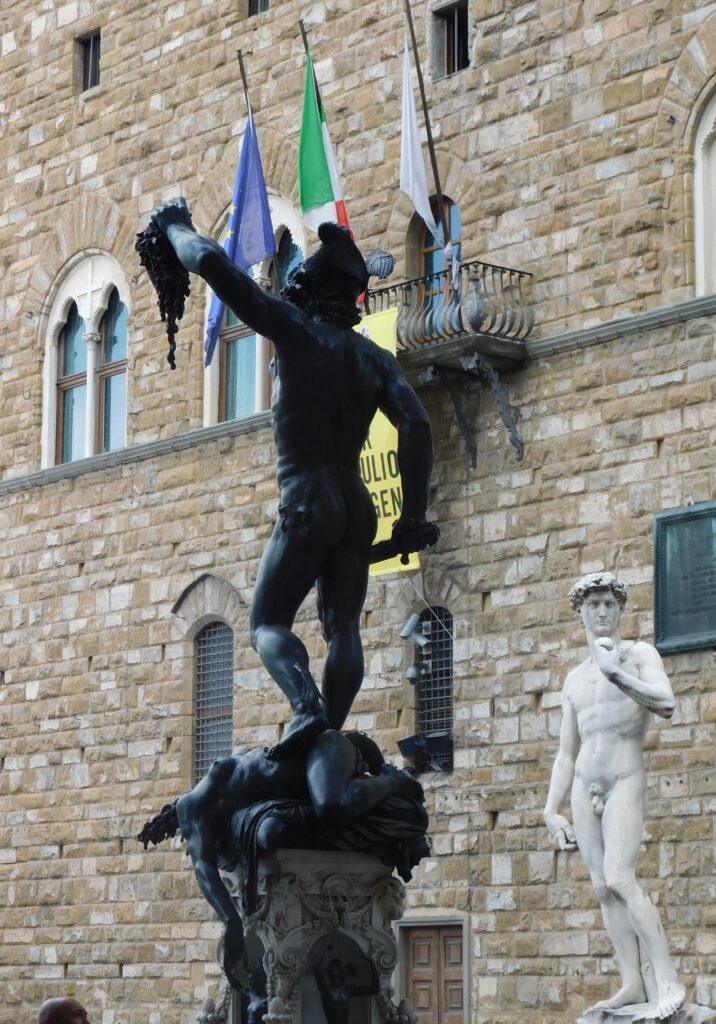
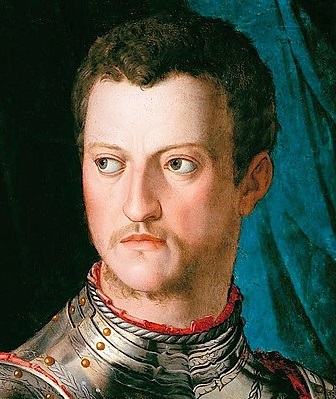
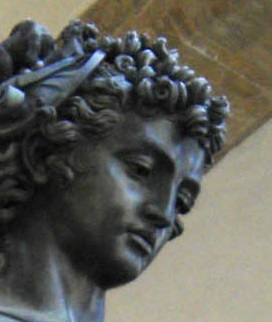
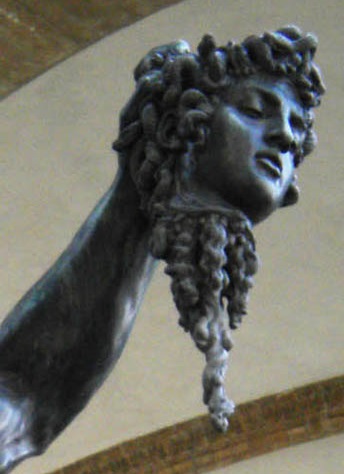
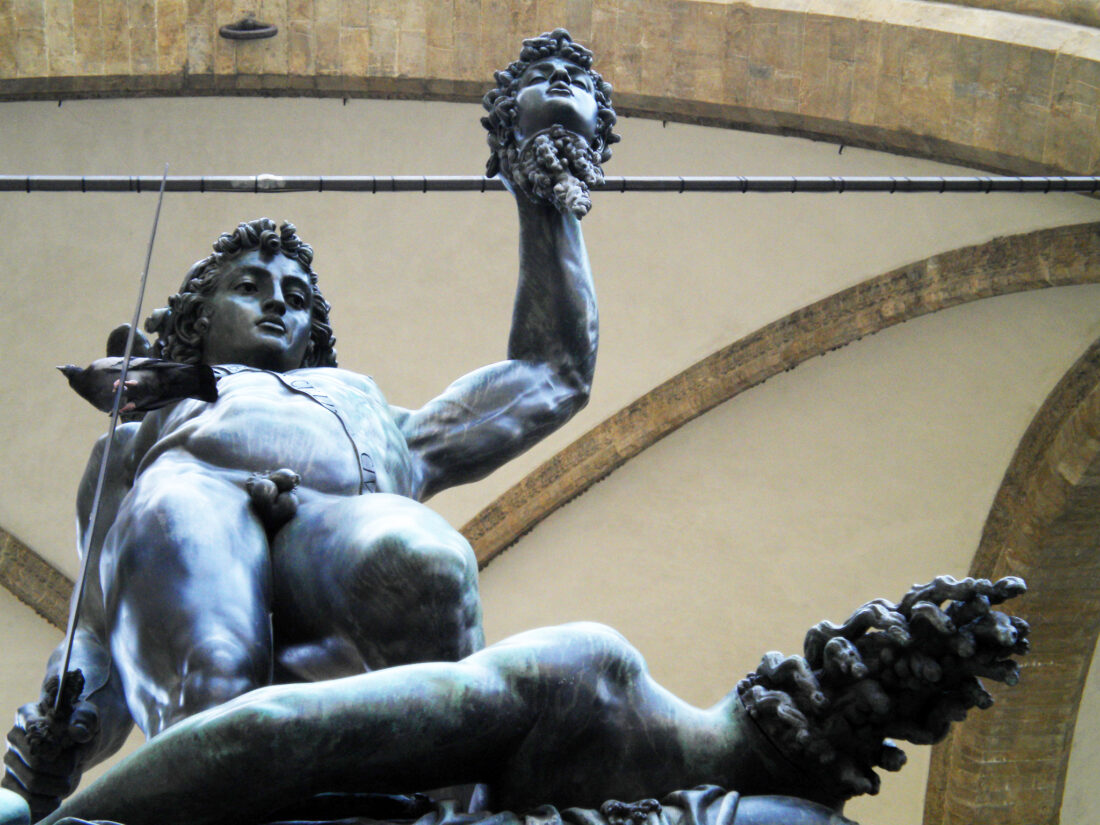
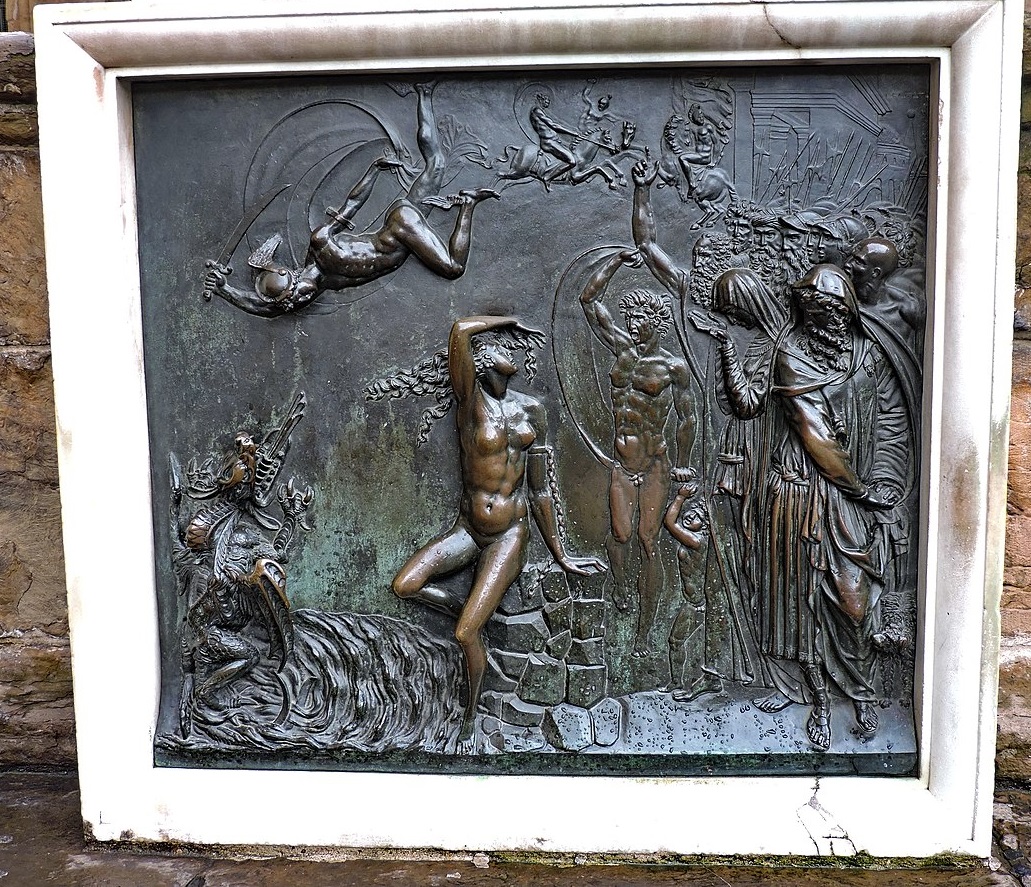
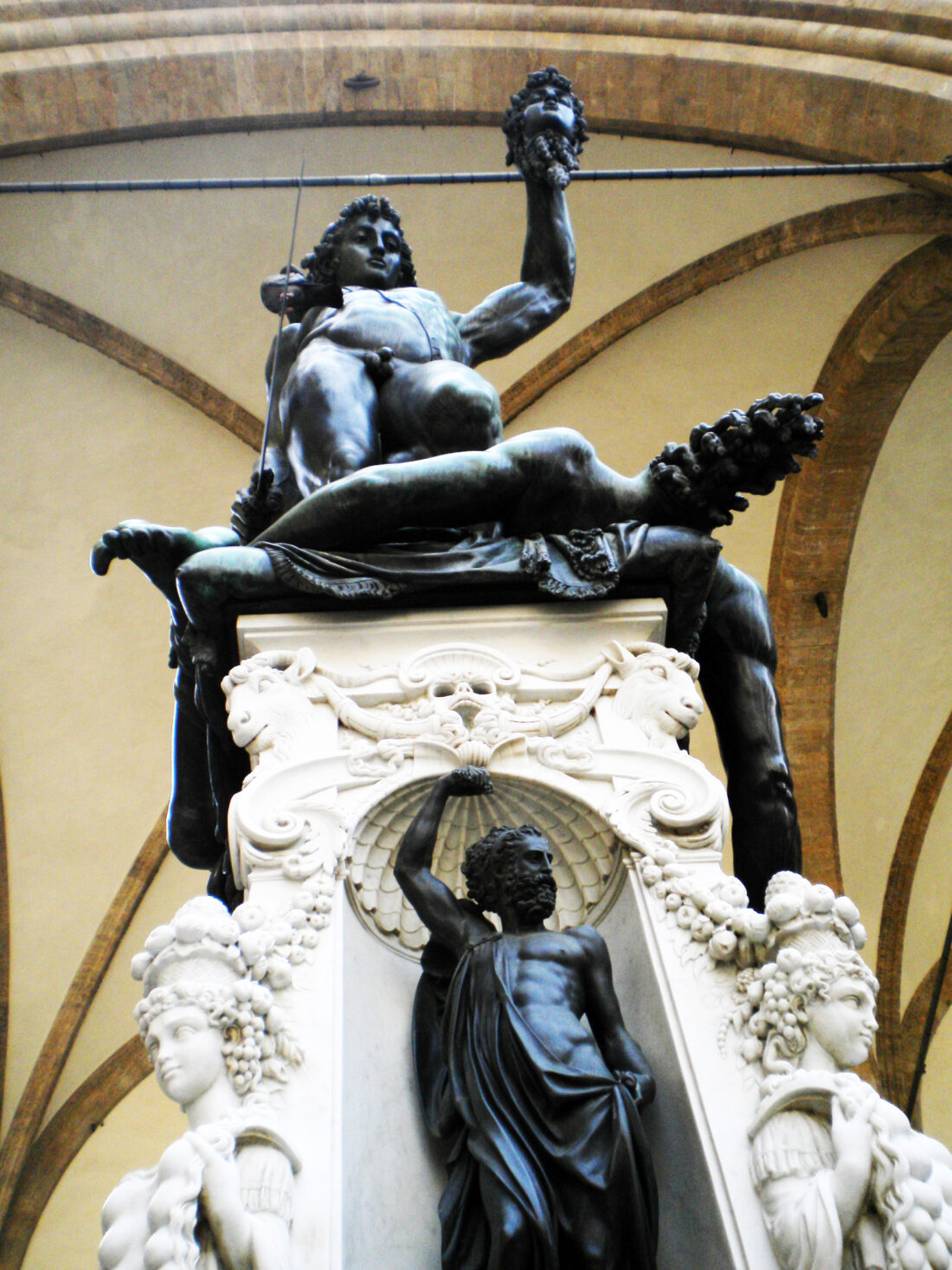
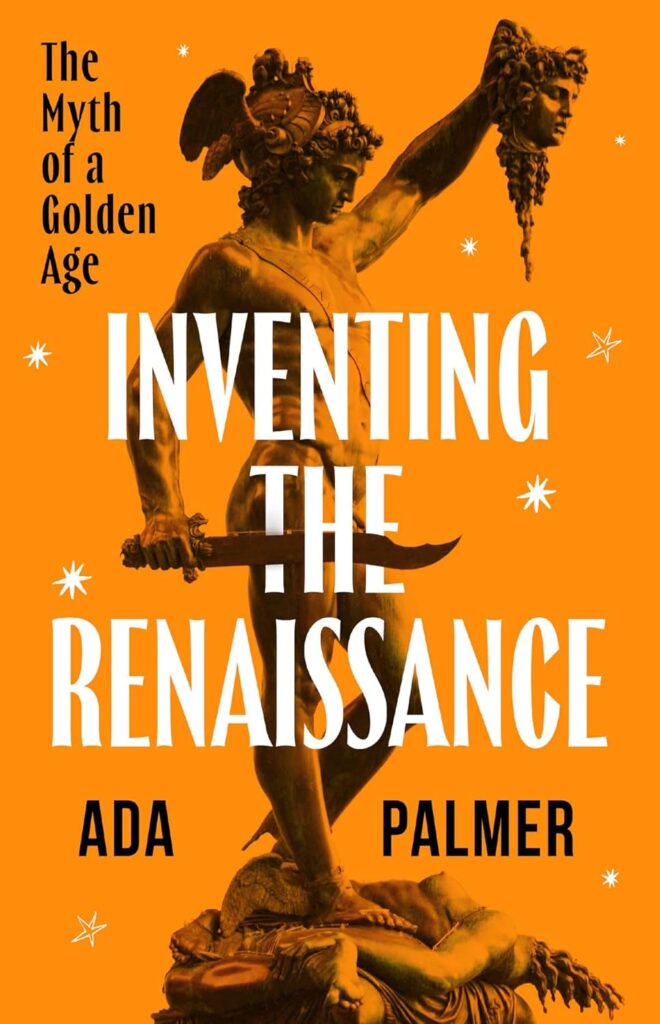
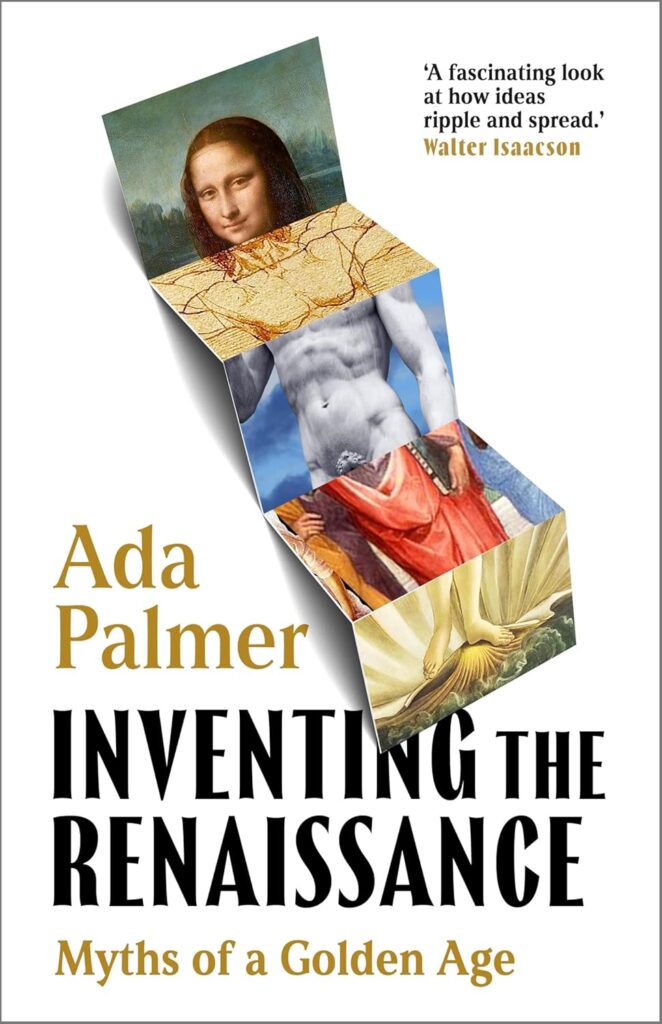
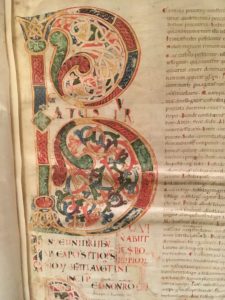
 Teaching Machiavelli through his letters is a separate thing from being an historian accessing Machiavelli through his letters. One of the reasons that I love teaching Machiavelli through his letters is that you get a very different view of the person from letters. You get unimportant details. You get the things that the person cared about that week, as opposed to the things that the person wanted to be discussed by many people in the context of that person’s name for a long time. You do get the serious political thought, but you get it mixed with “Where is my salary?” “Hello my friend,” “Here’s the party I was at,” “I have a cold,” all of these very human elements that don’t come to us when we just read a thesis.
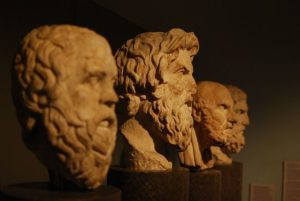 When I’m trying to unpack not only Machiavelli but history in general to my students, it’s very easy for the history to seem like a sequence of marble busts on pedestals who handed us great books. It’s much harder to get at the fact that those people are also people who are like us: people who messed up, people who ran out of money, people who had anxieties, people who failed in things that they undertook. People who had friends, people who were nervous without their friends, and lonely. And that isn’t a version of history that we get shown very often. We get shown heroes, we get shown villains, and we get shown geniuses, as if there isn’t a person present as well. Machiavelli is a very valuable example, because we have such a great corpus of letters, but he’s also such a name. If you want to make a shortlist of people who are a marble bust on a pedestal in the way that they’re presented as we talk about the history of thought, Plato, Aristotle, Socrates, Cicero, Machiavelli, are major major figures in that way. So the letters humanize them and make them real.
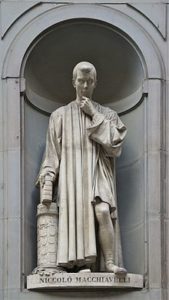 It was very interesting to me to see that battle between thinking of the figure as human, in which the question “Did he mess up?” is a valid question, as opposed to thinking of the person as someone who could never mess up. And a lot of the ways we approach historical figures, whether it’s Machiavelli, or Aristotle, or anyone, involve the idea that all of their works are fully intended, that they’re somehow in an a-temporal vacuum, that we should look at them all in sequence, that no one is ever going to change his mind about a thing unless the person themselves made changing their mind about a thing be a big deal. We create this idea of these geniuses where everything they wrote even from early on is exactly what they meant, which then all gets incorporated into material.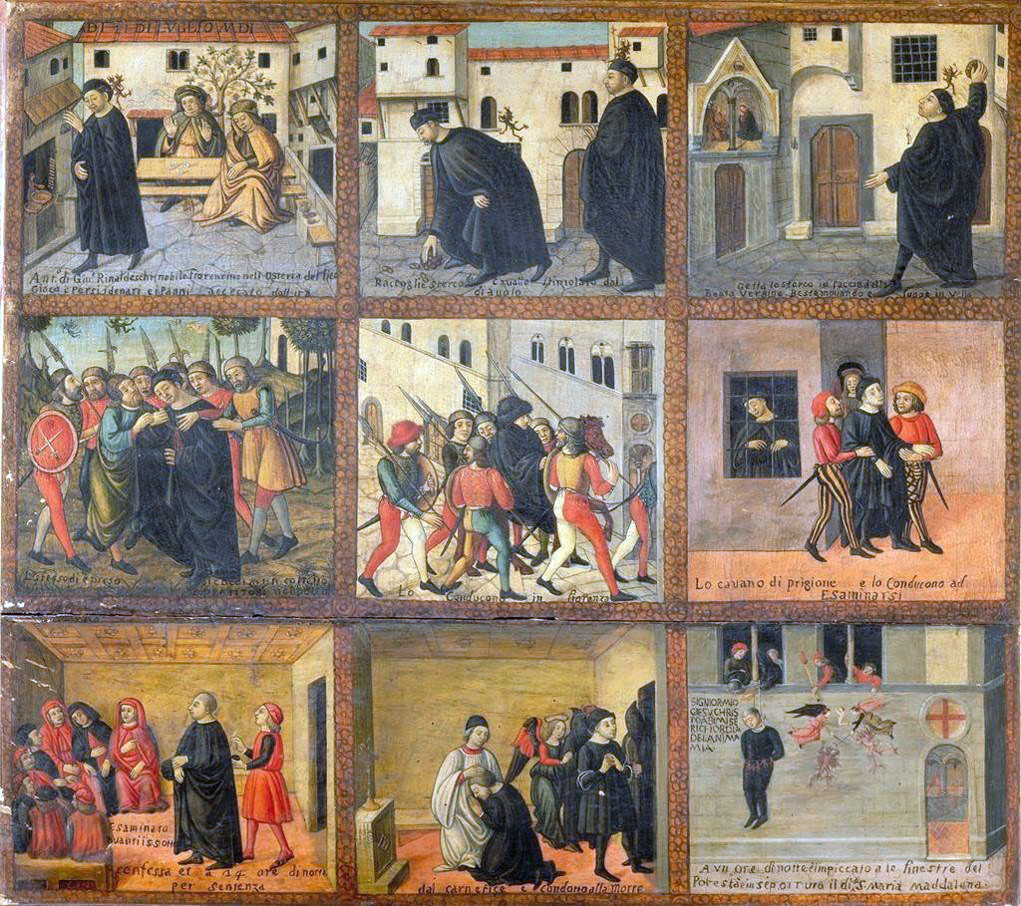
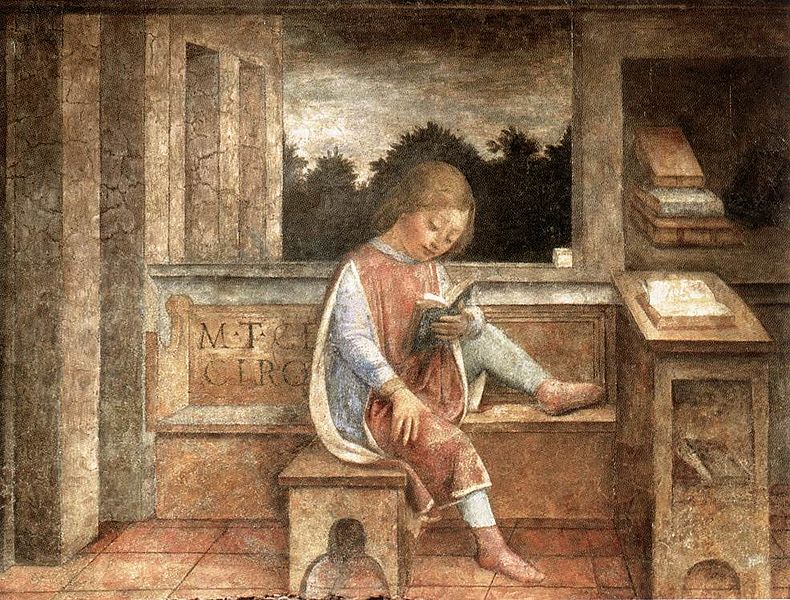
 Yesterday I found myself thinking about the history of the book in this light, and comparing it to some comments I heard a scientist make on a panel about space elevators. We all want a space elevator–then space exploration will become much, much less expensive, everyone can afford satellites, space-dependent technologies will become cheap, and we can have a Moon Base, and a Mars program, and all the space stations we want, and all our kids can have field trips to space (slight exaggeration). To have a space elevator, we need incredibly strong cables, probably produced using nanofibers. Developing nanofibers is expensive. What the engineer pointed out is that he has high hopes for nanofiber devlopment, because nanofibers have the ideal demand pattern for a new technology. A new technology like this has the problem that, even if there are giant economic benefits to it later on, the people who pay for its development need a short-term return on that, which is difficult in the new baby stages of a technology when it’s at its most expensive. (Some of you may remember the West Wing episode where they debate the price of a cancer medication, arguing that producing each pill costs 5 cents so it’s unfair to charge more, to which the rebuttal is that the second pill cost 5 cents, but the first pill cost $300 million in research.) Once nanofiber production becomes cheap, absolutely it will be profitable, but while it’s still in the stage of costing $300 million to produce a few yards of thread, that’s a problem, and can be enough to keep a technology from getting support. One of the ways we work around this as a society today is the university system, which (through a form of patronage) supports researchers and gives them liberty to direct research toward avenues expected to be valuable independent of profit. Another is grant funding, which gives money based on arguments for the merit of a project without expecting to be paid back. A third is NASA, which develops new technologies (like velcro, or pyrex) to achieve a particular project (Moon!), which are then used and reused in society for the benefit of all. But looking at just the private sector, at the odds of a technology getting funding from investors rather than non-profits, what the scientist said is that, for a technology to receive funding, you want it to have a big long-term application which will show that you’ll make a steady profit once you can make lots of the thing, but it needs to also to have a short-term application for which a small number of clients will be prepared to pay an enormous amount, so you can sell it while it still costs $300 million, as well as expecting to sell it when it costs 5 cents. Nanofibers, he said, hit this sweet spot because of two demands. The first is body armor, since it looks like nanofibers can create bullet-proof fabric as light as normal fabric, and if we can do that then governments will certainly pay an enormous amount to get bullet-proof clothing for a head of state and his/her bodyguards, and elite military applications. The second is super-high-end lightweight golf clubs, which may seem like a frivolous thing, but there are people who will pay thousands of dollars for an extremely high end golf club, and that is something nanofibers can profit from even while expensive (super lightweight bicycles for racing also qualify). So nanofibers can depend on the excitement of the specific investors who want the expensive version now, and through their patronage develop toward the ability to produce things cheaply.