Posts Tagged ‘Michelangelo’

Machiavelli IV: Julius II, the Warrior Pope

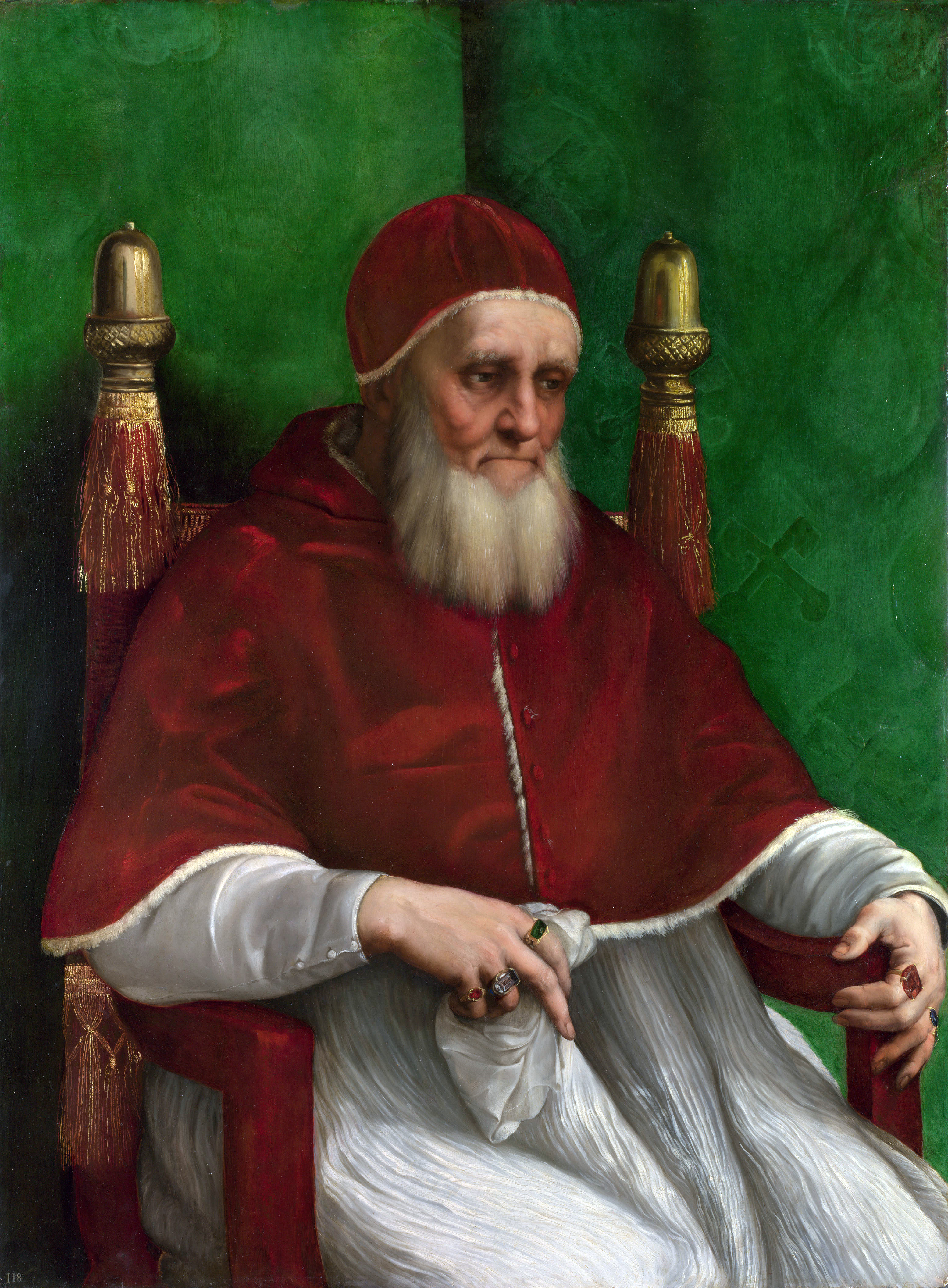
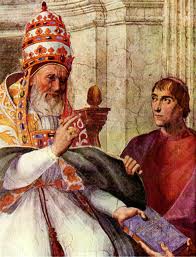
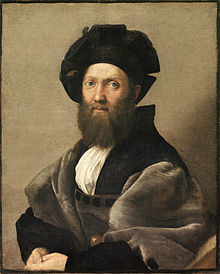
Pope Julius II (Portrait by Raphael)

(See also Machiavelli Part I, Part I.5, Part II and Part III)

Long has he waited, the new prince who in 1503 joins Borgia and Medici in stage center of Machiavelli’s tumultuous Italy: Giuliano della Rovere (1443-1513), intelligent, experienced, educated, well-connected, versed in the new old arts of the resurrected ancients, fluent in the subtleties of theology, and politics, and war, crafty, persuasive, bellicose, power-hungry–more than power-hungry, power-starved–and patient.  His is not a willing patience but that silent, vindictive patience which sets in like a sickness when spirit and ambition have been trapped in the stables waiting for the starter’s gun too long.  He had been a Cardinal twenty-one years when the election of 1492 brought him within a few votes of St. Peter’s throne.  He had planned so hard, spent so much, twenty-one years mapping the subtle battlefields of Rome’s Church, only to have the papal tiara snatched away by the Spanish Bull, that filthy Borgia, with his blackmail, and his bribery, the same arts della Rovere tried to use but Borgia, by a hair’s breadth, used them better.  The tension of 1492 made Giuliano della Rovere and Rodrigo Borgia bitter enemies from the instant Borgia became Alexander VI, and della Rovere, scenting the monsters’ nature before most others did, wisely fled to Ostia, thence to France, beyond Alexander’s reach, to wait and plan how to ensure that the throne he had been within a few votes of grasping would, next time, be his.

Long too has the reader waited for this new installment in my Machiavelli series.  I was sick for nearly three full months from mid-October to mid-January of this year (it was a nasty flare-up of a known chronic condition, exhausting but not dangerous).  This blog was one of many activities which I had to postpone while I concentrated on recovery.  Happily I am now recovered, and looking forward to a productive spring, during which I hope to return to my former pattern of producing a fresh post every two-to-three weeks.  I am very grateful all of you for your patience, and for the many kind and encouraging comments and responses I’ve received in the meantime.

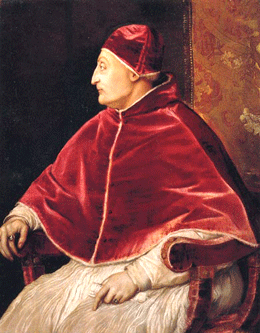
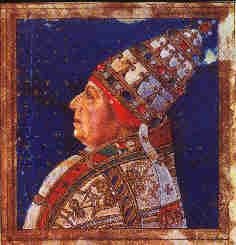
Pope Sixtus IV

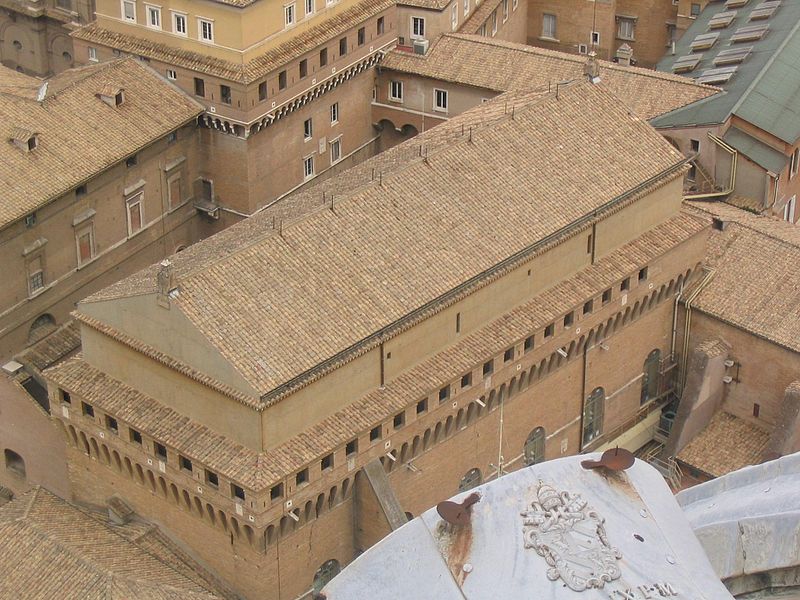
The della Rovere family rose to papal prominence in much the same way the Borgias had, through a compromise candidate.  His uncle Sixtus IV (pope from 1471-1484) came from a middlingly important Italian family, and was pious and learned enough to be a well-respected cleric.  He became a Franciscan, an act of uncommonly sincere piety for his class, since it was not a promising political move, and eventually became head of the order.  He was probably elected largely due to his piety, since after a couple of bizarre popes, including the fiercely humanist and weirdly progressive Pius II, then the anti-humanist, anti-social, confusing (rouge-wearing!) Paul II, people wanted something safe.  Given worldly power, our Franciscan decided to exercise it, and became engaged in many worldly ends of politics, including fomenting aggression against Ferrara, and encouraging the infamous Pazzi Conspiracy of 1478, which attempted to expel the Medici from Florence by trying to assassinate Lorenzo de Medici and his brother Giovanni (who was killed) by attacking them in the cathedral during mass (the pope’s involvement in the details of the plan were slim but it was still a stain).  Sixtus IV also built a new chapel, called the Sistine Chapel after him, and engaged freely in nepotism, granting Cardinalships to numerous nephews from both sides of his family, including young Giuliano della Rovere, who then waited for his chance after his uncle’s death, precisely as young Rodrigo Borgia had waited after the death of his uncle Callixtus III.

After Alexander’s election, in 1492 della Rovere retreated from Borgia-controlled Rome, but did not sit quietly.  He had spent time at the French court before, and had many friends and the ear of the king.  In France he made himself useful to as many powerful men as possible, and used his knowledge and mastery of statecraft to secure support, and weaken Borgia attempts to court the French king.  In 1494 he was one of the voices who persuaded the king to take advantage of Alexander VI’s squabble with Naples to invade Italy, and Cardinal della Rovere personally rode with the invading forces as they crossed the Alps and carved their bloody path south through his homeland, seizing Milan, threatening Florence, and forever transforming the face of northern Italy.  As Cesare Borgia’s attempts to carve out a kingdom, and strife between Naples and France, turned Italy increasingly into a battlefield, della Rovere was clever enough to foment Italian hatred of the Spanish Borgias, drawing allies who saw him as the safely Italian alternative, despite his involvement in the far more direct French invasion.  But della Rovere was not powerful enough to counter so savvy and ruthless an adversary as Cesare.  The younger cardinal acquired ally after ally, including Florence and Ferrara, and in the end Borgia attempts to woo France were too powerful for even della Rovere to convince the French king that the enemy of his friend should be his enemy.  France allied with Cesare, offered him a half-Spanish French princess and a French ducal title, and assurances of support so long as he upheld French interests in Italy.

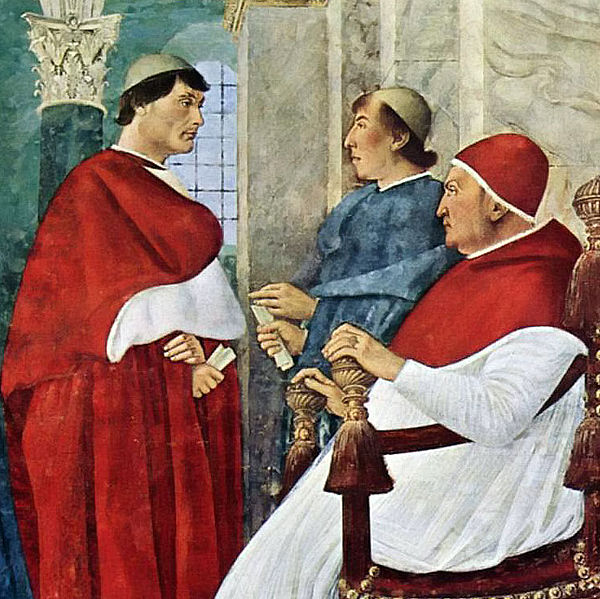
Young Julius with his uncle the pope, in the early years when the ambitious young Cardinal was not yet soured by so many years of forced patience.

On August 6th, 1503, pope Alexander and Cesare Borgia dined in their fortress at Castel san Angelo with Cardinal Adriano da Corneto.  Both became terribly sick.  Alexander died.  Cesare recovered, but slowly, after weeks of weakness and horrible suffering (one account describes his skin peeling off, though likely due to attempts to treat the illness rather than the illness itself).  Anyone who could possibly be accused of poisoning has been blamed, including both Cesare and Alexander, who had been uncomfortable partners since well before Giovanni’s death.  It may well just have been food poisoning in a pre-refrigeration world. Whatever the cause, Borgia fortunes were now at a critical moment, and the surviving Borgia prince had had little time to prepare, and was sick in bed, unable to lead troops or conduct negotiations.  He sent troops to loot the palace before the mob did, and it is unclear in the ensuing chaos what treasures were carried off by whom, but by the time it was done Alexander’s corpse is supposed to have been found alone, wrapped in a carpet, in a room from which every stick of furniture and scrap of clothing had been looted.  The body was displayed on the steps of the palace, a swollen, purple and black, stinking mass with its tongue sticking out that witnesses describe as the most vile corpse they had ever seen (and Renaissance people saw a lot of corpses).

Three armies threatened the Papal Election that followed: the armies of France and Naples, en route to fight each other, both camped just outside Rome to make the College and people aware that their kings and cannons were watching and would not tolerate a hostile victory in the vote.  Meanwhile Cesare’s armies were within Rome itself, and while he was too weak to take the field, he was far from too weak to command troops, and to command the eleven Spanish Cardinals who were far more Borgia pawns than anything else.  The conclave was delayed to allow extra time for French Cardinals, and della Rovere, to arrive and participate.

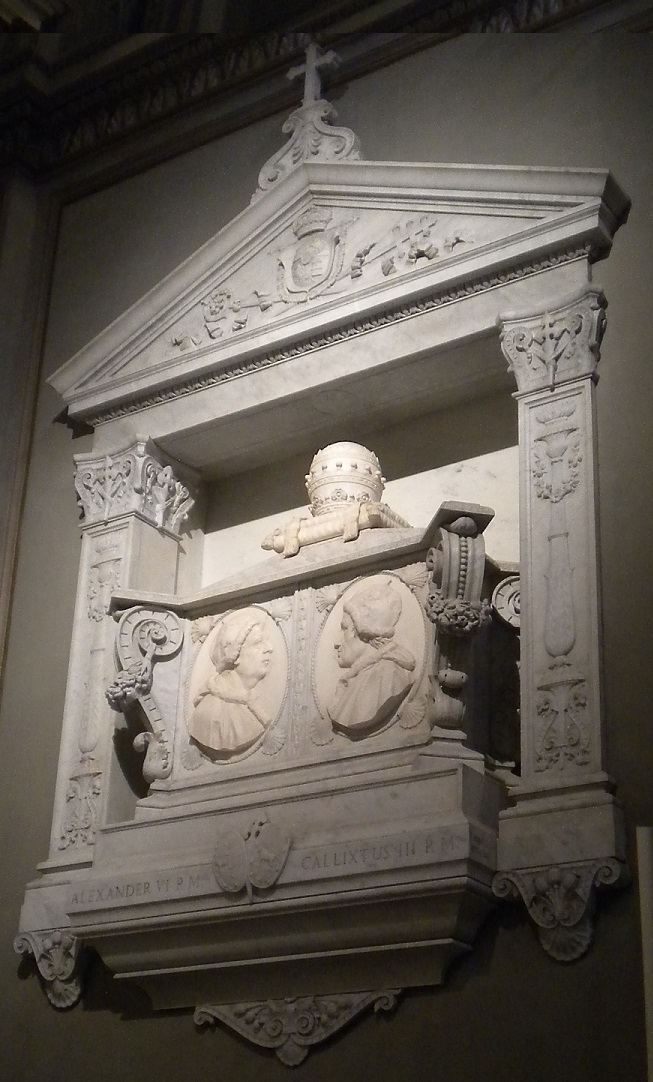
The Tomb of Alexander VI

Cesare had renounced his Cardinal’s hat in order to become a Duke and marry and pass on the Borgia bloodline.  There was no rule that the pope had to be a Cardinal, or even a cleric, and if Borgia forces had been at their peak it is possible Cesare might have pushed to be elected himself.   As it was he did not have the speed or power, so needed to compromise, and bide his time if he wanted to someday be pope.  But who to ally with?

France was determined to have a French pope, and worked hard to advance Georges d’Amboise as their candidate.  The French planned carefully.  Most Italians would never tolerate a French pope, remembering with dread the days of the Avignon Papacy, so Cesare’s contingent of Spanish cardinals was a perfect asset.  France promised to continue to support Cesare and recognize him as master of all his father had granted him if he would give his eleven votes to d’Amboise.  That added to the French cardinals would be nearly enough.  For the remainder, they could count on their good della Rovere and his cousins (whose votes he commanded), and on Ascanio Sforza, Cardinal of Milan, whom they had captured in the invasion, and released on condition that he vote for the French candidate and persuade as many allies as he could to do the same.  The plan had only one flaw: it relied on trusting the Italian Cardinals.

Della Rovere refused to vote for the French candidate.  If France wanted an ally on the throne, he insisted, they would need to elect him.  It would be easy: he was Italian, and an enemy of the Borgia, so all the Italian cardinals would flock to him, and none would support the French without his persuasion.  No amount of reminding della Rovere of the support and aid France had given him in the past made any headway.  France must give him the throne, or watch it fall into hostile hands.

Ascanio Sforza, now free, broke his word to woo his fellow Italians to the French cause.  He did, as a point of honor, vote for France himself, but let his capture and release make him a living argument to his fellow countrymen of the danger France posed.  With him as reminder, no Italian would ever vote for France.

Even the Spaniards turned.  With Cesare weak and sick and possibly about to die, Borgia stooges were looking to new powers to protect them.  For them, the King of Spain was the clear option, and he did not want a French pope, even if Cesare did.

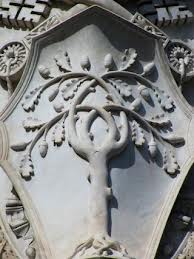
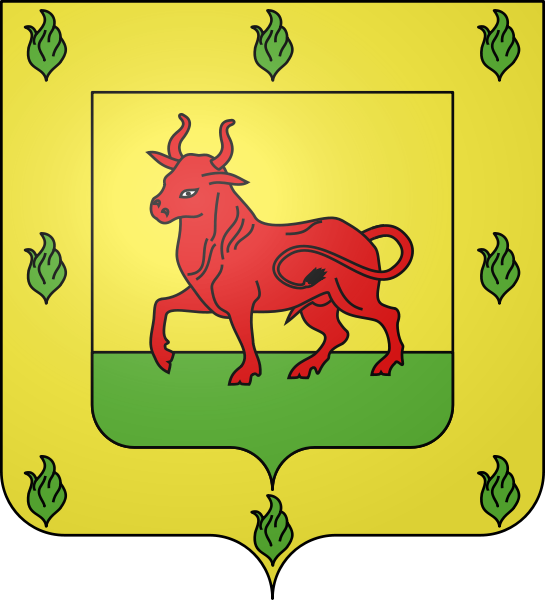
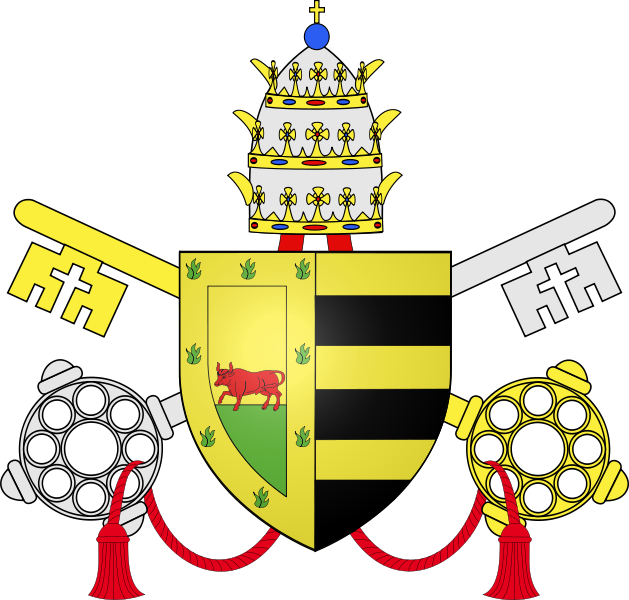
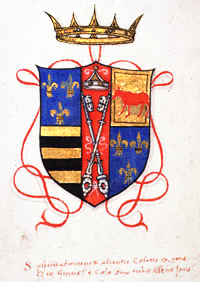
The Della Rovere Arms

The French bloc, triply betrayed, refused to accept della Rovere’s proposal that they vote for him, and would forever after blame him for their defeat.  Since neither could win, and no Spaniard could win, all powers looked for a compromise candidate, someone old and sick and inert, likely to do little and die soon, and all hoped they could regroup and gain a majority by the time of the next election.  Thus  Francesco Todeschini Piccolomini became Pope Pius III.  Nephew of the earlier humanist firebrand Pius II, Piccolomini was from the comparatively neutral town of Sienna, enough of a cowardly Borgia stooge to be tolerable from Cesare’s perspective, and not long for this world.  He reconfirmed Cesare as commander of the papal armies, postponing war and temporarily granting Cesare continued power over his dominions.  His most memorable act as pope was to announce that Alexander VI would not be buried in the crypt of St. Peter’s where popes were (and are) usually laid to rest.  Alexander was too wicked to be in St. Peter’s, he decided, not then, not ever.

September 22nd, Pius III is crowned.  October 18th, Pius III dies.  New election.

Cesare has recovered, and is still commander of the papal armies, but his forces are weakened and his position precarious   He has regained command of the eleven Spanish Cardinals but has no other sure votes.  France has not forgiven della Rovere, but he has worked hard to convince them that, given the general hatred of France, he is the most France-loving man likely to get on the throne.  Now he courts Cesare, offering solemn promises that, if Cesare and the Spanish cardinals support him, he will maintain Cesare in his current position, leave him the papal armies, his titles, his funds, his lands, and make him a close and trusted ally.  The Borgia Kingdom in central Italy will be forever secure, and della Rovere might even help Cesare into a position such that, when he is a bit older, he might succeed della Rovere as the next pope, restoring and finally solidifying the Borgia dream of turning the papacy into a hereditary monarchy.  Cesare will henceforth practically be della Rovere’s adopted son, and they will rule Italy together, with the support of their mutual ally in France, and Cesare’s ties with Spain.  Cesare accepts, the bargain is solemnly sealed, and a few promises to Ascanio Sforza are all it takes to secure the unanimous election of Giuliano della Rovere as Pope Julius II.

Julius takes the throne.

He has Cesare arrested, thrown in prison, stripped of all his titles and property, deported to Spain, and, after some intervening chaos and a brief escape, Cesare is killed.

This is an absolute shock, much, much more shocking than it sounds.  The Roman Pontiff, highest prince in the world, has betrayed and destroyed a noble sovereign Duke to whom he had pledged himself as a bosom ally, and to whom he owed his throne.  Cesare was Julius’ supporter and benefactor, and vice versa.  This alliance was in many ways virtually adoption.  We have read about a lot of broken promises and murders in the course of our Borgia stories, but this is different, utterly and unimaginably different.  When enemies duel or battle each other, those violent acts are honorable.  When enemies poison enemies, or send assassins after each other, that is dishonorable but still reasonably acceptable and common.  When Cesare killed his own man Remirro de Orco, that was new, shocking, different.  Confusing.  This is the same thing but on an unimaginable scale.  The innermost circle of Dante’s Hell is for people who betray their feudal benefactors.  This is that again, only a pope, and also the reverse, a patron betraying a supporter he has promised to defend and treat as an ally.  There is no place for this in Dante’s Hell.

There is also no place for it in the Handbook of Princes genre.  The Prince has betrayed and murdered his closest supporter.  No one can trust him now.   Any pledge he makes is unreliable.  Anyone near him is in danger.  The sword he wields is arbitrary and cuts down friend and enemy.  The rational man and the moral man now both come to the same conclusion: do not serve such a master.  Leave him.  Run.  The vassals of such a lord should abandon him at once, declare the tyrant what he is, unite and take up arms and overthrow him.  That is what must happen.  Machiavelli, good student of politics, knows it, and all through the night when the deed is done everyone expects that in the morning Julius will rise to face an empty throne room, while the banners of his former allies mass against him.

Julius, pope at last

The next morning, everyone turns up and kisses the pope’s ring and feet and politics goes on, and no one even whispers the name ‘Borgia’.  It never happened.  Everyone serves the traitor-pope just as before.

This is the moment that cannot be, as Machiavelli explains in The Prince and more in his letters.  This is where the Handbook of Princes fails.  The virtuous Prince was supposed to be better ruler because he commands the respect and loyalty of his servants, unlike the wicked prince who loses them: untrue.  The virtuous Prince was supposed to enjoy the blessings of God who would make him strong, while the tyrant was unseated: untrue.  The virtuous Prince was supposed to be more effective because good, wise policies have good, beneficial consequences for his people and his nation: untrue.  Uncertain why the last is untrue? Look at what has just happened and what could have happened:

Outcome if Julius II had been virtuous:

Julius seals his pact with Cesare.  After his election, he continues to treat Cesare as a close ally, allows him to control the papal army, and use it to continue waging war in central and northern Italy.  Thousands if not tens of thousands die in combat and more from bandits and disease as the chaos continues.  Cesare secures Romagna and the papal states, then turns on Florence, probably Modena and Ferrara too, on the Venetian land empire, shoring himself up more and more at the cost of chaos.  In the end either the Emperor invades to check Cesare’s rise, or Cesare grows strong enough to make his bid to be Julius’ successor, and bloody civil war erupts whether Cesare wins or loses as he and the rest of Italy battle to see whether or not the papacy will indeed become a hereditary monarchy.  Death toll: tens if not hundreds of thousands.

Outcome if Julius II is a treacherous deceiver:

Cesare is instantly removed.  The wars in central Italy cease.  The suddenness of the change makes it easy for provincial forces, as well as papal forces and city forces, to bring about some degree of stability.  The shock of the suddenness of Julius’ betrayal makes everyone else wary of causing trouble.  Peace is instantly restored, the Borgia Kingdom eliminated, exiles restored, Florence protected.  Death toll: Cesare Borgia, plus, perhaps, a few of his guards and associates.

Conclusion: the Virtuous Prince is not more successful.

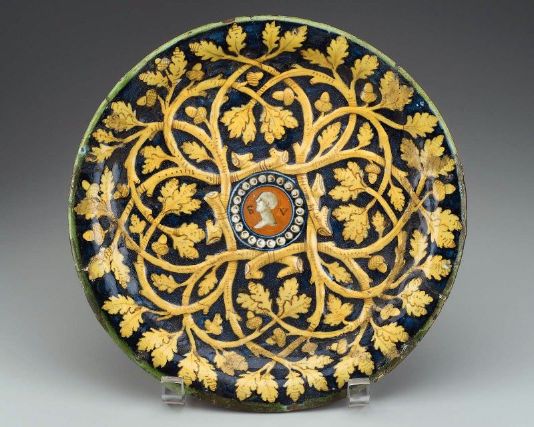
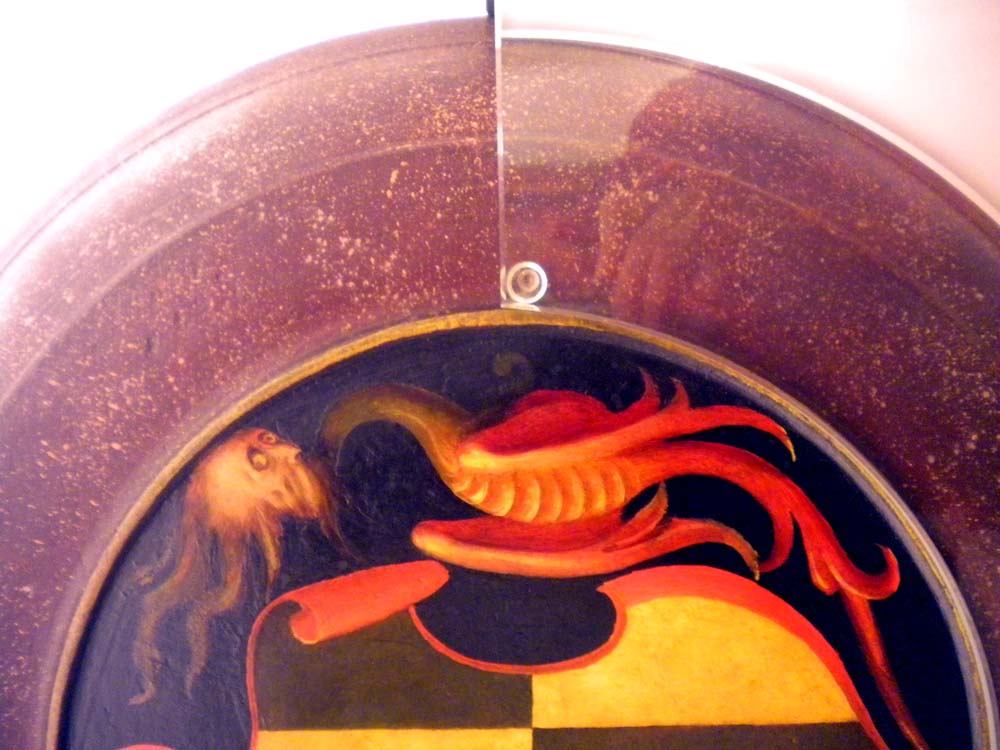
Plate decorated with the della Rovere oak

Julius instantly solved a problem no one else had been able to solve in a terrible decade.  The worst days of Italy are gone.  Julius’ vassals did not abandon him, nor did God smite him with skyfire.  The advantages that the Virtuous Prince was supposed to have are invisible.  Julius did it, not through love, but fear.  Perhaps it is more useful to be feared than loved?

More is undermined here than just the Handbook of Princes genre.  Ethics is a problem too.  The Virtuous Pope here, the one who was loyal to Cesare, would have doomed thousands to death and Italy to chaos and conquest.  Julius’ betrayal saved everyone.  Yet, the Christianity and ethics of Machiavelli’s day declare that Julius has done a wicked deed, and will go to Hell for it.  Going to Hell for saving thousands?  This does not sound right.  Is it really a morally wicked deed, Machiavelli asks, to betray and murder Cesare Borgia, and thereby prevent so much evil?  Is this really what ‘good’ and ‘evil’ mean?

Thus Utilitarian Ethics was born.  It is a familiar thought pattern for us, but for Machiavelli (and Europe at that point)  it was a completely new idea, never thought before.  What if this is good?  This act that, by destroying a terrible, wicked, monster of a man, saved a hundred thousand lives?  How can I call it evil?  What if I want to judge the act, not by what it was (betrayal, murder), but by what it did, save Italy (and Florence!) and the world from the Borgia menace.  And if Julius had done the “good” thing, and kept Cesare going, and let all that evil happen when he had the power to stop it with one dark command, could we really call that “good”?  And what of virtue ethics?  Why do I care whether Julius betrayed Cesare for selfish or selfless reasons–he still saved Italy, and so many, many lives.  Doesn’t that matter?  Doesn’t the consequence of an act, its utility, factor into the moral equation?  I think, he says, it does.
This is the advice Machiavelli writes for the Medici when the forced retirement of exile gives him time to write a new Handbook of Princes for a new kind of prince: the princes of Florence, whose duty is to protect Florence–beautiful, unique, burgeoning, irreplaceable Florence–and her citizens–artists, philosophers, poets, statesmen, craftsmen–from the perils of conquest and extermination which constantly threaten her fragile walls.  With France so close, one more civil war could be the end.  This is not a question of selfishness or power for power’s sake, but of the very survival of the nation in their care.   “In order to be virtuous, the people must still be alive,” (paraphrase).  In this situation, he writes, we should study and emulate Julius Caesar, but we should also study and emulate Cesare and Julius II.  If fear will discourage conspiracy, use fear.  If the betrayal and exile of one dangerous faction or family will stabilize the republic, use betrayal.  If breaking a treaty will give Florence the ally she needs to survive, rip up that scrap of paper.  It is the prince’s duty.

This is not a good consequence erasing an evil act, it is the argument that the act itself is not evil because of its good consequence.  Saving a hundred thousand lives, or Florence, is good–the means, therefore, are good, even if the means are a murder.  “The end justifies the means” thus does sort-of ring true, but rather he is saying that we judge the means by its end: what Julius II willed in his heart, Machiavelli would say, wasn’t the betrayal and murder of Cesare, but was the salvation of Italy.  If Julius had defended Cesare, as he promised, and let all those people die, that would have been the evil act.  At times he puts it almost as if the prince here is taking on sin for the people, as if in order to guard those in their protection the sovereign volunteers to damn himself to commit the sins necessary to create an era of peace in which citizens will have the leisure to live virtuously (instead of being dragged into violence, hatred, rape and death).  At other times it feels as if he is saying there is no other real scale beyond the Earthly consequence (no Hell?  Do we smell atheism?).  He never explicitly discusses the religious import of utilitarianism, but the mind of the reader cannot help but jump there instantly.

We now have consequentialism   The can of worms is open, and in my next post I shall explore it, and its religious implications.  But we have also opened another can of worms: the papacy of Julius II.

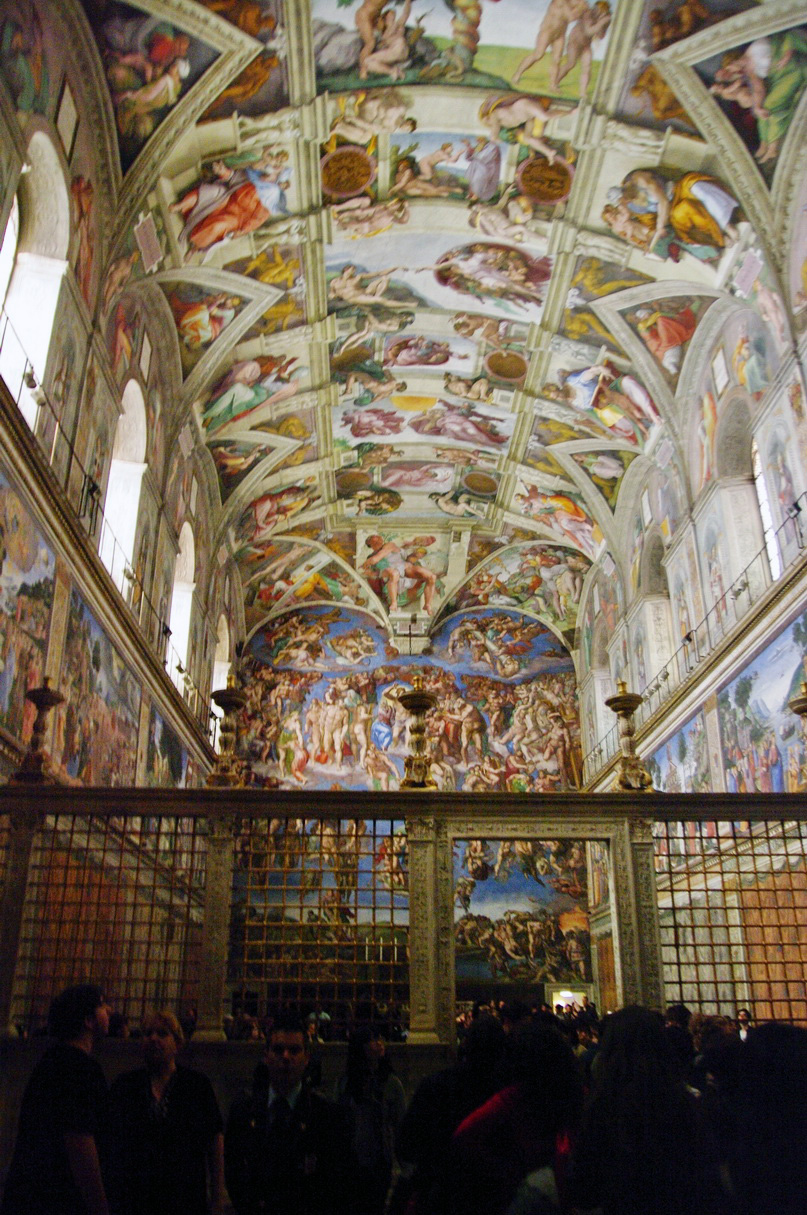
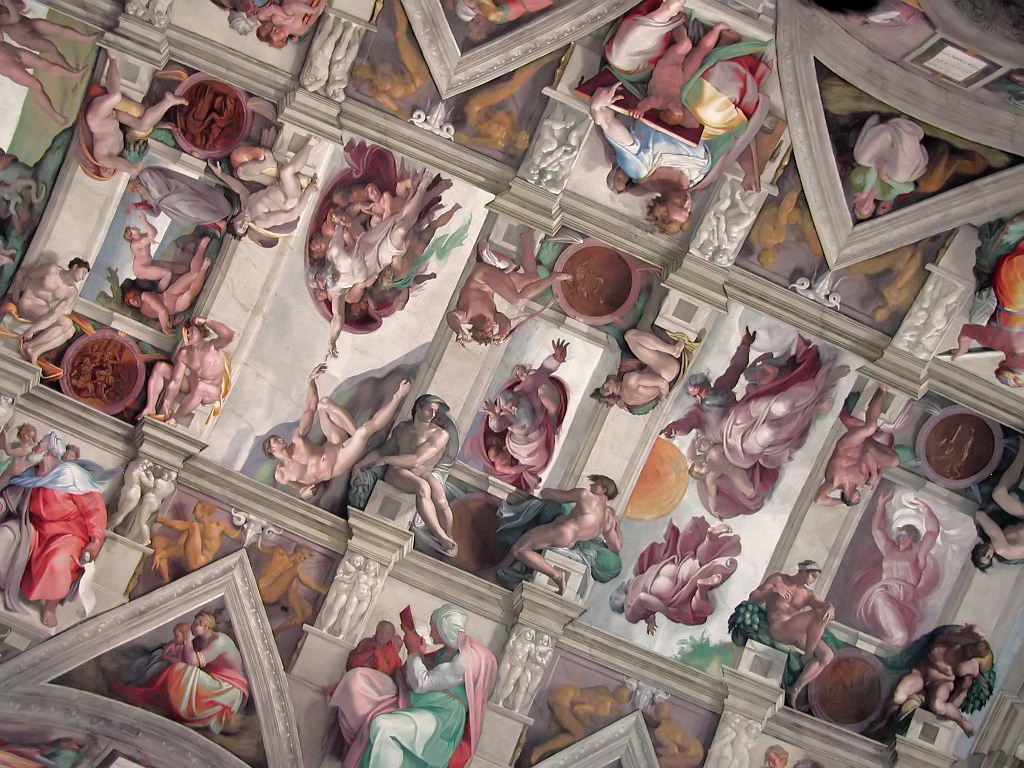
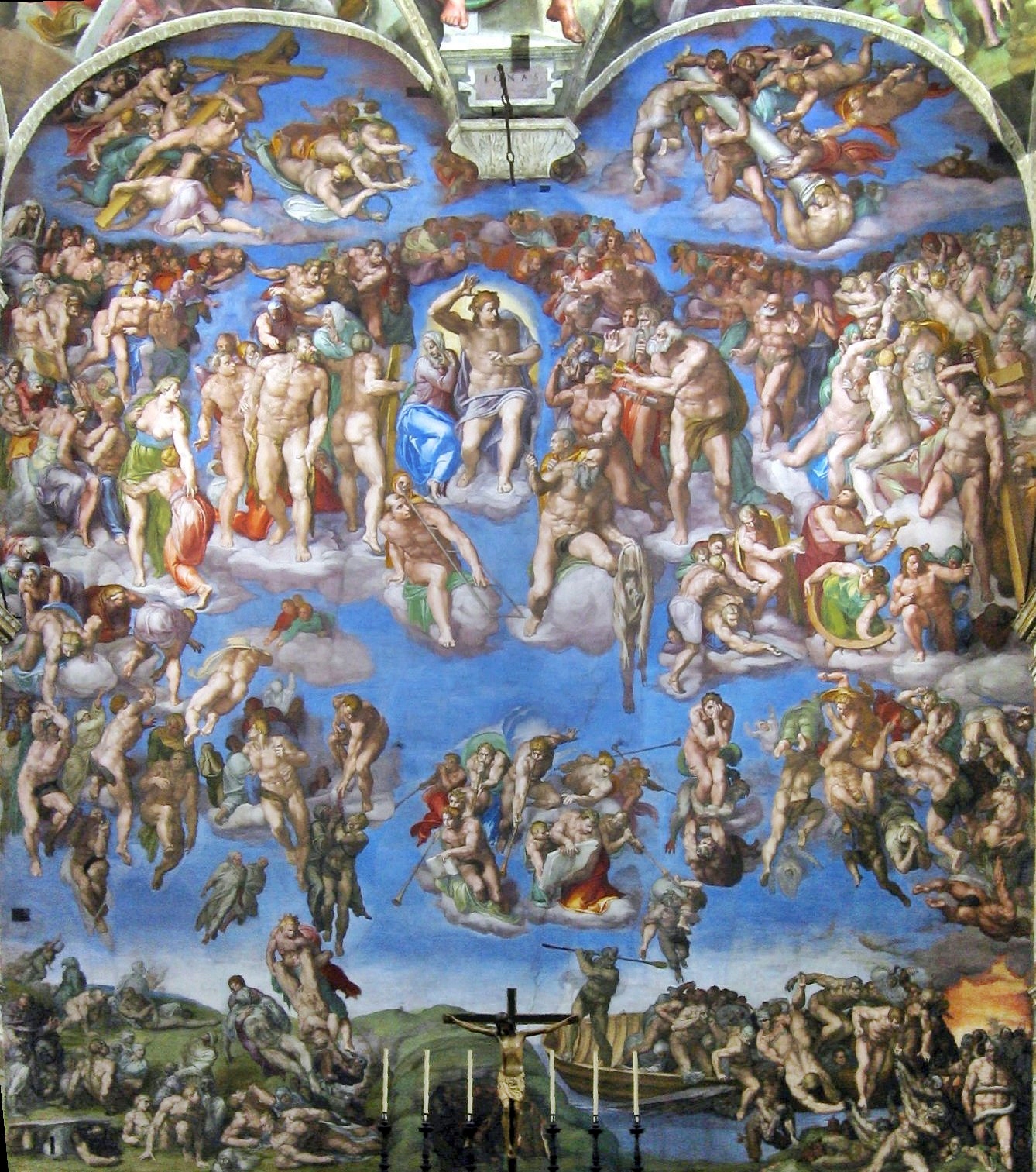
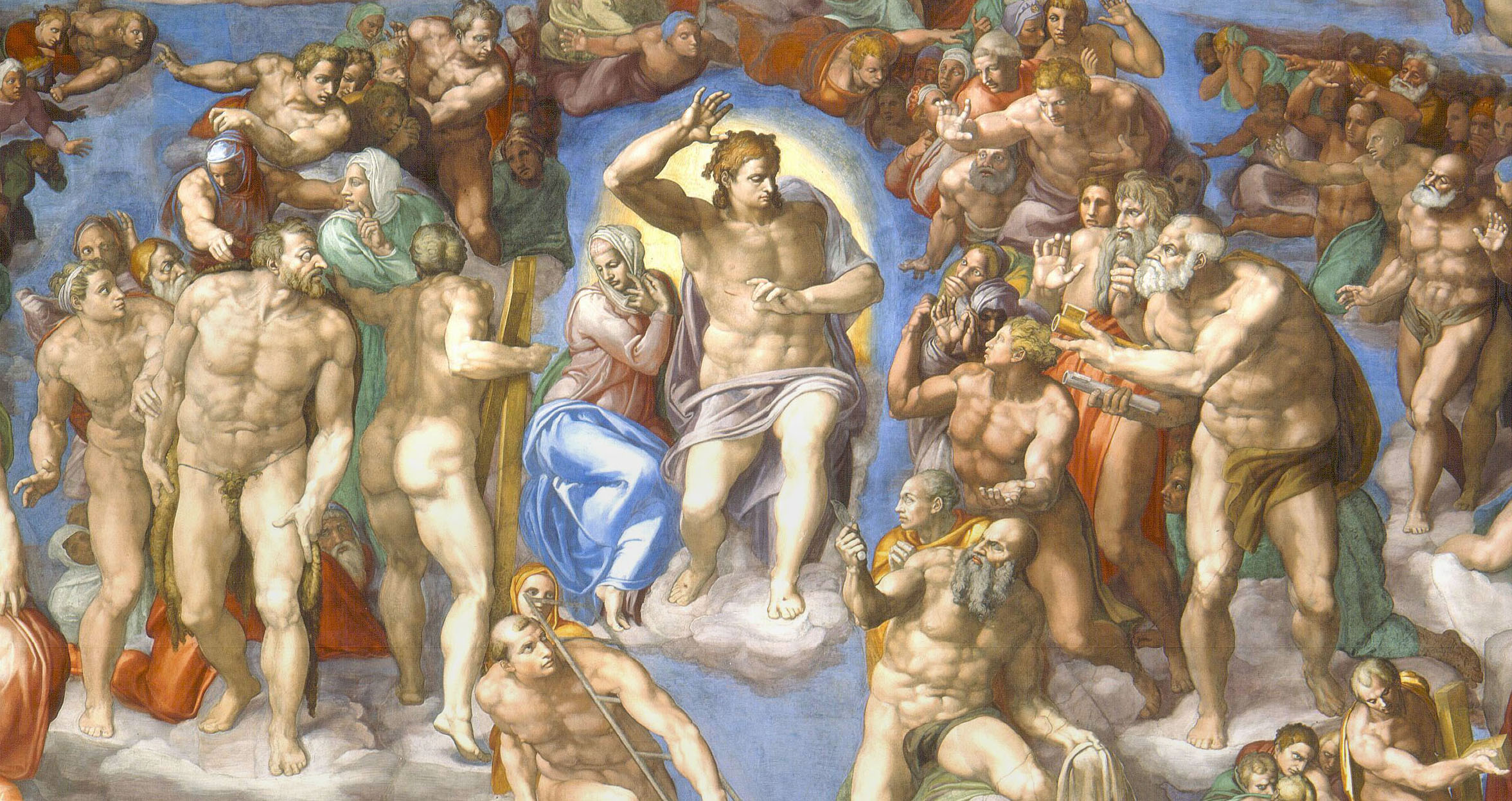
Julius II brought peace to Italy and saved thousands of lives.  Then he started a new war.  This is Giuliano della Rovere, referred to in his own lifetime and after as the Warrior Pope, and as “Il Papa Terribile”.  This is an infinitely ambitious man made tired and bitter by thirty years of waiting, ten of them wrestling with terrible Borgia enemies.  This is a pope who likes to ride in armor.  His is not an ambition which ends with wealth and power.  He is “Julius” and will remind the world that the pope is Emperor, successor to the Caesars.  Those territories Cesare left behind, that are now vulnerable and rebuilding, he demands them, and sends armies to seize them, and when Venice or other powers try to reclaim their own, he makes war.  France is still stirred up from earlier wars, and still bitter at him.  Naples is stirred up, the Emperor is stirred up, England is eager for conquests, Spain is defensive about its Mediterranean holdings, the Ottomans are expanding, the Swiss are ready with their mercenaries, and Florence is still delicious.  Julius stirs all these powers toward war, demanding in the name of his imperial power that Europe’s princes come in on his side to defend his right to rule Italy.  It is in this phase that the powers meet at Cambrai, a despairing Machiavelli watches the balance of power so carefully, exchanges so many letters with his friends trying desperately to predict who will be at war with whom when the council ends: France & Emperor against England?  France & England against Spain?  Which of the nearby armies, Julius, France, Naples and Emperor, will move first against Florence?  He studies, he worries, he plans, and in the end the council emerges and Julius II has persuaded every crowned head of Europe to join into a Holy League and help him attack Venice and take all the former Borgia territories and turn them into his new papal Roman Empire.  This is a pope determined to wipe away the Borgia stain with blood, and make the pope a true Emperor again.  This is a pope who will be remembered.  He also brings more humanism to the Vatican, stocks its libraries, has his beloved Michelangelo (a complicated dynamic if ever there was one) decorate the new Sistine Chapel with neoclassical art and figures of pagan sibyls mixed among the Hebrew prophets to reinforce the fact that the ancient philosophies revived by the humanists are part of his Christianity as much as anything.  But the humanism he brings is all in service of power: empire, law, Rome, Constantine, reminders of the sovereignty of Rome and Italy and the higher sovereignty of Julius.  He is a pope for whom means seems to mean nothing, and ends everything.  And he is incredibly effective, and remakes the papacy as no one had imagined it could be remade.

Five hundred years ago today, the 19th of February 1513, the order was given for the arrest of Niccolo Machiavelli on suspicion of participating in a conspiracy against the newly-reestablished Medici regime.   The Medici had been in exile in Venice for eighteen years, consolidating their wealth and allies and gathering resources so they could retake the city Piero had abandoned during the French (Borgia-caused) invasion of 1494.  In the intervening years, the Borgias had carved out their Italian kingdom, Giovanni had been murdered, Cesare had turned from a fearsome Cardinal to a more fearsome Duke and conqueror, and then the Borgia years had ended, and the family’s fall left a weak and disorganized Italy ripe for new ambitious families to carve out kingdoms; one of those best positioned to do so were the Medici.  Florence herself had experienced the theocratic rule of the monk Savonarola, then the restored Republic of Soderini, of which Machiavelli was one of the central figures.  When the Medici army of allies and mercenaries recaptured the city, they did not arrest Machiavelli right away.  They ended the Republic and moved into the Palazzo Vecchio, but Machiavelli remained in the city, a cautious but free citizen, until a small nest of anti-Medici conspirators was uncovered.  Among their documents were found a page listing the names of others they had intended to recruit but had not yet approached, including Machiavelli.  It was too much.  Machiavelli was arrested, interrogated, tortured (using a device a similar to the rack), and exiled.  It was in that exile that his forced retirement gave him the time to write the texts which would so transform how we understand politics, ethics and history: the Discourses on Livy treating Republican government, The Prince, and the personal letters which show even more clearly than his polished books how his new political and historical theories were the direct results of his experiences of the Borgias, their rise, their fall, and the new Emperor Julius II who rose to occupy the (bloodied and stained) papal throne.

Thus, today, while Google commemorates the birth of Copernicus 40 years earlier, Florence is marking February 19th 1512 with a procession through the city, in which the crier will call for Machiavelli’s arrest in each quarter o f the city.  It may seem a strangely dark day to celebrate, the imprisonment and torture of our beloved historical figure, but it is in many ways the birthday of political science, the one day which, if disrupted by some time traveler, could deprive us of the produce of that vital exile.  Machiavelli could have been forgiven and hired by the Medici he wanted so desperately to work for.  He could have been executed, or died in the prison, or been tortured enough to die of some infection or hemorrhage.  Instead we have utilitarian ethics, a vein of thought which is so universal in the modern world that we find it almost impossible to think about what “decision-making” meant without it.

Here at last we see both central facets of why Machiavelli is important.  When historians argue about “Who was the first modern philosopher,” those who argue for Machiavelli argue this: he was the first person to use consequentialist ethics, i.e. to believe that an act might be good or bad because of its consequences rather than the act itself, and the first person to practice political science, that is to use history as a set of examples to be studied and compared to rather than as a source of moral tales to be read and absorbed through virtuous osmosis.  We as modern people use both these things every day, so constantly that we struggle to think without them.  When deciding, what is the consequence?  Even if in the end you go with a decision based on Virtue Ethics or Deontology you still think about the consequence.  When looking at events, what historical ones are similar?  We study history to learn from it, and not repeat mistakes, right?  And when we do, we look at economics, oppression, class struggles, technological change, environment, patterns, not just the moral character of king and commander.  These are indispensable elements of modern thought, which define the modern era more clearly and more universally than, for example, any technology.  What is a modern person?  One reasonable answer is “someone who uses consequentialism and political science.”  There may be (and are) other differences, but this certainly is one, and Machiavelli is its father.  Julius and the Borgias were the spark, but he was the one who was there to see and analyze, and describe.
Next Time: “Was Machiavelli an atheist?” and why it is still valuable for historians and philosophers to write book after book about that question even though the only possible answer is, “We don’t know.”   Read the conclusion.
Share

Machilavelli III: Rise of the Borgias

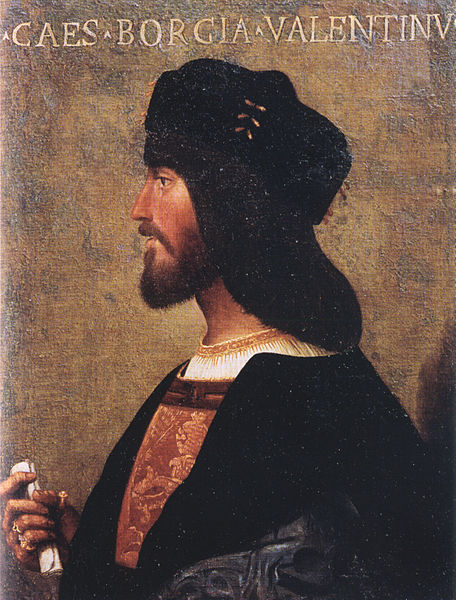
Cesare Borgia. With him and Lucrezia we have several different paintings which have been identified as possible portraits, but fewer certain ones.

Once upon a time (circa 1475) the whimsical Will that scripts the Great Scroll of the Cosmos woke up in the morning and decided: Some day centuries from now, when mankind has outgrown the dastardly moustaches of melodrama and moved on to a phase of complex antiheroes, sympathetic villains and moral ambiguity, I want history teachers to be able to stand at the front of the classroom and say, “Yes, he really did go around dressed all in black wearing a mask and killing people for fun.”  Thus Cesare Borgia was conceived.
Note: I have discovered that I have a lot to say about the Borgias, so this will be the first of two posts about their impact on Machiavelli.  I will try my best to get the second one out promptly. Thank you, kind readers, for being patient with the long delay between the last post and this.  It was a chaotic September.

See also the earlier chapers of this series: Machiavelli Part I: S.P.Q.F.Part I addendum, and Part II: The Three Branches of Ethics.

The Handbook of Princes:

In the middle phase of the Harry Potter saga, my father phoned me one day to exclaim that if he were Harry he would walk up to Crabbe and Goyle and appeal to them in the name of rational self-preservation.  Voldemort is a terrible, terrible person who randomly kills people who work for him.  Joining his side, or becoming involved with him in any way, is absurdly dangerous.  If you’re a Malfoy or something, and you know he’d come after you if you tried to quit, then joining him is certainly the safest option. But willingly getting involved is rather like plunging enthusiastically into a game of Russian roulette.  I cite this example because its simple appeal to human Reason (Evil is bad! You don’t want to be around it!  Think about it!) is exactly the sort of argument which lay at the heart of the Handbook of Princes genre before Machiavelli got his ink-blackened hands on it. The Princewas far from the first Handbook of Princes.  To the contrary, it argued against a long tradition of manuals of etiquette and collections of heroic maxims which were a common literary form, especially in an age when authors made money from their books only by dedicating them to patrons, who were often more inclined to reward books which seemed directly useful to themselves and their heirs.

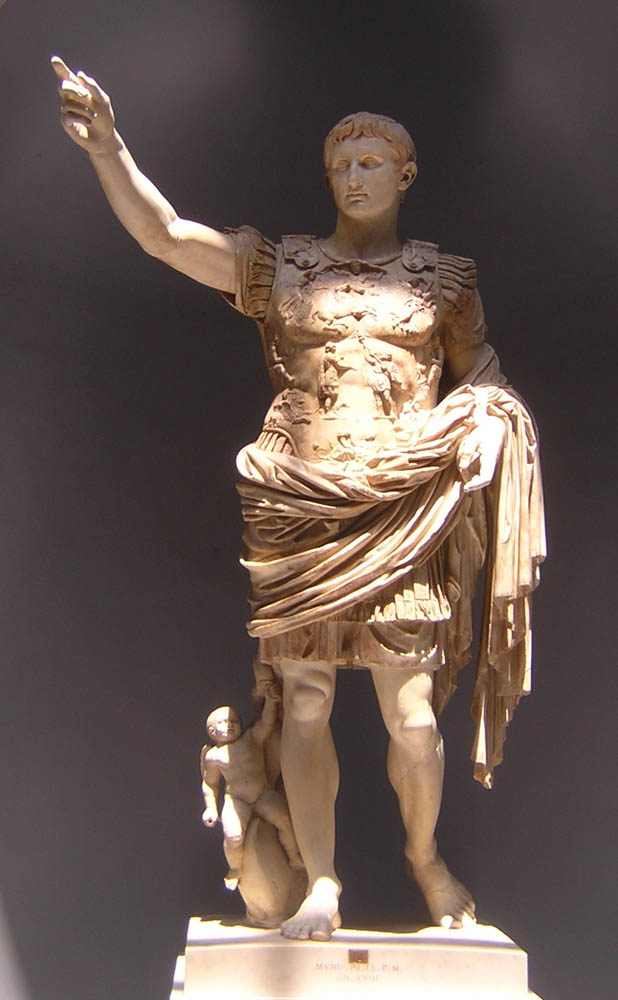
Augustus was a great prince. If we read his biography 50 times, we will be too!

A typical Handbook of Princes consisted of a mixture of anecdotes and advice.  The anecdotes were great tales of heroic exploits, focusing on brilliant and successful historical figures (Augustus Caesar, Henry V, take your pick) or on more obscure stories wherein a single figure (usually from Roman history) is remembered for a single noble act.  The presentation focuses on the hero, his character and the virtues (courage, wisdom, patience, generosity, self-sacrifice, industry) which enabled his successes.  These works are histories/biographies in a sense, but unlike the modern versions of those genres, were largely devoid of cultural and historical context, and would never discuss how men were products of their times, or how their successes were affected by class movements or economics.  The men were successes because they were great men, and by reading about their actions and the virtuous decisions which underlay them, the young prince could absorb these virtues and learn to do the same. Moral advice accompanied these moral examples, advice predicated on a combination of logic and the Renaissance universe in which we must remember God is presumed to take a very active part.   The virtuous prince will be more successful than the corrupt or wicked one.  Why?  First, because people will love and respect him, and therefore obey him.  If he acts like Voldemort, reason and self-preservation will drive his followers to realize that it is dangerous to be around him, and he will be abandoned and overthrown.  Tyrants fall to tyrranicides.  Beneficent monarchs, on the other hand, attract loyal followers who want them to stay in power.  People living under a good king will be willing to go to effort to keep him in power.

Castiglione, author of the Book of the Courtier, another high Renaissance descendant of the Handbook of Princes genre, which teaches one how to be an ideal courtier and help to advise and support an ideal prince.

As for dealing with rivals and enemies, i.e. foreign affairs, here too virtue is advised.  The virtuous prince will be more successful.  Why?  Because people will respect and listen to him.  Because chivalrous conduct makes a man outstanding and brave.  Because a virtuous man will have fewer enemies, at home and abroad, and thus be able to sleep at night with a clear conscience and less fear of assassins.  And because God is part of politics in this age.  This culture still believes in trial by combat, that the champion of a virtuous and true cause will always defeat the champion of an unjust one.  The saints will like and bless the good king, and drive plague from his kingdom.  “But bad things happen to good people too!” objects the devil’s advocate.  “What about Job?  What about the fall of the Roman Empire?  What about nuns who get the Black Death tending to people who have the Black Death?”  True, the culture answers, sometimes God sends tests to virtuous men, but by persevering through them with virtue one earns even greater rewards.  There is Providence.  If there is Providence, it is logically never, ever a good idea to do evil.  While the ultimate balance lies in Heaven, even on Earth, in a world with a deep belief in saints and direct divine intervention to answer prayer and protect the chosen, virtue is 100% the right call.  And religion aside, won’t a prince who is loved be showered with support and help?  Certainly Petrarch and his followers, who were so desperate for peace and stability, would eagerly shower any virtuous prince with support and help, and very sincere loyalty. So stands the genre when a young Machiavelli works with Soderini in the Palazzo Vecchio, attempting to run the government of Florence and to achieve stability and peace in a world of chaos and conquest.  This government is the product of Florence’s rebellion against Medici corruption, and everyone knows it exists for the sole purpose of protecting and serving the Florentine citizens and protecting the city and all her works and precious people.  No one in Florence has any incentive to do anything but love and support this government.  Right?

Unmatched in Infamy:

I was in the palace section of the Vatican Museum recently, showing some friends the dark neoclassical frescoes and blue and gilded Borgia bulls which so oppressively dominate Alexander VI’s apartments that no pope has been willing to inhabit that part of the palace since, when a guide came by with her tour group.  She was speaking English as  a compromise language, since she was a native Italian and her group was Korean, but since they were all 75% fluent in English it sufficed for basic communication.  Basic, but not subtle, so when they entered the room she began, “These are the rooms of Pope Alexander VI, he…” and then I saw a look of exasperated despair wash over her face.  How with broken English could she communicate the significance of the Borgia papacy to this group to whom Renaissance Italian politics were so foreign that if she’d told them Michelangelo was a pope, or Duke of Florence, or both, they would probably have believed her.  “He was a very very, very very, very, very bad pope,” she concluded, and shooed her flock on. I applauded her concision at the time, but when she had moved on my friends immediately turned on me and (with the full pressure of a common language demanding thoroughness) asked, “Why was he so bad?  I mean, this is the high Renaissance right before the Reformation – weren’t all the popes incredibly corrupt and terrible?  You’ve been telling us stories about catamites and elephants and brothels all day; what made Alexander VI so exceptional?”

The Borgia Bull. Learn to look for it. (I accidentally terrified my Sicilian tour guide once by spotting it over a cathedral doorway and, being rather startled, pointing at it and shouting "Borgia! Borgia Borgia Borgia!")

It is a fair question.  The papal throne was indeed at its most politicized at this point, a prize tossed back and forth among various powerful Italian families and the odd foreign king, and Italy remains littered with the opulent palaces built with funds embezzled by families who scored themselves a pope.  My best short answer is this:

  1. They were Spaniards, and the Italians hated that, so all possible tensions were hyper-inflamed.
  2. Instead of the usual graft and simony, they tried to permanently carve out a personal Borgia duchy in the middle of Italy, and when that was going well, they tried to turn the papacy into a hereditary monarchy.
  3. They very nearly succeeded.

The Borgia family came from Valencia in eastern Spain (then Aragon), and were powerful enough there to frequently secure Church offices for younger sons, including the bishop’s miter.  Trivium of the day:  Valencia’s Cathedral is known for possessing one of the best accredited Holy Grails (i.e. more confirmed miracles than any leading rival grail candidate), which means both Rodrigo and Cesare Borgia were briefly custodians of the Holy Grail. The first Borgia pope, Callixtus III(originally Alfonso de Borja, b. 1378, d. 1458), was from Valencia in eastern Spain. During the middle years of his career he was instrumental in getting the royal house of Aragon to accept the compromises which ended the schism, in those years when Europe was going through its antipope-a-month phase.  He was made a Cardinal as a reward, came to Rome, and was elected pope in 1455 as a compromise candidate.  A compromise pope is elected when two or more powerful rivals have a deadlock in which neither can secure the majority necessary to become pope, and neither will let the other win, so they pick someone neutral and extremely old who is guaranteed to die within a couple years, giving the rivals time to level up their bribery skills and try again.  The most notable achievements of his three year reign include a brief crusade, excommunicating Halley’s Comet when its bad luck interfered with his crusade (“Take that!  No communion or last rights for you, comet!”), and securing Cardinal’s hats for two of his nephews, including young Rodrigo.

Rodrigo Borgia as Pope Alexander VI

Rodrigo Lanzol Borgia, later Pope Alexander VI (1431-1503) was only matrilineally a Borgia, the son of Callixtus III’s sister.  He took a law degree at the university of Bologna, and was twenty-five when his uncle became a compromise pope.  Making good use of their manifestly narrow window, Callixtus had the city of Valencia promoted from having Bishops to having Archbishops. He thus made Rodrigo an Archbishop, then a Cardinal, and finally gave him the position of Vice-Chancellor of the Church, an important (and lucrative!) position managing the papal purse, particularly its taxes and military expenditures.  There is no better office from which to be plugged directly into the detailed workings of the Church, and to secure a precarious but powerful position as one of the foremost non-Romans in Rome.  After his uncle’s death, Rodrigo stayed in this position through four more papacies, setting up a permanent household in Rome and there  raising his most famous bastard children.  When his fifth papal election rolled around in 1492, he was nicely on track to be another mildly-entertaining, thoroughly-corrupt Renaissance pope. The papal election of 1492 was one of the great power games of world history.  Anyone seeking to create a board game or one-shot role-playing simulation of an exciting political moment need look no farther.  Twenty-three men are locked in the not-yet-Michelangelized Sistine Chapel.  They can’t leave until someone receives twelve votes and becomes pope.  Everyone has a different goal.  A few want to be pope.  Others want to sell their votes to the papabile (pope-able candidates) for the best price going.  Some want wealth; some have plenty and want to turn it into power.  Some want titles; some have titles but have lost the fortunes that should go with them and are hoping to earn that back.  Some are young and want to make friends and be owed favors; some are old and want young relatives to become cardinals to preserve the family’s toehold in the College.  The Medici Cardinal is sixteen and hoping to cement the family’s hold on Florence.  The Patriarch of Venice is ninety-six, dying, and wants to go back to his impregnable hometown and eat candy.  Ten of the cardinals present are nephews of previous popes, eager to keep nursing from the coffers and to keep their family fortunes safe from rivals.  Eight are pawns of kings and want to secure the clout necessary to get the new pope to grant their masters’ requests should a king want to, for example, divorce Catherine of Aragon and marry Anne Boelyn (that’s a few decades off but it’s the kind of thing one has to be prepared for).  The previous pope glutted the College with his own relatives but all are too young for anyone to be willing to vote for them, so they have thrown their collective clout behind the cunning veteran Giuliano della Rovere: learned, aggressive, interested in art, interested in the classics, and interested above all in how both can be used as tools of power.  As for Rodrigo Borgia, he has waited a long time.  This may well be his last shot at his uncle’s throne.  Resources: all the wealth, contacts, secrets, tax-returns and dirt he has accumulated in decades managing the papal purse.

The Sistine Chapel is not actually that large a place for thirty-odd men to be trapped for several days.

It was a very complex election, about which we have lots of information, but little that is reliable.  We know there were four rounds of voting, and that Borgia was not one of the front runners in the three leading to his unanimous or near-unanimous victory in the last.  We have records of enormous bribes, offices and territories representing tens of thousands of florins in annual income changing hands.  Some allege that the king of France contributed hundreds of thousands to efforts to get Giuliano della Rovere on the papal throne.  It seems pretty clear that the Borgias smuggled letters offering fat bribes into the chapel inside the food which was delivered for the cardinal’s meals.  One delightful anecdote from the period claims that the 96-year-old Patriarch of Venice was the last critical swing vote, who, having a wealthy family, secure lines of power, a literally impregnable homeland, and not long to live to enjoy the fruits of bribery, sold out for a couple hundred florins and some marzipan, since, when one is locked in the Sistine Chapel with a bunch of clerics for day after day, sweets are precious hard to come by.  In the end even Giuliano della Rovere himself seems to have accepted that, if he could not win, it was better to profit and wait than to remain stubborn and gain nothing.  He was still fit, favored by the King of France, and likely to survive to see another election.   (For more nitty-gritty details on what we think we might maybe know could have happened potentially, see the wiki.)

The Papal Arms of Alexander VI

Thus Rodrigo Borgia became Pope Alexander VI. One point of friction which came up in the course of the election was a proposal to contractually limit the number of new cardinals the new pope could appoint.  All popes strove to load the College of Cardinals with their kin and allies to ensure that their factions had a leg up in the next election, and over the course of the five popes Rodrigo had lived under the portion of stooges and nephews in the college had ballooned like the bubo of a plague victim.  Rodrigo Borgia agreed to a high but reasonable limit (I believe the limit was six, although I could be a little off).   Then, still within the blushing springtime of his papacy, he trashed that limit and appointed twelve!  One of those twelve Cardinal’s hats went to the Archbishop of Valencia, one of his own bastard sons, Cesare Borgia. It was a strange and strained life growing up a Borgia bastard, with a Spanish father but an Italian mother, raised in Rome.  The kids learned Catalan as well as Italian and French, not to mention Latin and Greek, since by 1480 humanism was sufficiently victorious that even a twelve-year-old bastard daughter of nobility received a healthy dose of  Homer.  The Italians considered the Borgias Spanish, but in Spanish eyes they seemed Italian, making them literally at home nowhere.  Even within the walls of their own house, as bastard children of a Cardinal they could not be properly acknowledged, at least not in the earlier parts of Rodrigo’s career. This left them wealthy and well-set-up, but also rootless in a world of enemies.  Our protagonists here will be Rodrigo’s children by the primary mistress of his Roman pre-papal years, Vannozza dei Cattanei.  He had other bastards both before and after, but none that will interest us as much as Giovanni Borgia (1476/7?-1497), Cesare Borgia (1475/6?-1507), Lucrezia Borgia (1480-1519) and Gioffredo Borgia(1482-1518).

A Pope Like No Other:

Rodrigo now had one goal: permanently establish the Borgia as one of the great families of Europe.  He was an old man, and had to move fast.  He bought a ducal title for his intended heir, Pier Luigi.  When Pier Luigi died, he bought one for the next son, Giovanni, and made Giovanni commander of the papal armies.  He married his younger son (Gioffredo, aged 12) to a princess of Naples (aged 16).  He filled the College of Cardinals with stooges who owed their positions and fortunes to the Borgia family, and ensured they had no other allies and many enemies, so they had nowhere to turn if they broke from the Borgia fold.  And he positioned his “nephew” Cesare in the College as a cardinal, just as his uncle had positioned him.

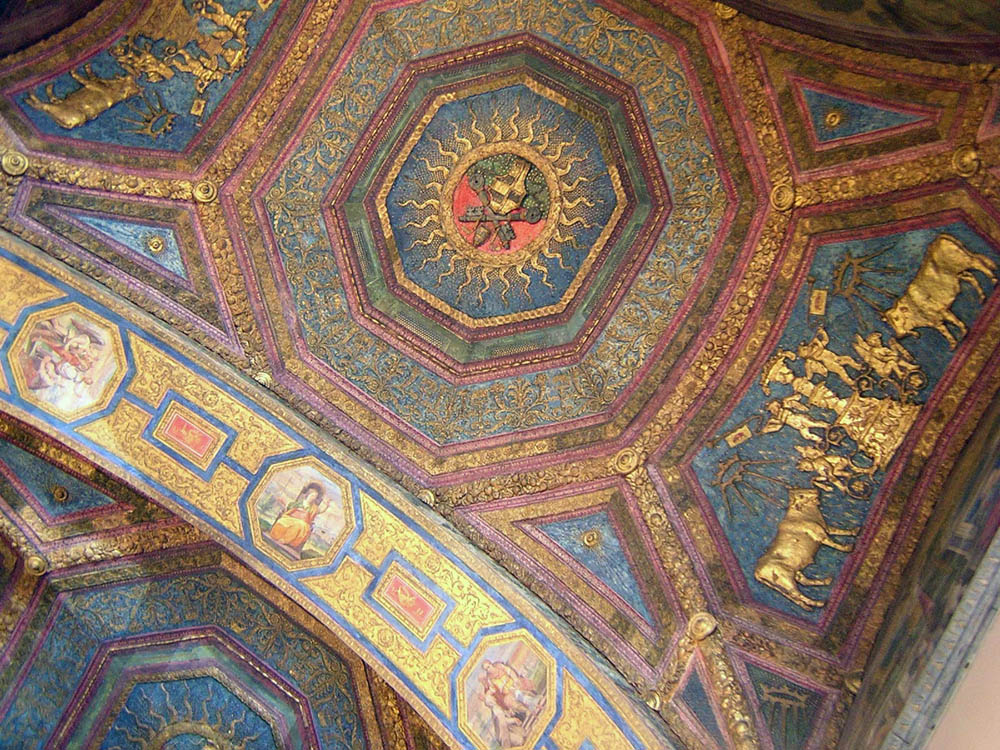
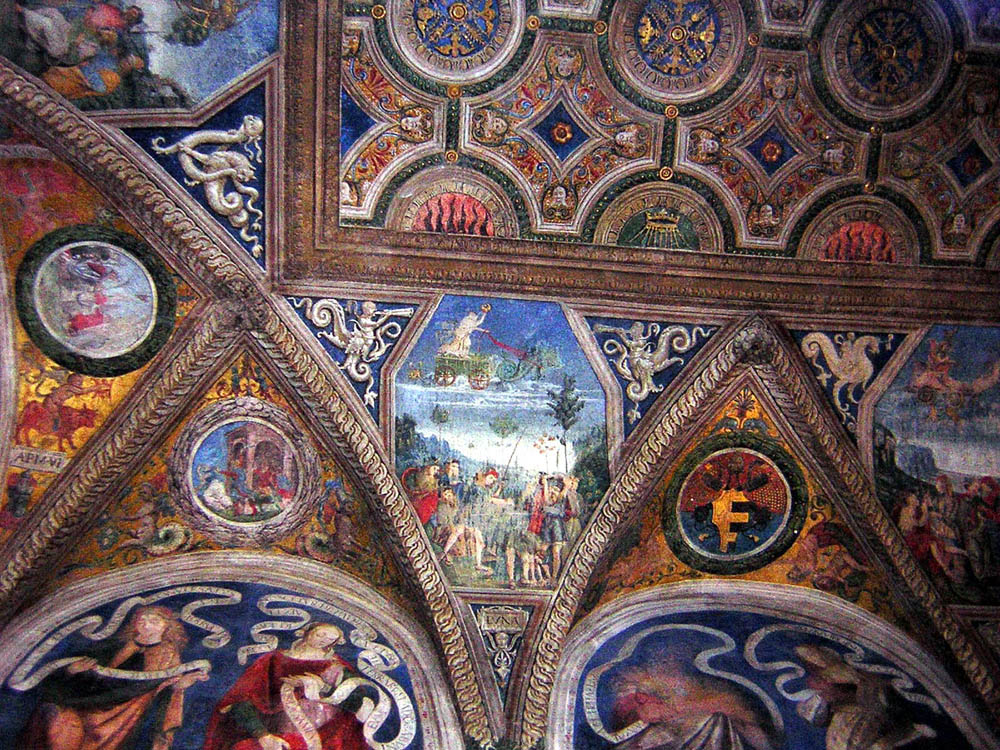
The ceiling of Alexander's apartment.

All this is expected of a Renaissance pope. He spent lavish sums on redecorating the papal apartments within the Vatican palace, with the Borgia bull all over them.  He took a new mistress, the young and enchanting Giulia Farnese, and soon the papal palace rang with the cries of a newborn papal princess.  He gave vast sums from the Church’s coffers directly to his children, to spend on amassing land and personal troops.  He made corrupt appointments of clerics that fed vast sums into the pockets of allies who never went near the abbeys or peoples whose spiritual well-being they were supposed to oversee.  He used papal military forces to pursue personal family vendettas, particularly against the Orsini and Delle Rovere. All this was also pretty standard for a Renaissance pope.  Here is where it gets exceptional. Cardinals and other powerful figures who opposed the Borgias kept dying–sometimes of symptoms suggesting poison, sometimes of bloody assassinations, sometimes of obviously trumped up court sentences, or of unexplained issues while they were incarcerated in the private papal prison in Castel san Angelo.  The estates of the condemned kept getting confiscated by the holy see, and winding up, not in the papal treasury, but privately in the hands of the popes sons and cousins.  Giovanni was a Duke, and begins demanding to be treated as the equal of the many Italian nobles who had looked down their noses all those years at the half-Spanish mutts.  Cesare, meanwhile, positioned in the papal conclave and with fourteen-or-so other Cardinals appointed by his father and sure to vote his way, was in a good position to succeed his father in the next election.  Now the papacy was ready to become a permanent hereditary Borgia monarchy.

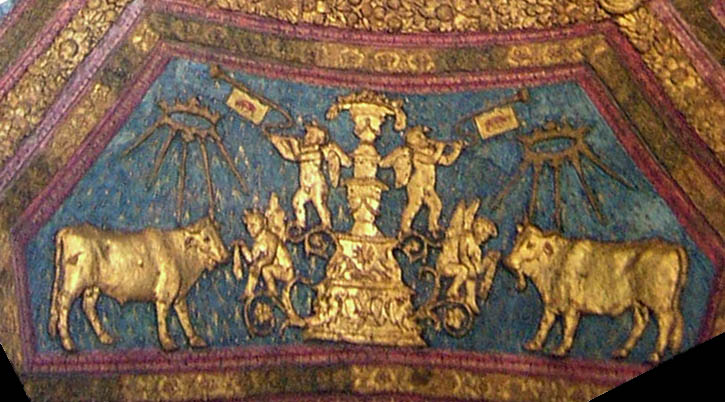
More Borgia Bulls, on Alexander's ceiling. The next pope refused to live in those rooms, and made new ones. Now they keep confusing modern art there.

In 1494 Alexander made a mistake:

  • Alexander: “Hey, King of Naples!  Give me a whole ton more land and money!”
  • Naples: “What?  No!  I already married my daughter to your son, that’s enough!  Go away!”
  • Alexander: “I’m the pope!  What I want I get!”
  • Naples: “I don’t care if you’re the pope!  Do your worst!”
  • Alexander: “Hmm… rather low on armies at the moment, actually.”
  • France: “Excuse me, Your Holiness, but I have an army, and I also dislike Naples.  Why don’t you let me march through Italy and beat up Naples for you?  We can pretend I’m on the way to a crusade, so they don’t see it coming.”
  • Alexander: “Sure!  Thanks!  That sounds like a great idea!”
  • France: “Sweet!  All right, boys!  All aboard to invade Italy!”
  • Alexander: “Invade Italy?  What?  Oh, huh… that sounds bad…  Um, please stop?”
  • France: Bang!  Crash!!  Smash!!  “What was that, Your Holiness?  I can’t hear you, I’m too busy conquering Milan!”
  • Alexander: “Dangit!”
  • Italy: “Wait, did His Holiness just invite the French to invade?  That’s a new one even for the ‘worst popes’ book!”

But he remained the pope,  however brutal his exploits.  He had armies, money, his own prison-fortress, his own courts of law, political instincts honed by decades, detailed knowledge of everyone’s secrets, the authority to grant noble titles, and the power to damn you to Hell forever and ever.  His every move made him more powerful at the cost of his enemies, so the worse things got, the bleaker the prospect of taking down the Borgia monster.

Lucrezia Borgia

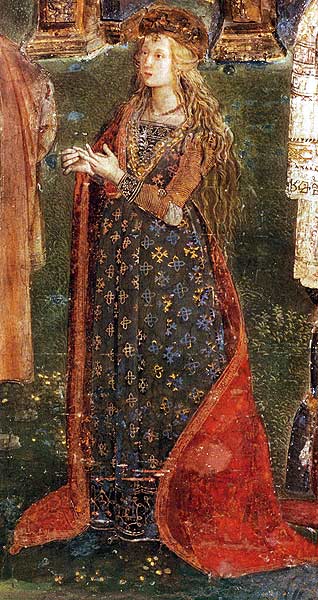
If you can’t take down the monster, one traditional option is to marry it.  Yet in this case, even allying with the pope by marriage, effectively agreeing to permanently condone and support whatever antics he got up to, was not necessarily a permanent fix.  The infamous and enchanting Lucrezia Borgia deserves an entry of her own someday, but I will treat her briefly here.  She was supposed to be one of the most beautiful ladies in the world, with blonde hair which fell past her knees, and a keen and well-trained intellect.  I can testify personally to the latter, since I have read some of the letters she wrote to her father from Milan at the age of fourteen, and the depth of her understanding of the European situation as she warns her father of political turmoil along Italy’s northern border certainly adds plausibility to the impossible competence of a lot of teen-aged young adult and anime protagonists.  In marriage terms, she was the best catch in the world.  Unfortunately, she was too valuable.  Alexander engaged her to one noble, then broke it off in favor of a better one, then a better one (“What’re ya gonna do about it?  Her dad’s the pope!”).  Eventually he married her to a bastard of the Sforza, the ruling family of Milan, then when the Sforza weren’t valuable enough wrangled an annulment (the Sforza objected fiercely: “You can’t do that!  We’re Catholic!  Ending a marriage requires a special dispensation from the pop… oh, right. #%$&!”)  Next Alfonso of Aragon, from the Naples-Spanish royal family.  That one ended in a juicy (and unsolved) murder. All the rumors of corruption that follow corrupt rulers naturally followed the Borgias, and I mean all of them.  Every important person who died was poisoned by the Borgias.  Every body found floating in the Tiber was their fault.  Lucrezia was sleeping with her brothers.  Lucrezia was sleeping with her father.  Giovanni was sleeping with Gioffredo’s wife.  Giovanni murdered his own wife.  Cesare murdered Lucrezia’s second husband out of jealousy because he was in love with her.  Alexander was sleeping, not just with Julia Farnese, but with Julia Farnese’s brother Alessandro.  Alexander was sleeping with the Ottoman Sultan’s brother Cem.  Most of these rumors must be untrue, and experts have spent many years making baby steps toward sorting true from false, but the majority is pretty much impossible to verify.  It does seem to be true that there was a patch in there when so many Cardinals were being murdered that there were active betting pools in Rome where you could lay money on which Cardinal would be offed next.  I myself am half convinced by the numerous accounts that claim that Cesare used to go out in the streets at night and murder people for fun.  I mean, why not?  His dad’s the pope!  Many of the claims may be outlandish, but neither historical facts nor the rule of plausibility can really help us quash them when the facts we do have are so exactly what we would expect if everything was true.  For example, in 1498, two of Lucrezia’s household servants were found dead in the Tiber without explanation, and shortly thereafter she definitely gave birth to a bastard, which was officially declared to be Cesare’s son, then to be Alexander’s son, then to be her half-brother with no claim about who the father was.  What was history supposed to think?  And all this time, the Ottoman Sultan’s brother Cem, who was living in Rome as a political hostage, did spend a suspiciously large amount of time hangin’ with the Borgias.

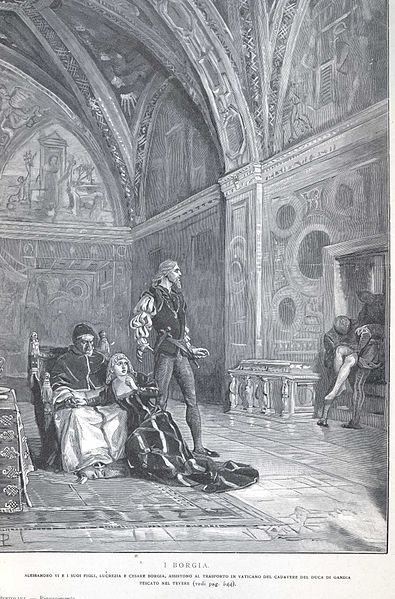
Shock! Dismay! Much later romanticized image of Cesare, Lucrezia and Rodrigo as the body is brought in.

But these were small things.  In 1497, one of the bodies floating in the Tiber was their own.  Giovanni Borgia, Duke of Gandia, Alexander’s heir.  An untouched purse containing gold worth more than a year’s income to many Romans proved it was not a random murder.  Alexander launched an intense investigation, then suddenly halted it after less than two weeks without any announcement of the result.  No one was convicted.  Rumors blamed the Orsini.  Darker rumors blamed his fellow Borgias.  Young Gioffredo Borgia was accused, on the grounds that Giovanni was supposed to have been sleeping with his wife.  Cesare Borgia was accused on the grounds of… of… frankly, it just seems that everyone who knew Cesare and knew Giovanni and knew the situation just agreed, as if by instinct, that it was Cesare.  Nothing else made sense.  Fratricide–the narrative demands it.

The Dark Prince Rises:

Why kill Giovanni?  [Disclaimer: there is no proof Cesare did kill Giovanni.  I freely confess that my tendency to believe those who claim he did is based solely on (A) its consistency with his later actions, and (B) the fact that it feels narratively right.  There is no proof!]  Cesare was supposed to succeed his father as pope.  But Giovanni, he was the one who got to be a Duke, to marry a princess, to enjoy the lands and castles, and to carry on the Borgia name.  He had been the heir.  The logical next heir should have been Gioffredo.  Instead Cesare took center stage.  He renounced the Cardinalship, becoming the only man in history ever to do so.  His father pressured the French into giving him a princess for a wife, and a Ducal title.  So little did the actual people ruled by nobles matter to the aristocrats who owned them at the time that they decided to make him Duke of a region called Valentinois for the sole reason that, as Archbishop of Valencia, he was already nicknamed “Valentino”, and this way they wouldn’t have to change his nickname.  He took command of the papal armies, and control of the Borgia estates.  But Alexander continued to sort-of treat him as a Cardinal and he continued to sort-of act like one, making everyone worry that they might still intend Cesare to succeed his father as pope even though he was now also intending to succeed as worldly heir.  What did it mean?

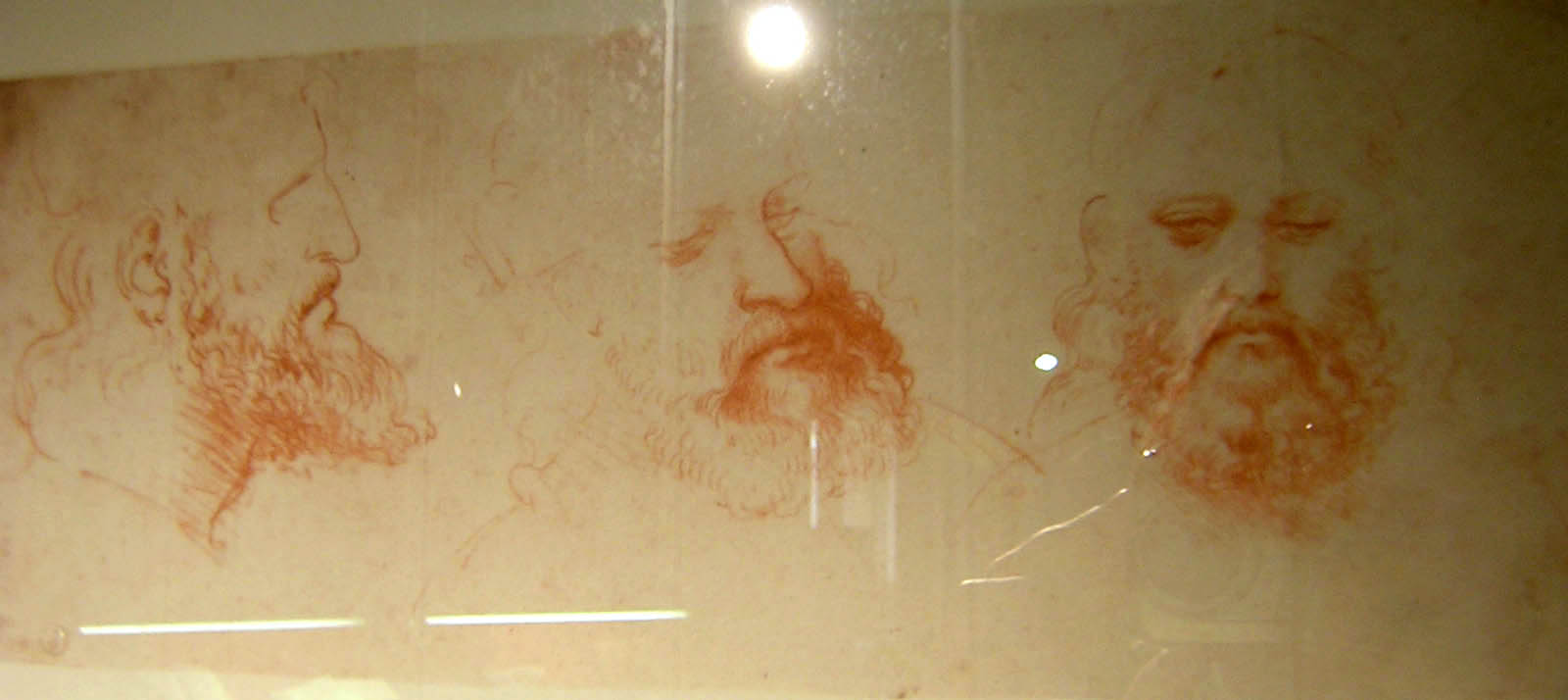
This drawing by Leonardo Da Vinci is pretty-much unknown, but an expert whom I have reason to trust told me with confidence that he believes it is a portrait sketch of Cesare.

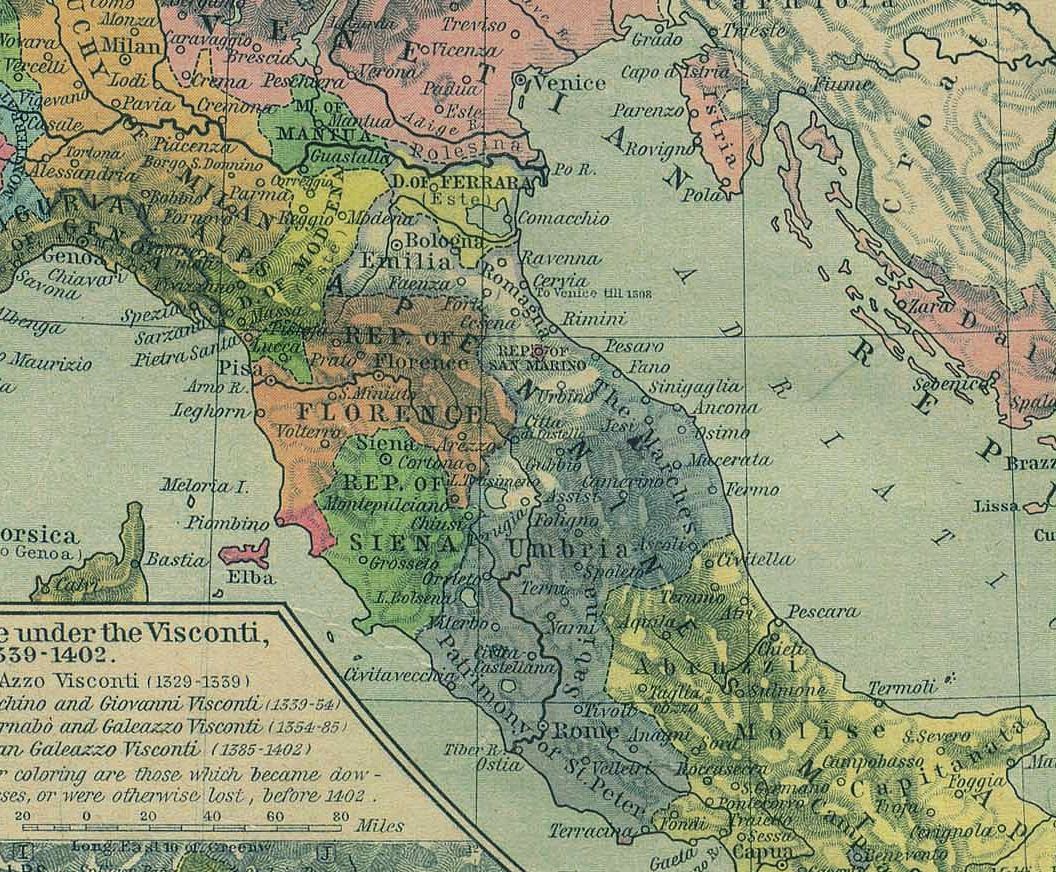
Titular power was not enough now.  During Giovanni’s years, Alexander had already started signing papal lands over to his son-and-heir, not as temporary leases but as permanent gifts, carving off pieces of the Papal States and creating a private Borgia kingdom out of what had been Rome’s.  You see, titular ducal titles like Gandia and Valentinoi,s to Italian eyes, just meant some faraway nowhereville which gives people money and makes us have to call them “Your Grace”.  Such territories didn’t matter, not like a territory in Italy would matter.  What Alexander and Cesare made now was different.  Alexander gave a big hunk of the papal states to Cesare, as a permanent gift.  The cities within the Papal States were governed by papal “Vicars,” i.e. nobility granted rule over sub-territories within the papal lands much as Dukes and Counts are granted sub-territories in a kingdom by a king or emperor.  These vicars were in theory appointed by the pope and could be replaced by him, though in practice the position was by custom passed along noble lines from father to son.  To depose them all and give their lands to his son as the new vicar was thus technically legal but practically unthinkable, and an as great a shock to the political scene as if a king of France had suddenly deposed half his top nobles.  It also implied Alexander’s intention to leave these territories in Borgia hands permanently.  Next Cesare raised armies and started, on small pretexts, attacking neighboring city-states and territories, ejecting the current rulers and adding them to his private Borgia kingdom.  (“What’re ya gonna do about it?  My dad’s the pope!”)   A new blotch appeared on the European map.  Let me repeat: a new blotch appeared on the European map, a kingdom out of nowhere, carved out in the heart of Italy, a kingdom which no longer belonged to the pope, or any Italian house, but to the Borgias.   Whether Cesare became pope next or not, he would be Duke—perhaps soon King—of an ever-growing chunk of the world.  No pope had done this.  No pope had done anything close to this.

Maps help, even if this is not the best. The blue section in the middle is the Papal States. The northern arm is what Alexander carved off for the Borgia kingdom. Ferrara to the north (Yellow) and Modena (also yellow, west of it) are what became Borgia allies when Lucrezia married Alfonso D'Este. Notice how Florence's orange territory is now an inconvenient bite-shaped hole in the side of Cesare's kingdom.

The new and growing Borgia Kingdom was an especially terrifying force in the eyes of those on its ever-changing borders.  The pattern rapidly became clear: ally with the pope–by marriage or treaty–or you are next on Cesare’s chopping block.  These were not subtle takeovers but outright sieges, with the full brutality of Renaissance warfare.  Even Ferrara—the untouchable no man’s land between Venice and Rome which no man dared disturb lest strife on the Venetian border weaken the power whose fleet was the only barrier between the Turk and Christendom—even here Cesare threatened war.  The threat of war with the Turk meant nothing to him.  He was ready to ravage Ferrara, and would have if the Duke hadn’t speedily married Lucrezia and agreed to condone and acknowledge all his new brother-in-law’s conquests.  So even the untouchable noble house of Este fell into Borgia hands.  And do you know what plump, gold-fatted city-state lay directly west of the patch where Cesare was playing king-unmaker?  Good guess.

Good morning, Mr. Machiavelli.  Your mission, should you choose to accept it, is to prevent Cesare Borgia from conquering Florence.  You will serve as our official ambassador to his court.  You will shadow the Duke-Cardinal as closely as possible, report to us about his character and tactics, and develop a strategy to keep him from adding Tuscany to his expanding kingdom.  While at his court, you will need to maintain yourself and your team with grandeur sufficient to make him take us seriously as a political force, but we can’t send you any funds to pay for this, since Borgia has so completely destroyed peace and order in the region that bandits are rampaging through the countryside robbing and murdering all our couriers.  As always, should you or any member of your team be caught or killed, the Signoria will disavow all knowledge of your actions.  This message will self-destruct in a few weeks when your office is inevitably looted and burned, but if you throw it in the fire that will speed things up.

Thus began Machiavelli’s very special education in the conduct of a different kind of prince.

Cesare's ducal coat of arms, adding the French fleur de lis after he successfully wins the King of France to his side.

Cesare Borgia was both feared and loved.  The “loved” part may seem out of place given Borgia infamy, but it was true.  The papal vicars Cesare replaced had been widely disliked by the peoples they ruled, since most of them were corrupt and more interested in family advancement than their people’s well-being.  Cesare offered something different, and in many cases better.  Better how?  Because the fundamental purpose of government, from the perspective of a butcher or a weaver, is to keep the peace and prevent killing and looting.  Cesare did that.  Cesare did that very, very well.  How?  If someone was caught causing strife in the streets, that person would be executed in the most horrifically graphic possible way and his corpse strung up in public.  Consequence: peace. Two examples of Cesare’s activities in this period crop up particularly vividly in the history books, and in Machiavelli’s “little book on princes.” The first is the case of Remirro de Orco.  Cesare conquered the territory of Romagna (East/middle hunk of Italy), including the city of Cesena.  Such was the chaos resulting from the violent upheaval and expulsion of the old rulers, that the region of Romagna had largely degenerated into chaos, banditry, killing and looting.  Cesare needed to bring order.  He appointed a mercenary captain named Remirro de Orco, one of his more loyal men, and commanded that he bring peace to the area as efficiently as possible by using maximum brutality.  Following Cesare’s order, Remirro carried out numerous executions, using methods gruesome even for the Renaissance, and speedily crushed the region under the iron heel of peace.  No one looted.  No one dared.  After peace was achieved, Cesare inspected the region and confirmed that it was indeed stable, arguably even more prosperous than it had been before his conquests, but that the people were fired with bitterness and rage.  The next morning, Cesare had departed, and Remirro de Orco was found in the town square of Cesena, having been sliced in half, with his gore-spewing entrails strewn across the decorative pavement.  No one doubted it was Cesare’s doing, but to Machaivelli’s astonishment, the effect of this unthinkable betrayal was instant and lasting peace.  The people were satisfied, even grateful, that Cesare had taken revenge upon the brutal oppressor, and the new, gentler vassal he left in place to rule the region was readily obeyed.  They did not blame Cesare for the atrocities loyal Remirro had carried out at his express order – instead they thanked him for avenging them.  Cesare was loved.

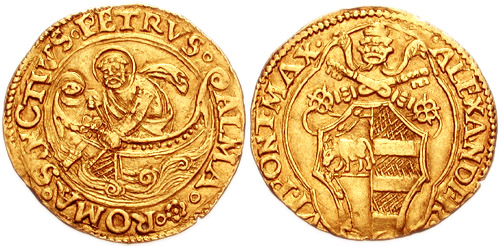
Coins minted by you-know-which-pope.

He was also feared, by other loyal vassals who noticed (as my father urged Crabbe and Goyle to) that the villain had a tendency to brutally murder people near him, even loyal servants.  This was unheard of.  The Handbook of Princes says the success of the prince depends on his ability to inspire loyalty and love from his vassals.  The vassal betraying the benefactor is the worst thing in Dante’s Inferno; Dante didn’t even have a section for benefactors who betray their vassals because it simply didn’t occur to the Renaissance political mind that one would ever want to.  But it did occur to Cesare. By this phase, by the way, Cesare’s face had been disfigured by syphilis, and he had taken to wearing a mask.  And dressing all in black.  Yes, ladies and gentlemen, he genuinely did go around dressed all in black wearing a mask, betraying and murdering people.  Sadly, we have no documentary evidence that he went “Wa ha ha!  Wa ha ha ha ha!” The nervousness that swept through Cesare’s vassals leads us to the second amazing incident, the massacre at Senigallia.  In very late 1502, several of the vassals who had supported Cesare in return for receiving power under him and having his help crushing their enemies became increasingly afraid, both for their lives and for Italy and Europe, and plotted against him.   This was really quite rational.  But they were disorganized and uncertain, and did not follow through well.  They heard rumors that Cesare had heard about the plot.  They didn’t quite trust each other not to sell each other out to him.  One problem led to another, and in the end they decided to abandon the plot, confess to him that they had considered treason but renew their vows to follow him to the end, and beg his forgiveness.  They confessed.  He forgave.  They rejoiced.  He invited them to join him for a feast.  They heartily accepted.  He massacred them all.  High on Olympus Hestia sighed, and the vengeful Furies in the depths gnashed their teeth as the Laws of Hospitality lay wounded.  Cesare’s vassals never plotted against him again.

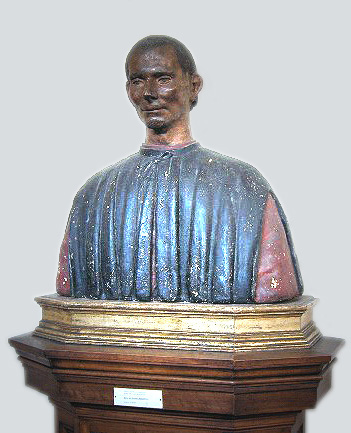
Our most reliable portrait of Machiavelli, made from his death mask.

I will never forget the letter written to Machiavelli by his friend Biagio Buonaccorsi on January 9th 1503, expressing absolute delight and abject gratitude and relief upon hearing that Machiavelli had survived the massacre at which so many of Cesare’s court had been killed.  Throughout this period, dear Niccolo’s friends and family were prepared to read any day that he had been killed, either with Cesare or by Cesare.  And they didn’t manage to send him his salary.  Once they tried giving it to Michelangelo to carry to him when he was en route to Rome, but even Michelangelo turned back in Cesare-ful times of banditry and chaos.  But something else unsettling was happening too.  What of our Handbooks of Princes?  Shouldn’t a betrayal like that make the rest of Cesare’s vassals turn and flee?  Shouldn’t these people rebel hearing rumors of his brutality?  Doesn’t the Handbook of Princes genre teach us that every move Cesare is making should fail?  Then why does every step he takes seem to be a step up?  They’re trying to turn the papacy into a hereditary monarchy, and they’re succeeding. It should be noted that Cesare’s rise does not necessarily completely undermine the advice in the traditional Handbook of Princes.  Providence has exalted tyrants before, and fools have followed them, many out of of fear.  The apparent (psychological) effects of the incidents with Remirro and at Senigallia are hard to explain, but this can still fit traditional narratives, especially if the Borgias fall in some appropriately cataclysmic way, demonstrating the wages of sin and the grisly fate that waits for bad princes and bad popes.  Then Cesare’s story can join our collections of moral anecdotes as an example of hubris and cruelty, while one of his enemies (Guidobaldo da Montefeltro perhaps?) becomes the hero.  But for now, hubris and cruelty seem to be winning the day.

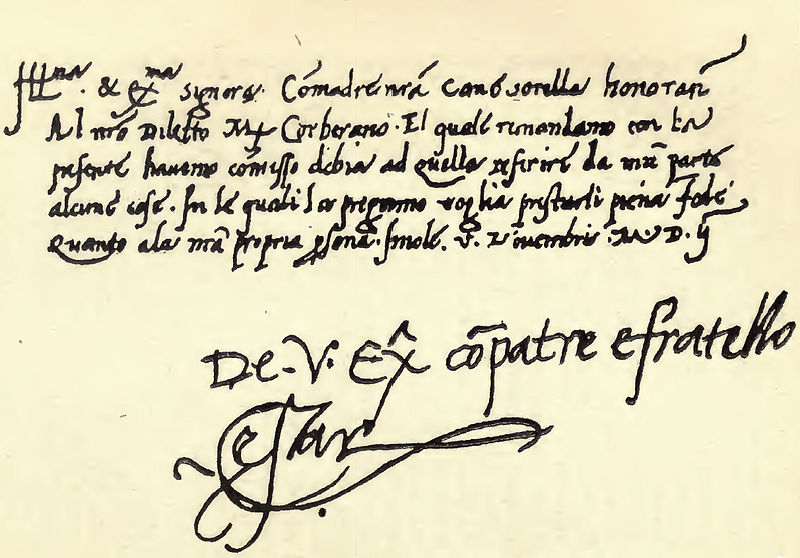
A sample of Cesare's surviving handwriting, with his signature at the bottom.

Machiavelli’s letters from the period include some of his reflections on these larger philosophical and historical questions, but he does not have the leisure to invent political science just now.  That must wait for the leisurely days of his exile.  On this mission, every second is reserved for Florence.  Seeing all who opposed the rising prince fall one by one, Machiavelli too chose to follow fear’s advice and suggested an alliance.  Florence accepted his plan and, after many careful approaches by their wily ambassador, so did Cesare.  Florence became an official Borgia ally, agreeing to recognize Cesare’s legitimate claim to his newly-carved kingdom and to offer money and resources to help him conquer more.  Florence was safe for now—at least, as safe as Remirro de Orco had been. And it is in this precarious state that we must leave Florence, and Machiavelli, and the triumphant Cesare for a little while, as the spring of 1503 promises Great Change.

Continued in Machavelli IV: Julius II, the Warrior Pope

Share

Spot the Saint: Mary Magdalene and John the Evangelist

It’s been a while, so here are some extra trixy new saints to add to our challenge.  (Note, the Renaissance images featured in this post will feature nudity, so if you’re not comfortable with that skip this entry):

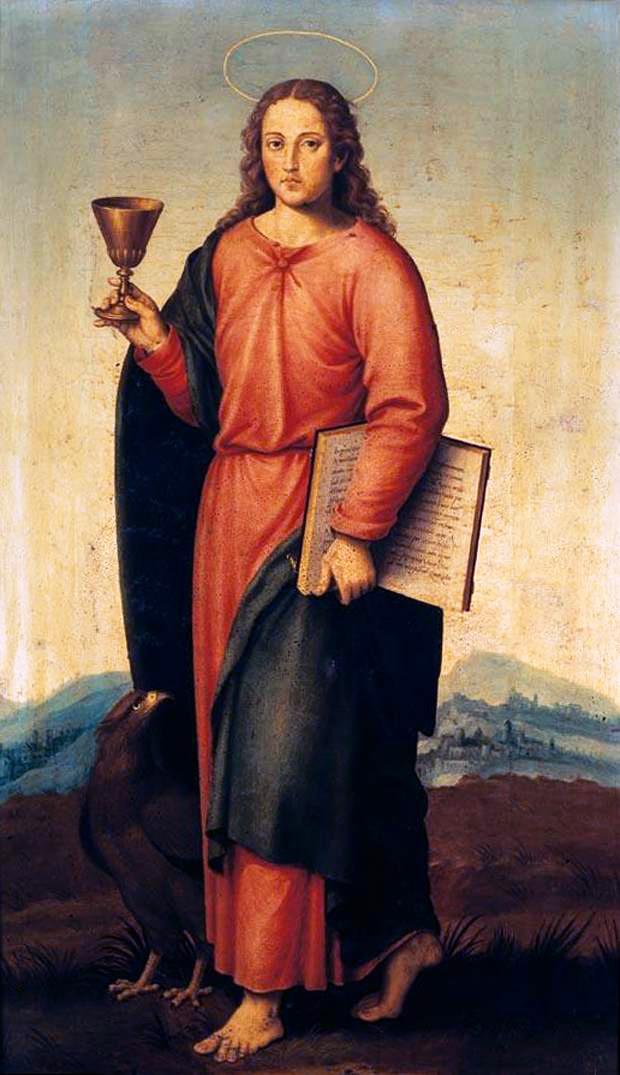
John the Evangelist (Giovanni Evangelista)

  • Common attributes: Eagle, book, pen, Roman robes, EITHER beautiful young man OR old man with very long beard
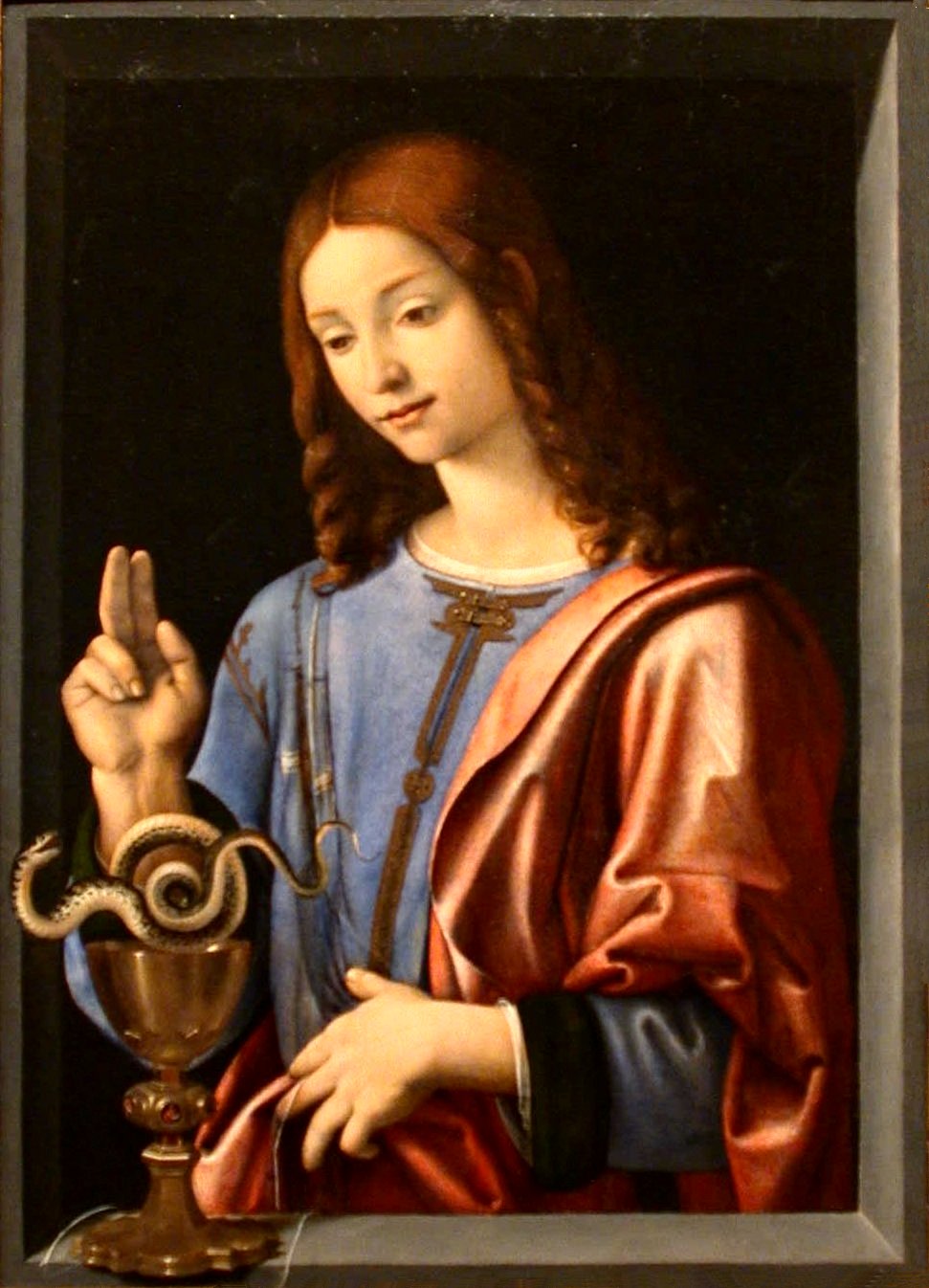
  • Occasional attributes: Chalice with a snake or dragon crawling out of it, often dressed in pink
  • Patron saint of: Friendship, everyone in the bookmaking industry (writers, editors, compositors, booksellers, bookbinders, print makers, engravers), protection from burns, protection from poison
  • Patron of places: Asia Minor, Umbria, Wroclaw Poland, Sundern Germany, lots of weird places like Cleveland and Milwaukee and Boise Idaho
  • Feast day: December 27th, also May 6th (his surviving being boiled in oil).
  • Most often depicted: Standing around with other saints, mourning at the Crucifixion or Deposition, asleep in Christ’s lap at the Last Supper, being boiled, in a set with the other three Evangelists
  • Relics: Ephesus (church has now been turned into a Mosque)

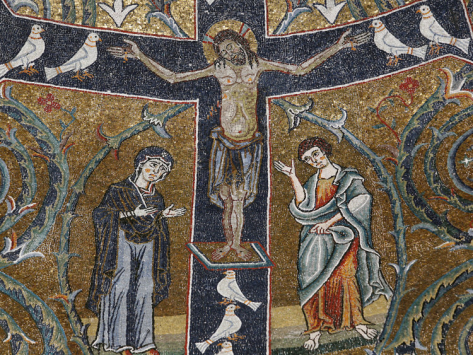
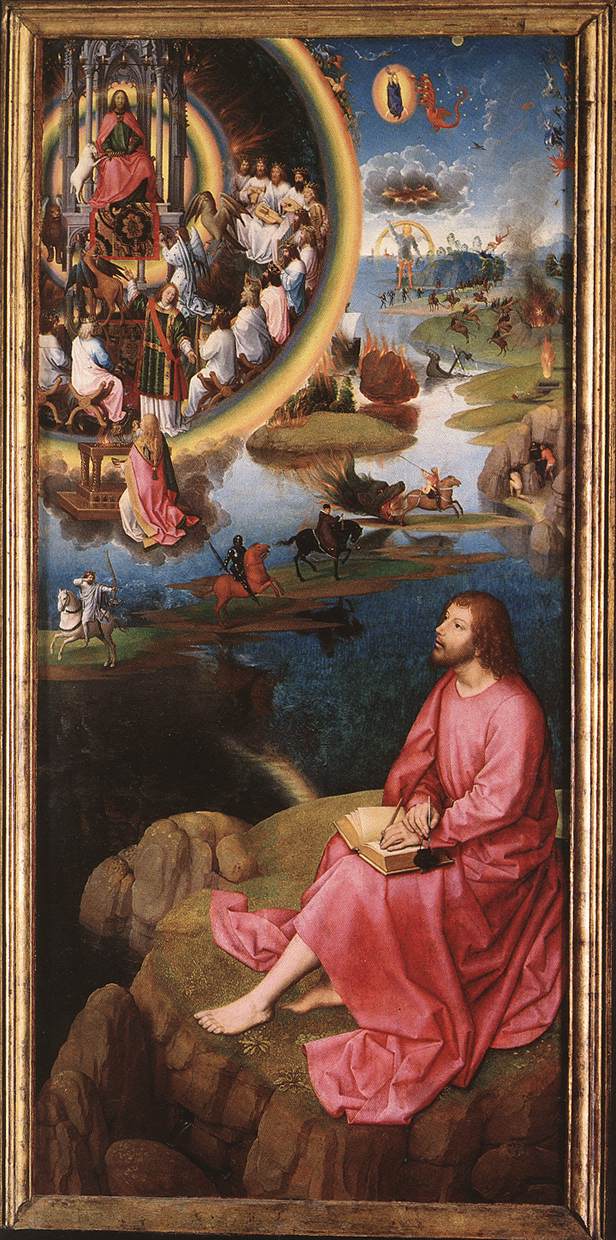
Due to the popularity of Crucefixion scenes, the most commonly depicted apostle in Renaissance art is not, shockingly, Peter, nor Paul, but John the Evangelist, who, like the fainting Virgin and tearful Magdalene, makes a mandatory cameo at the base of every cross.  Add to this the frequency with which artists decorate four matching surfaces (four vaults, four doors, four pinacles above central images) with the Four Evangelists, and the frequency with which John is depicted writing his Gospel or witnessing events of his Gospel, and he becomes one of the most familiar faces in our list.

Familiar but tricky.  John the Evangelist, or “the Beloved”, presumed author of the Gospel of John, is a great challenge to saint spotting for three reasons.  First: he often has no attributes, and has to be identified from his general bearing, location and activities.  Second: he appears at two completely different ages, which can throw one off.  Third: when young he often looks so female to the modern eye that the mind leaps straight to our list of female saints, looking for spiked wheels and eyes on plates, without considering the fact that this might be a boy.  The fact that he appears so often in the same scenes where Mary Magdalene makes sense to appear makes the two of them frustratingly easy to mix up.

John’s radically fluctuating age is due to the fact that he is believed to have lived a very long time, and did important things at many different points in his life, unlike martyrs who are pretty-much always shown at the ages they were when they died.  He was established as having been very young (and handsome) during Christ’s life, and can be spotted among full sets of apostles by being the most handsome, and often the only one without a beard.  He then went on to live a very long life preaching and writing, and survived numerous near-martyrdoms: He was arrested and beaten by Domitian, but remained impervious.  He was then poisoned, but he blessed the chalice and the poison turned into a snake or dragon and ran away (Where did it go?!  Is it still out there?…), hence his attribute of holding a cup with a snake in it.  He was then boiled in oil, but that didn’t work either, and he escaped to Ephesus where he lived a long and pious life.  He also supposedly got into a conflict with some worshipers of Artemis at one point, who tried to stone him, but the stones bounced off, and then at his invocation two hundred of them were killed by lightning, and then resurrected, in one of the largest mass-resurrections in the palette of saintly miracles.  But because none of the implements involved in these stories actually killed John, he does not carry them around with him in Heaven (i.e. in art), so while Lorenzo and Catherine and Paul have convenient death tags, John remains elusively short on attributes.

John is depicted either as a beautiful youth, or as an old man with a very long beard.  Modern gender tag conventions make his youthful form particularly easy to mistake for a woman, mainly because of his hairstyle, which is usually long and loose down to his shoulders or shoulder blades.  This style looks feminine by modern standards, but was not by Renaissance standards.  In Renaissance art, pretty-much no woman would ever have hair nearly that short.  Women’s hair is generally to the elbows, and is worn tied up in an elaborate hairstyle, or at least covered by a veil.  Loose hair with nothing tying it up is the style of a knight or dashing nobleman, never a woman.  The to-modern-eyes feminine presentation of John the Evangelist is enhanced by the fact that, at least in Tuscan art, he’s usually dressed in pink.  I don’t know why this is, and it certainly isn’t a solid rule, but just as the Virgin Mary is almost always in a blue robe, John is almost always in pink, which was not gender-coded in the Renaissance as it is now, but does rather add to the overall effeminacy of the young “beloved”.

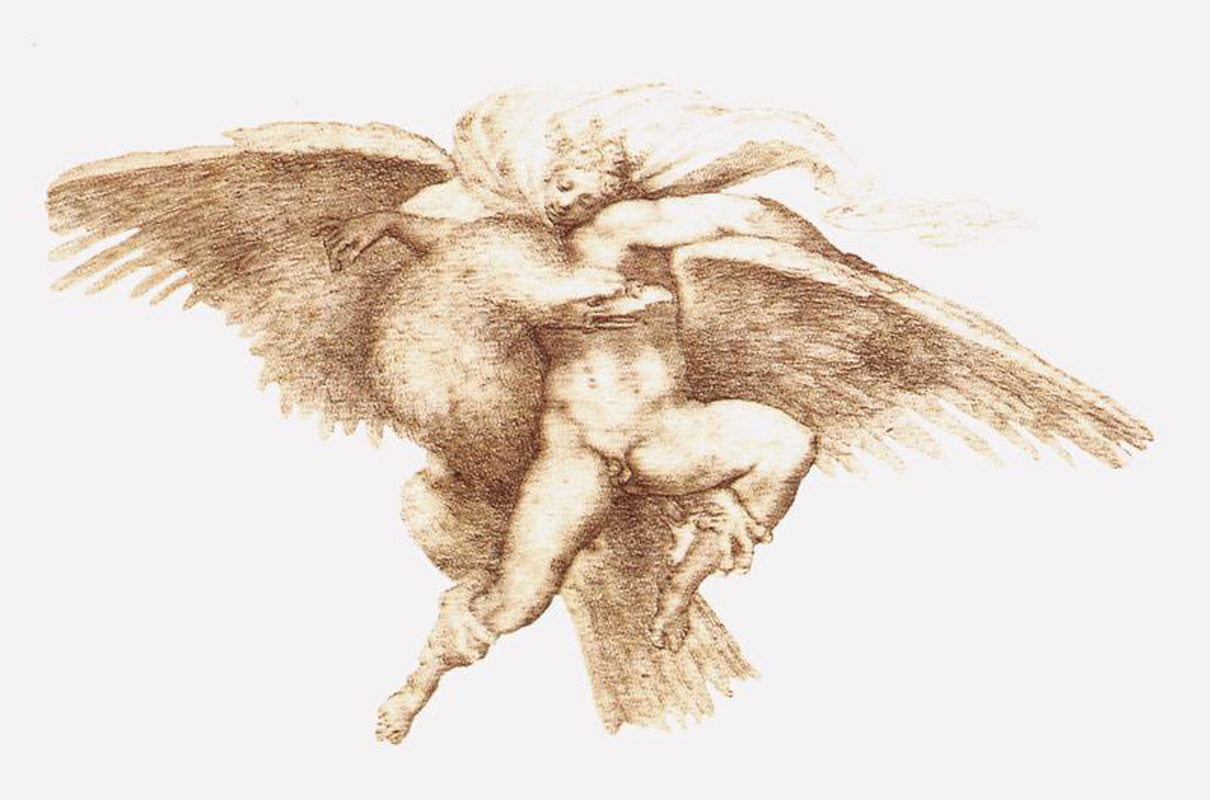
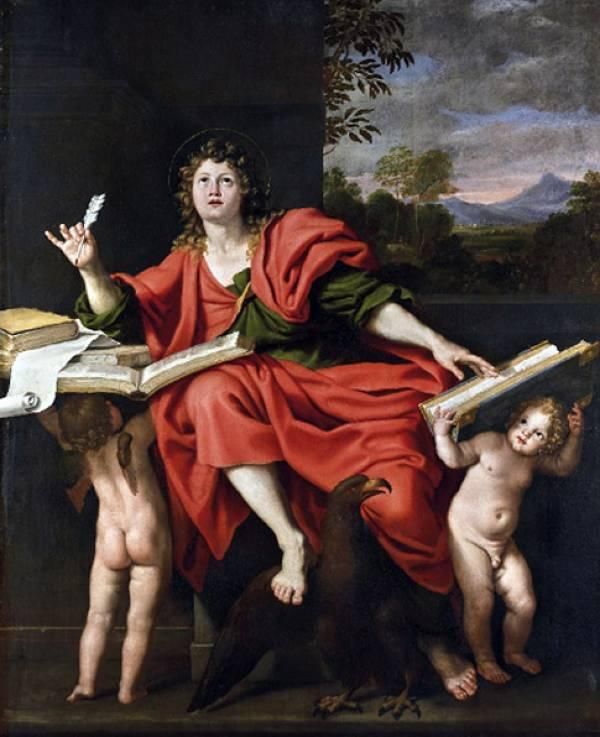
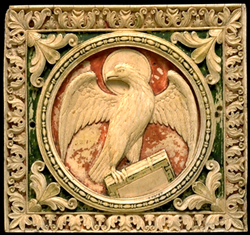
The Four Evangelists have four winged animals that represent them: the Winged Lion for Mark, the Winged Bull for Luke, the Winged Person i.e. Angel for Matthew, and the Winged Eagle for John (no, no one has a non-winged Eagle as an attribute).  Sometimes just the animal is used to stand in for the evangelist, with no human figure at all.  The evangelists’ animals are sometimes depicted covered with lots of eyes, but more often John just has an eagle hanging out next to him.  This, combined with John’s youth and beauty, strongly invokes the Greco-Roman image of the handsome Ganymede being carried of by Zeus in the form of a lustful eagle, and puts John solidly with Sebastian in the palette of “sexy saints,” i.e. saints who are sometimes used as an excuse to show a sexy male body in a world in which eroticism, particularly homoeroticism, was controversial, yet religious content often eased criticism.  We have Renaissance diatribes in which theologians rail against the sensuality of paintings in aristocrats’ collections, citing nude Venuses and scandalous Ganymedes, but the same treatises often explicitly say that nudity is A-ok in religious art, because the bodies of John, Sebastian and Mary Magdalene point the soul toward heavenly thoughts rather than Earthly.  Looking at them, though, it is sometimes hard to see the difference:

Michelangelo's Rape of Ganymede

John the Evangelist. Note the pose of the legs, and the position of the eagle.

The old John, author of the gospels, is often depicted with the other three evangelists in a set, but sometimes he is depicted as just a bearded sage with a book and an eagle, or, less helpfully, with just a book, or even less helpfully as just a bearded man, though, often, still in pink robes.  Sometimes, to mix things up, he’s just an eagle.

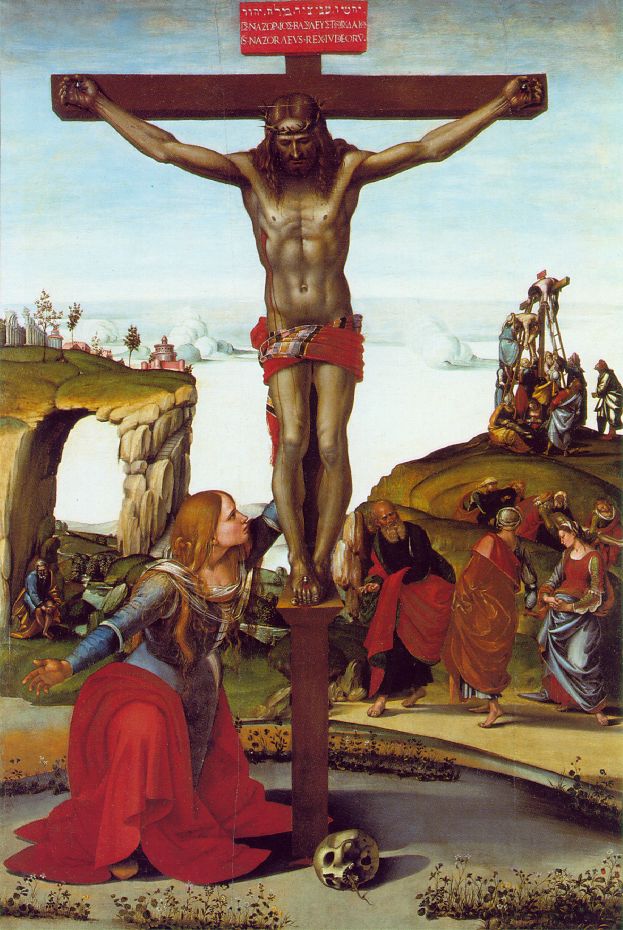
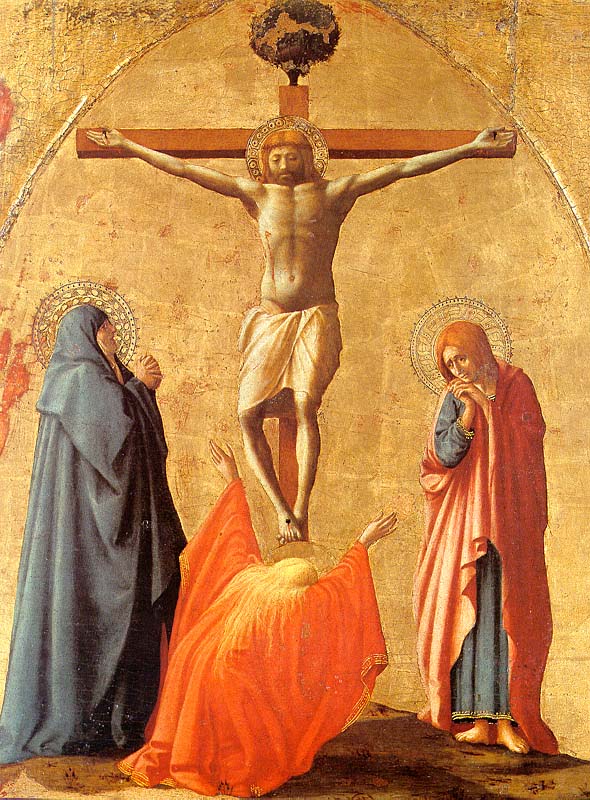
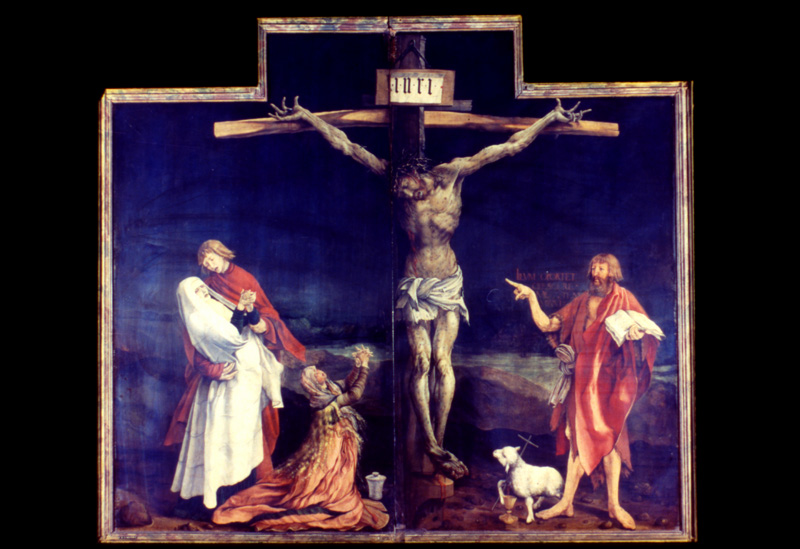
One way to spot John when he has no attributes is by his customary position.  At a Crucifixion, John is always depicted near the foot of the cross, mourning dramatically, accompanied by Mary Magdalene, the Virgin Mary and ladies attending to the Virgin, usually including Margaret.  Thus, if there are several beautiful mourners at Christ’s feet, the one with the shortest hair is John.  The gender tags remain trixy, however, and unless one knows what to look for in the hair styles, it can be difficult to tell the difference between John and Christ’s other major mourner, Mary Magdalene.

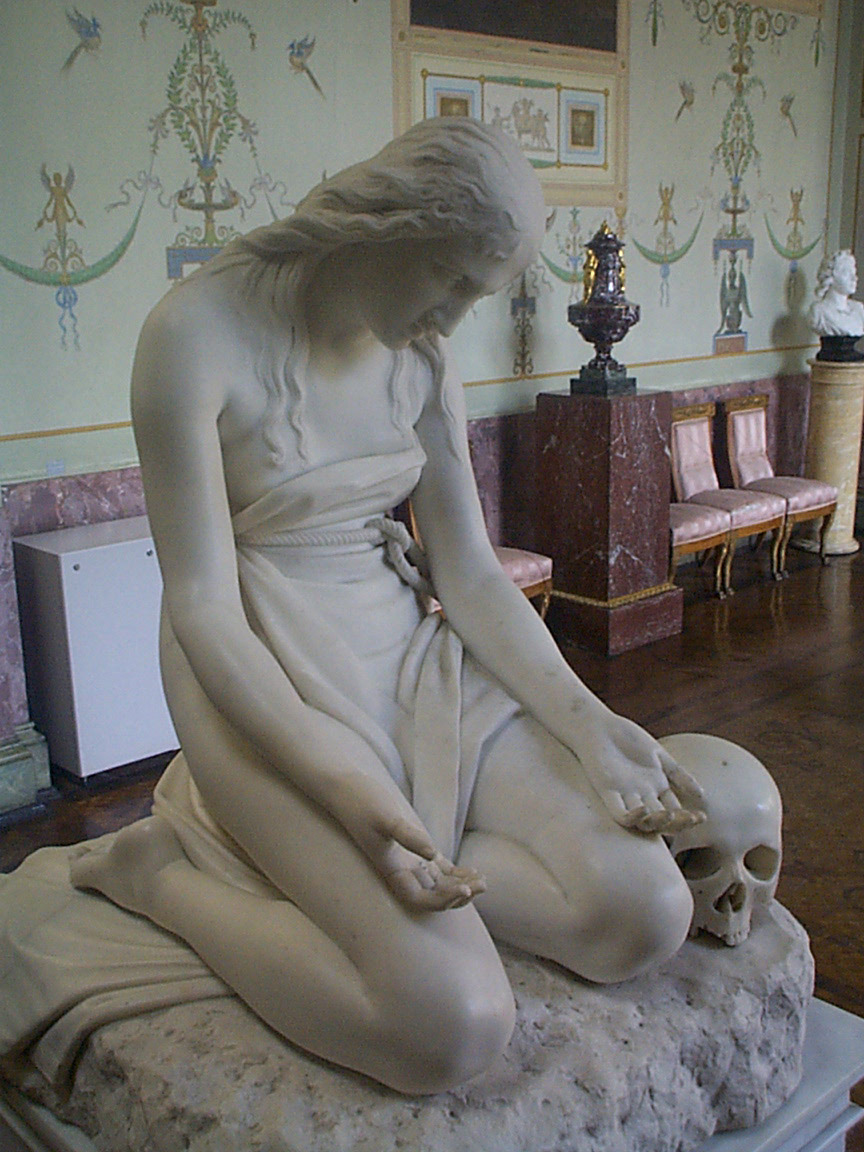
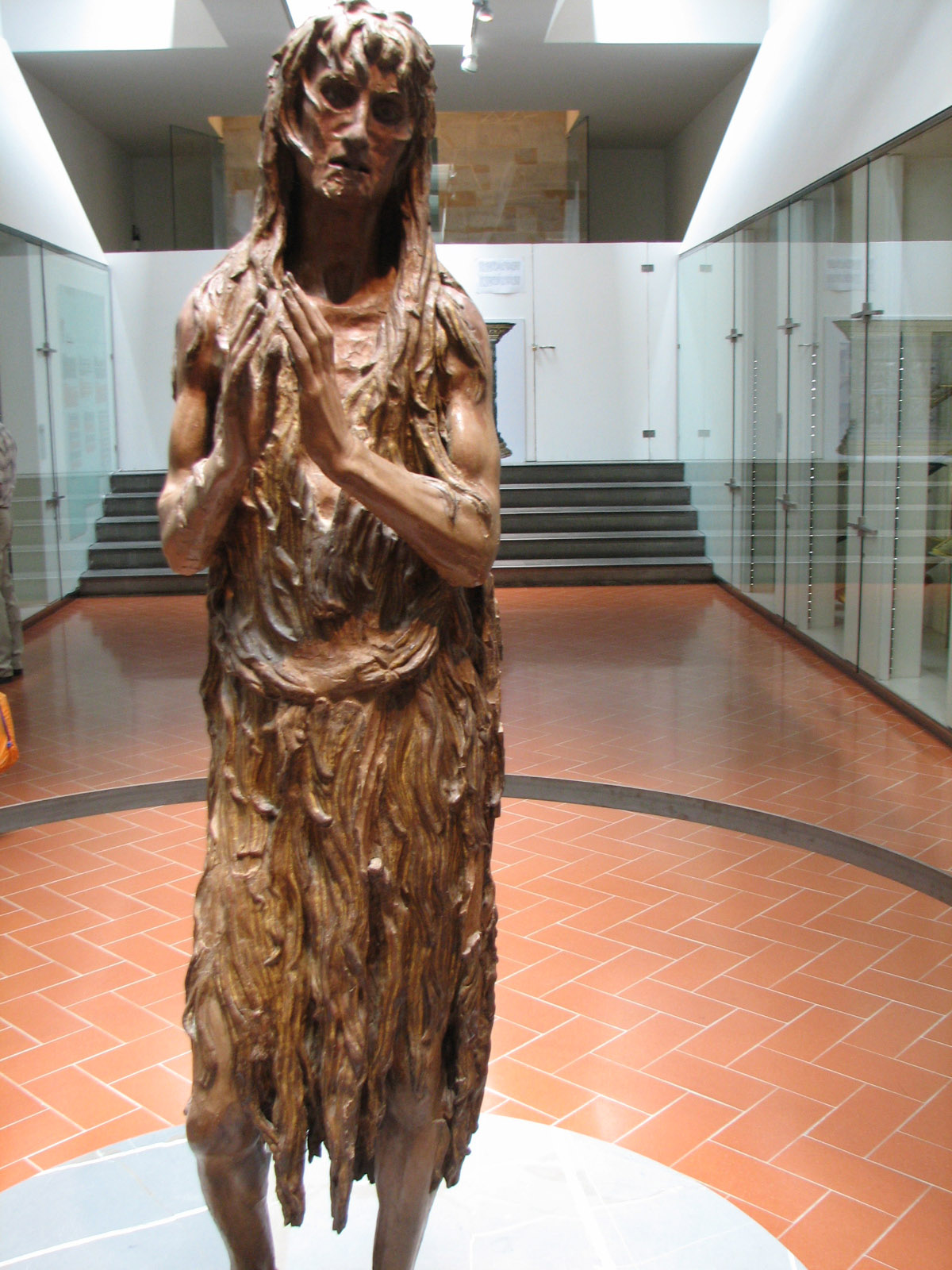
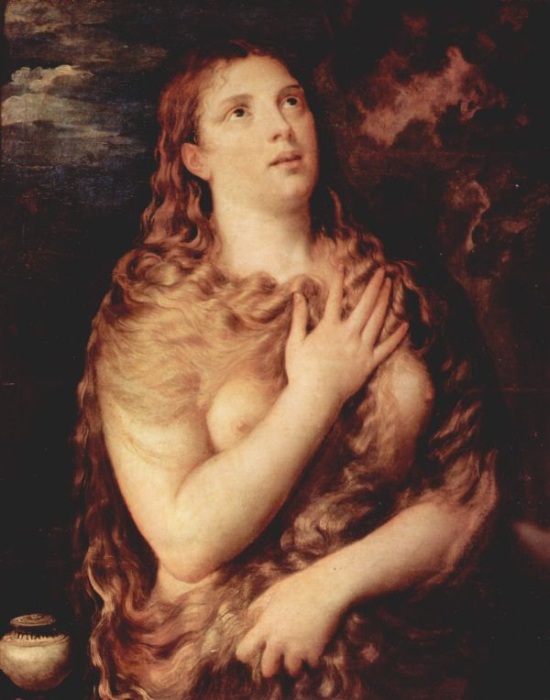
Mary Magdalene

  • Common attributes: Long loose hair
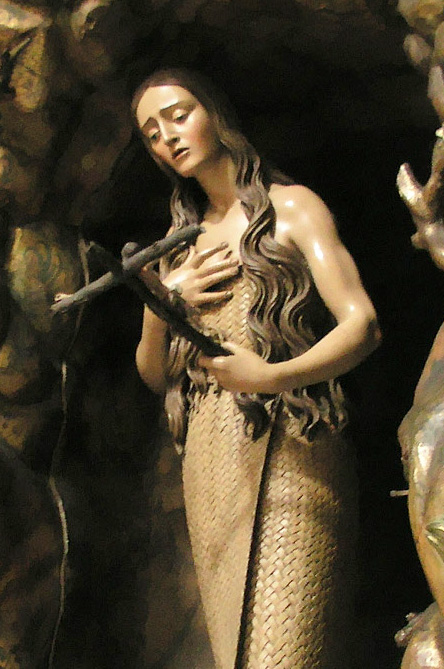
  • Occasional attributes: Ointment jar (often made of alabaster) or cup, skull, naked except for her hair
  • Patron saint of: Penitent sinners, converts, the contemplative life, apothecaries, women, reformed prostitutes, protection against sexual temptation
  • Patron of places: Atrani, Italy
  • Feast day: July 22nd
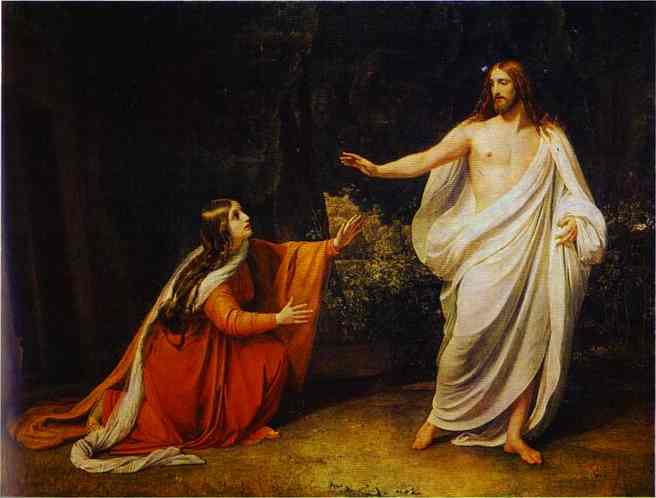
  • Most often depicted: Standing around with other saints, grieving at the Crucefixion or Deposition, anointing or embracing Christ’s feet, in the wilderness being a hermit, being airlifted to heaven by angels, with Christ in the garden attempting to touch him while he refuses (“noli me tangere”)
  • Relics: Either Constantinople OR the French hemitage on La Sainte-Baume, depending who you ask

Ah, Mary Magdalene, unofficial patron saint of conspiracy theorists, historical mystery fiction and feminist historicist conflicts.  There is either way too much information about Mary Magdalene or way too little, depending on what sources you listen to.  Our goal is to present the version which appears in Renaissance Art, as opposed to the skillion other versions, from Mary “Equal of the Apostles”, to Mary thesystematically-suppressed founder of a long-lost feminist Christianity, to… I don’t actually know what she is in the Korean comic “Let’s Bible!” but given that Jesus is a teenage girl with no pants and Satan is a Mexican guitarist, I think I am safe in assuming that she is a talking spider plant.

In the Gospels, apart from a vague reference to her being cleansed of “seven devils”, and being Lazarus’ sister (even this is debated), she pretty-much only appears during the Crucifixion process, at which she is a named and specified witness of (A) the Crucifixion, (B) the fact that the tomb is empty, and (C) the Resurrection.  Renaissance artists depict her consistently at all these things, accompanied at the Crucefixion and tomb by the Virgin Mary, the confusingly vague “Other Mary”, and at the Crucifixion by them along with John the Evangelist and, often, Margaret.

Gregory the Great (in 591 AD) is credited with establishing the idea that Mary Magdalene was a prostitute, who renounced and reformed her evil ways when she converted, and it is this version who populates Renaissance art as the second-most-commonly-depicted woman after the Virgin.  She is thus usually a very beautiful, sensual young woman, the cultural antithesis of the Virgin, and a figure which lets Renaissance religious art have a conversation about female sexuality in a way that the endless martyred virgins like Catherine and Lucy can’t facilitate.  The legend also has Mary Magdalene go out into the wilderness after the Crucifixion and live as a hermit, allowing her to be used as a prototype for serious female participation in the extreme religious life of total commitment, contemplation and self-denial which made hermits and, later, monks such a central part of medieval Christian ideas of true religious life.  Remember that, until St. Francis’s revolutionary program of bringing religious life to the urban lay population, the term “religious” in European culture meant a hermit, priest, monk or non, who were considered the only people with meaningful religious lives, and the only ones likely to go to heaven without being martyred.  The archetype of Mary Magdalane, female hermit, opened this to women.

As champion and representative of the Contemplative Life, Mary Magdalene is patroness of contemplative philosophers, and of the Dominican order, which so values contemplation as a path to the divine.

A depiction of the "Noli me tangere"

While the Mary Magdalene story could serve to open some doors of religious activity to women, it also closed some in the form of the “Noli me tangere” scene.  This scene, frequently depicted in art, was when the resurrected Christ appeared to Mary (before he did to anyone else) and, when she attempted to embrace him, said “Don’t touch me” (Noli me tangere).  This scene is sometimes used to justify refusing to allow women to be priests, where they have to consecrate and touch the body of Christ.  The scene in which Thomas, after doubting the resurrection and saying he won’t believe until he touches Christ’s wounds, is then actually allowed to touch Christ’s wounds is used to demonstrate that men can touch him but not women.  The fact that Mary Magdalene was allowed to anoint Christ’s body when he was dead leads to all sorts of confusing cultural attempts to figure out the correct divisions of male and female physicality in liturgical, medical and funerary situations which I will not attempt to sort out.

"Penitent Magdalene" in hermit mode, with skull

The thing which makes Mary Magdalene recognizable 95% of the time in art is the fact that she has long loose trailing hair.  This derives from (A) the pre-modern association between loose hare on a woman and wantonness/ sensuality/ prostitution, and (B) a medieval legend that, when Mary renounced being a prostitute and threw away her luxurious seductive clothes, her hair miraculously grew to cover her nakedness.  And even though the miracle of her long hair happens at a certain point in the logic of her linear narrative, the same special relationship with time that allows renaissance artists to cheerfully depict toddler-aged John the Baptist in a hairshirt and carrying a staff allows them to depict Mary Magdalene’s miraculously long hair at any point.

Another fun Mary Magdalene legend moment, also medieval, describes the fact that she refuses to eat while in the wilderness, so to keep her alive angels air-lift her to Heaven every day where she is fed divine manna and then set down again.

All this makes Mary Magdalene the top choice saint for painters who want an excuse to depict a sexy woman, just as the usually-nearly-naked Saint Sebastian is the top choice for depicting a sexy man.  Saint Sebastian can be depicted as a fully clothed guy holding an arrow, but is usually a luscious youth with a gauze-like loincloth, and in the same way Mary Magdalene can be a haggard penitent hermit, or she can be a luscious nude, chest heaving with ecstatic (religious) excitement, indistinguishable from Lady Godiva.  Thus we encounter extremes with Mary, as we do with John, ranging, in her case, not in age, but in sensuality, from the extreme of Titian’s Magdalene, whose luscious hare carefully covers everything except the naughty bits, to Donatello’s gaunt and stunning hermit.

Donatello's Version

Titian's Version

The disparity of how Mary Magdalene is depicted is perhaps best summarized by who artists tend to pair her with, since saints are most often spotted in symmetrical groups flanking Christ or the Virgin, and thus every one needs a partner symmetrically opposite.  Often “reasonable Magdalene” (as I think of her) beautiful, in nice clothes, with long flowing hair and her jar, is paired with John the Evangelist, the two beautiful, young people who loved and were emotionally close to Christ the man.  In contrast, “hermet Magdalene” is usually paired with John the Baptist (her hair paralleling his hairshirt), or to the old wasted hermit Saint Jerome, so the pair of them can kneel on rocks and beat their breasts and contemplate skulls and crucifixes in the wilderness in parallel.  Finally “sexy Magdalene” is usually alone, as an excuse to have a naked lady.

But don’t forget to look for the jar – she does have it sometimes.

Population of a Crucefixion Scene:

With John and Mary Magdalene under our belts, it is now possible to sort the population of a standard Crucifixion scene.  Generally not all of these figures are present, but the scenes often include:

  • Virgin Mary, generally wearing a hood/veil, and depicted fainting into the arms of companions
  • Mary Magdalene, with long beautiful hair, generally embracing the foot of the cross, or otherwise grieving very conspicuously, with arms flung wide
  • John the Evangelist, also grieving conspicuously, occasionally helping those who catch the fainting Virgin
  • St. Margaret and “The Other Mary”, nondescript women catching the Virgin Mary while she faints
  • A skull at the base of the cross, supposed to be Adam’s skull, because he was buried at the same place that the cross was set up
  • The Good Thief and the Wicked Thief, crucified on two other crosses on the either side of Christ, with the Wicked Thief on Christ’s left having his soul carried of by a (usually adorable) little devil.
  • St. Longinus, the centurion who stabbed Christ with a spear, depicted carrying a spear, sometimes on horseback.  May or may not have a halo, since at the moment he does the stabbing he hasn’t yet converted, so some artists show him not-quite-yet a saint and therefore halo-free
  • Other non-saint figures, including the soldiers playing dice to see who keeps Christ’s clothes, an unappealing man mocking Christ’s thirst by offering him a sponge dipped in vinegar on a long pole (the Holy Sponge!), and assorted random witnesses who are sometimes so plentiful that it starts to feel like they must be time travelers gathering to watch the occasion
  • Angels with cups (the holy grail) catching the dripping blood
  • Other random saints who logically shouldn’t be there, like John the Baptist, or Francis or Dominic, or whoever is the local patron saint is, stuck in by the artist and shown as witnesses, contemplating the scene and grieving, or, in John the Baptist’s case, pointing at Christ.

The population of a Deposition, when they take the body down and mourn it, is about the same.

Samples:

Quiz Yourself on the Saints You Know So Far:

 The next level of challenge in saint spotting is judging when you do and don’t know figures.  In the image below, you should recognize five of the seven figures.  (One figure is deceptive, since the figure on the left holding lilies is, in fact, a portrait of a more obscure local figure made to look like a more famous one, but you should be able to identify who he’s pretending to be).

Some comments on the old figure second from the right (read these after you have done your best to identify everyone in the picture).  It is often possible to figure out a fair amount about a figure even if you don’t know who it is from looking at details of costume.  Looking at this figure, you can tell first what religious order he is a part of from his clothes, and from the extra decorated band on his habit you can tell he held a high rank, probably a bishop.  Now, note his halo.  See how, while everyone else’s halo is a circle, his is instead a bunch of linear rays coming from his head?  Artists sometimes use this technique, employing two different halo styles in one painting, to differentiate full saints (with the round halos here) from someone who is beatified, i.e. who has gone through the first three stages of becoming a saint but not the last one.  Someone who is beatified has been examined officially by the Church, which has determined that the person is in Heaven and capable of using their position in heaven to intercede with the divine on behalf of people, but who has not yet had the three confirmed miracles necessary to establish sainthood.  Historically, beatification was controlled more by local officials, so that bishops had the authority to beatify local people, while sainthood always required Vatican approval.  Reverting to our Kingdom of Heaven terms for a moment, someone who is beatified is at court, but hasn’t yet succeeded in securing any notable favors from the king, so is a less certain benefactor than an established court favorite like John the Baptist or St. Francis.  For example, Pope John Paul II is currently beatified, but not yet officially a saint.  Long-term, cult followings for figures who are beatified but never canonized are sometimes actively discouraged by the Vatican, which usually has a reason for denying sainthood to such a figure if they do.  For example, Charlemagne was beatified but never canonized, and when the power struggles between Pope and Emperor as rival claimants to imperial power got tougher, the Vatican actively suppressed the cult of Beato Carlo Magno in order to monopolize heavenly authority – this, however, is why Charlemagne is sometimes depicted with a halo, and his remains are stored in fancy reliquaries and treated as holy relics.

Reliquary of Charlemagne

Thus, whoever this figure in the painting is, you can tell by looking, has been beatified but not yet canonized at the point that the painting was done.  Since beatified figures are usually only popular in the areas where they lived, when you see a beatified figure like this, it’s a safe guess that the painting was done in the figure’s home town, or somewhere (s)he was active, and that it may well have hung over the beatified figure’s tomb, or in a church where (s)he worked.

The presence of two different distinct styles of halo is thus a marker that can help you nail down a painting’s origin.  Note: some artists use linear halos for everyone, so you can’t always say a linear halo = a beatified figure, rather what you need to look for is two different types of halo in one painting.  At other times artists use the same technique to differentiate other weird kinds of things, for example an altarpiece I saw at the Academia last week which had round halos on a bunch of female saints and linear halos on some allegorical ladies who were hanging out with them.  This can also be used to differentiate saints from angels, and from Virtues, like Temperence and Strength/Fortitude, who also hang out in Heaven when they’re not busy crushing Vices underfoot or participating in Tarot readings.

Share

Florence: Overview of Major Museums

Kicking off my new Travel Reviews section, a quick review of some centerpieces among the many, many, many attractions Florence offers her visitors.  Please keep in mind that times and prices change constantly, so always check before you plan:

Uffizi Gallery:

  • The city’s great painting collection, housed in the offices built by Vasari for the Medici dukes.  Arranged in mainly chronological order, the collection chronicles the progression of art out of the middle ages through the Renaissance.  This is where you find the big names: Giotto, Filippo Lippi, Botticelli, Raphael, Titian, Michelangelo, all in halls decorated with Romanesque grotesque ceilings, covered with portraits of everyone who was anyone in the Renaissance, and crammed with classical sculpture, including the Medici copy of the Laocoon.  Highlights include the three big Madonnas, the Botticelli room featuring the Madonna della Magnificat and the Birth of Venus, Raphael’s portraits of popes Leo X and Julius II, and Michelangelo’s Holy Family With Gratuitous Naked Men.  Endless gift shop including a huge room of academic books.  Fantastic venue for Spot the Saint.
  • Cost:  11 euros plus 3 or so extra for making a reservation.
  • Time required: 6+ hours if you can stand up that long.
  • Hours: 8:15 am to 6:50 pm Tuesday through Sunday.  Closed Monday.  Sometimes open late Tuesdays.
  • Website:  http://www.uffizi.firenze.it/en/index.php
  • Notes: The Uffizi has an infinite (3+ hour) line during peak season, so it’s a very good idea to make a reservation.  It also has very few places to sit, no water fountains (they scan your bag as you go in so you can’t bring water), and a very inconveniently-located bathroom.  So enormous and exhausting is it that it’s very difficult to go through in one day.  If you’re in Florence for a week, I highly recommend getting a Friends of the Uffizi pass, which costs 60 euros at present (40 for student-age) and gives you unlimited access plus line skipping at the Uffizi, Academia, Bargello, Pitti Palace and San Marco, plus some other secondary places.  The card, which can be purchased at an office at the Uffizi, gives you the leisure to go to the Uffizi for half a day, then go do something else, then return.  In my experience a typical visitor does not quite get 60 euros out of the pass in a single week, but it comes close, and the convenience makes up the difference.  No photos.

Academia:

  • The other most famous and frequently-visited museum in the city.  The Academia hosts the original Michelangelo David and Michelangelo Prisoners, plus a great collection of Renaissance paintings, and, in the upper floor, a great Saint Spotting area including a huge collection of icons of Saint Zenobius.  Michelangelo’s fame means the Academia is always extremely crowded, and there are always mobs around the David.
  • Cost: also 11-ish, 14-ish with an appointment.
  • Time required: 5+ hours
  • Hours: 8:15 am to 6:50 pm, Tuesday through Sunday.
  • Website: http://www.polomuseale.firenze.it/musei/?m=accademia
  • Notes:  The Academia is great, but it’s also a lot of hassle and chaos, especially during peak season, and it’s not actually that much better than most of Florence’s other, less popular great museums.  As with the Uffizi, make an appointment or get the Friends of the Uffizi card, but honestly, if you are only in Florence briefly and need to choose carefully, there are other things you can see that are just as fabulous and a lot less difficult.  No photos.

Bargello:

  • Formerly the prison and seat of the city’s chief of police, the Bargello is a fabulous fortress, with battlements and hundreds of coats of arms of knights who served in it.   Now it houses the city’s Renaissance sculpture collection, including Donatello’s David and Cellini’s Ganymede.  Easy to reach and inexpensive, this little museum takes a comfortable half-day to see thoroughly, but is crammed with  world-class pieces.   Also contains collections of ceramics, a chapel whose fresco includes the oldest surviving portrait of Dante, and assorted “stuff” ranging from Roman cameos to an ivory and ebony medieval portable backgammon set.
  • Cost: 5 euros
  • Time required: 3-4 hours.
  • Hours:  (sigh) 8:15 AM to 1:50 PM, closed the 2nd & 4th Monday and 1st, 3rd & 5th Sunday of each month and randomly selected holidays.
  • Website: (the official one seems to be down) http://en.wikipedia.org/wiki/Bargello
  • Notes:  No photography is permitted in the sculpture rooms, but they do let you take photos in the courtyard.

Palazzo Pitti:

  • This enormous palace in the across-the-river (Altrarno) area is where the Medici dukes moved once the Palazzo Vecchio proved too cramped for their royal style.  It contains seven museums in one, which are confusingly grouped into two separate tickets.  They are constantly rearranging what is on what ticket, so this info may be out of date:
  • Ticket 1 is for the Palatine Gallery, which includes yet another collection of extraordinary paintings, including a lovely Raphael holy family, a great Filippino Lippi madonna, Titian’s extremely sensual Mary Magdalene, and elaborate baroque frescoed walls and ceilings.  It also contains some of the finest examples of Pietra Dura, the Florentine art of making elaborate images out of inlaid semi-precious stone.  It also includes the Royal Apartments, with all the fancy furniture.
  • Ticket 2 is for the Argenti Museum, or silver museum, which houses the ridiculous treasures which belonged to the Medici family.  When I say ridiculous I mean it, and the endless cases of ivory vases, gilded cups, huge amber reliquaries and elaborate hand-carved rock crystal dishes leaves one completely overwhelmed by the opulence of wealth.  Prepare to be stupefied by the sheer genius of human opulence.  This collection is very different from anything you meet at a typical museum, and I recommend it highly as a break from too much art.  The first few rooms also feature truly astounding fake-perspective frescoes, and one of my favorite fresco cycles of all time, depicting Lorenzo de Medici inventing the Renaissance.  There are also frequently interesting temporary exhibits in the initial rooms.
  • Also on Ticket 2 are the Boboli Gardens, the large, meandering Italian gardens behind the palace.  These are great for a quick stroll, or for getting really winded on the endless slopes and stairs.  At the river end of the gardens is the grotto, an elaborate Renaissance fantasy of a fake excavated ancient Roman villa, covered with fake mud and fake ruins and rustic mosaics made of seashells.  It is only open for brief intervals at unpredictable times of day, so if you go, ask an employee when it will be open that day, to make sure you don’t miss it.
  • Minor museums included in one ticket or another are the Modern Art gallery, the Costume Museum (disappointingly small and modern), the Porcelain Museum, and the Carriage Museum.
  • Cost: 8.5 euros for the Palatine, 7 for the Argenti.
  • Time required: 3-4 hours for the Argenti, another 3-4 for the Palatine, 1-2 each for the others.
  • Hours: 8:15 to 6:50, closed Mondays.
  • Website: For the Argenti: http://www.polomuseale.firenze.it/en/musei/?m=argenti, For the Palatine: http://www.polomuseale.firenze.it/en/musei/?m=palatina
  • Notes:  No photography except in the gardens.

Museum of the History of Science (Museo Galileo):

  • A phenomenal collection of scientific instruments from the Renaissance through 19th century, though mostly 17th and 18th.  Astrolabes, sextants, orreries, clocks, barometers, telescopes, electrostatic generators… These are pieces from the period when scientific demonstration models were designed to impress aristocratic patrons, so gold and engraving are the norm.  Highlights include Galileo’s telescopes (and finger and thumb in a reliquary), apothecary’s work table, the Military Compass (dagger with built-in compass and other mathematical tools), and a gruesome collection of 18th century full color obstetric models showing dissected female torsos and the various ways babies can be laid wrong in them.
  • Cost: 8 euros.
  • Time required: 3-4 hours.
  • Hours: 9:30 AM – 6:00 PM, except on Tuesdays, when it closes at 1:00 PM.
  • Website: http://www.museogalileo.it/en/index.html
  • Notes: Private museum, not included on the Friends of the Uffizi ticket.

Museo del Opera del Duomo (Museum of the Cathedral Corporation):

  • The construction of Florence’s massive cathedral, which was, at the time, the most spectacular church in Christendom, was an incredibly expensive undertaking, and the Renaissance corporation created to oversee it survives to this day.  This museum showcases the art and artifacts which belong to that corporation, including numerous sculptures from the old early Renaissance facade which was later torn down in favor of a more modern one, the wooden models of different designs for the church, and many of the tools used for it.  Highlights include Donatello’s stunning wooden sculpture if Mary Magdalene, the reliquary from the Baptistery containing the right index finger of John the Baptist, and the original Baptistery sculptures and (once they’re done cleaning them) the real Gates of Paradise.
  • Cost: 6 euros
  • Time required: 2-3 hours.
  • Hours: 9:00 AM – 7:00 PM, except on Sundays, when it closes at 1:45 PM.
  • Website: http://www.operaduomo.firenze.it/ There does not seem to be an English version of this website.
  • Notes: Not included on the Friends of the Uffizi ticket.

Palazzo Strozzi:

  • An enormous city palace built by one of Florence’s leading merchant families, the Palazzo Strozzi hosts a circuit of temporary exhibits, usually pretty good, but each is unique, so check it each time you consider coming. The Strozzi family were never the most powerful, but generally the biggest wealthy merchant family, with the most individual households, so widely feared (and often exiled) by the Medici and other rivals. This palace was built after a return from exile, and celebrates their presence in the city.
  • Cost: Variable by exhibition and greed.
  • Time required: 2-4 hours depending on exhibit.
  • Hours: 9:00 AM – 8:00 PM, Thursdays 9:00 AM – 11:00 PM.
  • Website: http://www.palazzostrozzi.org/index.jsp?idProgetto=2&idLinguaSito=2
  • Notes: Private museum, not included on the Friends of the Uffizi ticket.


La Specola (Museo di Storia Naturale):

  • All major cities have natural history museums, but not ones founded by the Medici.  La Specola hosts eighteenth-century specimen collections, including skeletons and dissection models, many many more elaborate wax surgical models than the science museum, and the Medici’s pet hippo (stuffed).  Not for those with weak stomachs.
  • Cost: 6 euros, 10 euros for museum and exhibition.
  • Time required: 2-4 hours.
  • Hours: 9:30 AM – 4:30 PM, closed Mondays.
  • Website: http://www.msn.unifi.it/mdswitch.html
  • Notes: Some ticketing connection with Pitti Palace which I don’t quite understand. (Quoth the website in two contiguous lines: disabled access: YES / disabled access: NO)


Share